I am not enough. I will never be enough. I am inadequate. Completely, desperately inadequate.
I sit at the counter and feel the weight of those words pressing down on me, pressing me into the counter top. I am unable to push back.
Why do these thoughts oppress me when they are true? The truth sets me free. But this…this is hopelessness and shackles and life draining from my limbs and air leaving my lungs. Somewhere deep in my thoughts, this truth harbors a lie. What is it? What am I thinking?
I search my mind. God, help me search my mind. I think about how I think about me.
I AM not enough. I am NOT enough. I am not ENOUGH. I never will be. I never was. I learned that long ago. I remember crying out to God to rescue me…to fix me. I knew there was something wrong with me. As a child, a teen…I did not wonder…I did not ask. I knew. I was deficient, defective, Less Than…
Less than what? Less than what I should have been. What I could have been. I failed. I am a failure. Should have been what? Could have been what? Enough. I should have been enough. I should have been adequate. I should have been complete. Strong.
But I know…deep within me…in the cold, dark place…I know, I couldn’t have been enough. Because I am broken and I am a sinner.
Oh, but I should have been! I should have been enough. I should have been Good. Strong. Complete. Independent.
That last word almost slips by. Out of the corner of my eye I see it…drifting off into the distance…trying to sneak away…but I caught it. My mind draws that word back and lays it out before me. Because that’s a word that doesn’t belong. Independent. That word doesn’t live in the space I share with Jesus. That word has no place here.
But I feel it: my desire to be independent; to be good; my anger at having failed. I hate that I need help…that I need to be rescued. And I begin to untangle the lies from the truth.
I am not enough.
Finish that sentence, Nichole.
I am not enough…on my own. Truth.
I never could have been enough. Truth.
I never could have been enough…because I am defective. Lie.
How is that a lie? My sin, my brokenness, my failures and misdeeds clamor and clang down the streets of my life like a Mardi Gras parade…refusing to be ignored. I should have gotten it right. But I am a failure. I am defective…a disappointment…weak…
You never could have been enough because you were never meant to be enough…on your own.
Truth.
I feel the freedom. The pressure easing off my back, my chest. I breathe.
I need God, not because I am defective, but because I was never meant to live without him. I was made to need Him. We were made to need Him. And yet we come into this world thrashing and gasping for air…desperate to survive. Selfish…to keep the breath for which we struggle, to hold this life..to own it…to be something…on our own.
On my own, I am not good – not because I failed – but because I could never be good apart from God. I was not created to be on my own. On my own, I am nothing…maybe something worse than nothing.
I am not a failure. I just am. Truth.
I am needy. Truth.
I am weak. Truth.
I am broken. Truth.
And that is exactly what He wants me to be. Truth.
On my own – like independent – those are words that have no place between Jesus and me. His Spirit and mine. We are one. I will never be on my own. I cannot be on my own.
I am His. Truth.
Everything He gives me, which is all of Him, is endless. I don’t need enough – I have everything. I have more than everything.
I am complete. Truth.
I breathe in this truth. I am light and hope finds its wings. The truth sets me free.
I am free. Truth.
But he said to me, “My grace is sufficient for you, for my power is made perfect in weakness.” Therefore I will boast all the more gladly about my weaknesses, so that Christ’s power may rest on me. That is why, for Christ’s sake, I delight in weaknesses, in insults, in hardships, in persecutions, in difficulties. For when I am weak, then I am strong. 2 Corinthians 12:9-11
The other morning as I was praying for a friend, these words just poured out onto the pages of my journal. About halfway through, I realized that this message is not just for one particular friend (though it is certainly for you, my dear) but for all of us. Happy Easter, my friends.
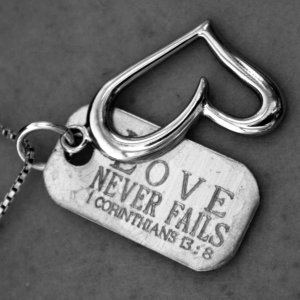
What if we just stripped away all the theology, all the questions, all the seeming inconsistencies of life … and just let Jesus love us?
What if we took a step back from our toil, set down our work and opened our hands. I would like to sit in a chair – perhaps a rocking chair – and rest my tired feet and aching muscles. And then, what if we just sat back with nothing left to do but receive His love?
No need to labor over this or that. Forget about if you’re doing a “good enough” job. Stop fretting over whether you said this right or thought that right. Just stop and let Him love you.
Because His love just is. There is nothing you can do to change it. You can’t increase His love or decrease His love. His love has no limits – past, present or future. His love is perfect, bottomless and complete. God’s love just is.
So what if instead of thinking about love, trying to figure it out, you just sit back, relax and open your heart?
You may say that you don’t get it – this love. You wonder, how can you receive His love when you can’t even fathom it? Here’s the thing: you will never truly be able to fathom the depths of His love because it’s His love… and He is God.
But you can experience His love. You can receive His love.
When you were a child, you didn’t understand or fathom your parents’ love. How could you? An infant, a toddler, a child, a teenager can’t know what it is to love with a parent’s love. They can’t even begin to understand such love.
Oh, but they receive it! Like a dry sponge, they soak in every ounce of love their parents will give them.
And so it is with God. We don’t have to understand His love….we just have to receive it.
He loves us. Whether we love Him or not. His love never changes, never runs out, never gives up. His love for us, for me, for you… just is.
And this love is more faithful, more powerful, more rich and deep and warm and consuming and freeing and nourishing and redeeming and forgiving and compassionate and nurturing and constant
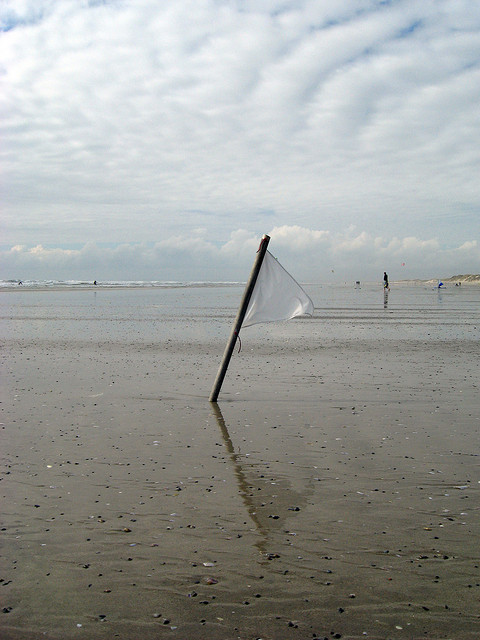
Photo by natasha555
and merciful and gracious and fierce and healing and completely free… than any love we’ve ever known.
His is a love we cannot fathom. But it is a love that is ours.
Let go of your toil. Let go of your work. Let go of your need to figure it all out. Let go of every last shred, every little thread, every tiny cord of control. Let go so that you can open your hands and receive.
Let go. Let go. Let go. And let Him love you. Let Him have you.
He waits. He waits at the gates of your heart for the moment you will turn the lock, pull back the heavy doors and let Him in.
He waits. He longs to give Himself to you. Receive Him. He is yours.
I admit it. I had to Google YOLO to find out what it means. (I guess I really am almost 40.)
YOLO: You Only Live Once.
True enough. I really don’t want to debate reincarnation in this post, so let’s leave it at that for now.
You Only Live Once. Like many catch phrases, YOLO can inspire us.
Of course, some people just use it as an excuse to act like an idiot.
That’s the way with words. They’re powerful, but the direction of that power depends on the meaning we give them.
After reading the Facebook debates about YOLO – is it about getting drunk or skydiving, making your life count or experiencing everything possible – I began to wonder…is there a better motto to live by? One that captures the essence of YOLO but with more lasting impact?
Not that I’m a big “motto to live by” person. Because, really, most mottos are formulas and most formulas don’t survive the tests of life. If we had formulas, we wouldn’t need God.
Anyway…I was mulling it over (yes, I said “mulling”) and here’s what I got – I mean it literally popped into my head:
YOLOL. You Only Leave One Legacy.
Isn’t that a better perspective? If you’re really going to make this life count, forget about living for the moment, feeding your selfish desires, amassing a fortune or making a name for yourself. And consider your legacy.
I believe that as a culture we’re in danger of forgetting what it means to leave a legacy. We live selfishly, haphazardly blazing a trail that future generations will have to navigate. What are we leaving them? What will be their inheritance?
We spend money in the hopes of getting through the week, the month or the next debt ceiling increase.
We spend time – on the computer, the TV, at the amusement park (umm…guilty!) – because we’re tired and just want a little something for ourselves…right now.
We spend energy, talent and gifts and when we don’t see results, we get discouraged. Because that track plays over and over again in our minds: You’re wasting your time! Life is short! You Only Live Once!
But the thing is, making a difference takes time. Often more time than this life offers us. And that’s where the legacy part comes in.
Have you any idea of the reach, influence and extent of Walt Disney’s legacy? From animation to movies to music to clothing to Broadway to amusement parks to agriculture to technology to philanthropy to I don’t even know what else, Disney is doing it and they’re doing it all over the world.
Walt Disney started out with nothing and every time he found success, he leveraged it to try something new. For a wealthy man, he sure was broke a lot – mortgaging everything he and his family members had multiple times. He could have left his success in the bank, put up his feet and enjoyed the good life. But Walt never stopped dreaming, because he never stopped thinking about the future…and the generations to come.
In 1966, before construction began on Walt Disney World Resort, Walt died. He only lived once. But just look at his legacy.
Recently, a missionary visited our church. He and his family serve a people who are very “closed” to the gospel. And naturally, this family often feels discouraged. They live in a hut in Africa, walk to a well for water, grow vegetables, dig latrines, fight malaria, parasites, cultural challenges and spiritual battles. All for what? The villagers still practice Islam and witchcraft and polygamy and spousal abuse.
But they found encouragement in the sacrifices of other missionaries. Missionaries with stories like Nate Saint, who, in the beginning of his mission to the Waodani people of Ecuador, was brutally murdered by the very ones he longed to reach with the gospel of Christ.
To some, Nate’s life and death may appear futile. But just look at his legacy: Despite their grief, Nate’s family stayed in Ecuador and today, approximately one in six Waodani are believers. Nate’s son, Steve, considers the Waodani his family.
Jesus lived a mere 30 something years on Earth. He was conceived out of wedlock, poor and nothing special to look at. He was tortured, nailed to a tree and mocked by those He came to save. He suffered the agony wrought by all humanity’s sin, endured the rejection of his Father and paid a penalty undeserved. He died a criminal’s death and was buried in a borrowed tomb.
He left behind a handful of confused followers including His mother, a formerly demon-possessed woman and some guys who were so freaked out for their own safety, they locked themselves away in the second floor of someone’s home.
At first glance this doesn’t look like a successful approach to the whole YOLO thing.
I was with my youngest daughter, Christina, and a friend. We stood in a vast, barren landscape of dry, scraggly hills covered with natural debris. I didn’t look at the sky but it must have been sunless, because everything was gray, ashen.
I am bent over a pile of withered, cracked branches – branches much longer than I am tall and about the thickness of a baseball bat. The branches are so dry, they’ve begun to turn white. I kneel down, curious. Lifting up a few branches to see what lies beneath, I notice they’re stuck in some sort of gray mire. An old riverbed! The mire reeks of decay.
I lift my head. To my left are three dead owls.
Nothing lives here.
I stand and look around. I see now – the hills and valleys are actually the stony banks and dry beds of countless rivers and creeks. Each one filled with desiccated branches. Everywhere my eyes scan: parched, lifeless land.
A moment later, I am at an old farmhouse. Not mine. My grandmother’s? My mother’s? I think we’re on vacation. My entire family is there. Even my grandparents, who’ve long since passed.
My grandma’s in the kitchen. There’s a child sleeping on an over sized chair. Is it Christina? Or am I seeing myself?
I step out the screen door and the sky looms heavy, oppressive, dark. Drizzle dots my skin. I sigh and think, “Ugh, rain. Another family vacation day ruined.” Then I remember the dry riverbed. I put my hand out to catch the drizzle. “No. Not enough to make a difference.”
Next, I am standing outdoors. Christina and I are by the street, facing the white farmhouse. She seems younger in my dream. My friend stands in the yard, facing us. Behind her there’s a little vegetable garden. And I have a sense that my grandma is watching us through the embroidered café curtains of the kitchen window.
It starts to rain. And pour. And pour. For a moment I am disappointed. Rain on vacation.
I look at the ground beneath my feet. Mud. So much water the ground can’t hold. My skin, my hair – soaked. What a mess! What a…
I remember: The dry riverbeds. The barren wasteland. This rain – it’s falling there too!
I turn my palms heavenward and lift my face to the rain. Rain will quench the parched land and fill thirsty riverbeds. Perhaps the rain did not come when I wanted, as I expected, but it came and it is good.
What do you do with a dream like that? What do you make of it? I would love to hear your thoughts. It has been a couple of weeks and God is still speaking to me about it.
I should tell you that this dream came on the night of Tuesday, November 6 – Election Night 2012. Hmmmm….
I should also tell you that our church is in the midst of a spiritual emphasis we call “Pray for Reign.” Together, we are praying for God to reign in our lives, individually and corporately, and that His spirit would rain down on us and on our land.
Back when Pray for Reign began, I fell in love with this song Waiting for the Rain by Misty Edwards:
“..I’m waiting in the desert, just waiting for the rain…”
This weekend, I had the privilege of being with a friend while she grieved. As I watched her cry, God gave me a sort of vision: I glimpsed dry riverbeds, like the ones in my dream, deep in her soul. And they were being watered by her tears. The beauty of it took my breath away. The eyes of my heart began to see…to understand grief differently:
Loss of any kind leaves an empty space in our hearts. If we hold on to that loss or run away from it, that hole becomes an dry, decaying ditch. What water is left, sours from the rotting branches of bitterness – those worthless things we use to fill our hollow spaces. Then it happens again…and again, so that one day, we look around at the expanse of our souls, and see acres upon acres devoured by loss. An emaciated wasteland.
Nothing lives here.
“…oh but I won’t leave this desert, until I see the rain…”
More often than not, God won’t bring back what was lost – people die, dreams are dashed, life changes, friends move away, bodies grow weak. All this life…it’s just a letting go.
I have wrestled with this. I have burned with rage. I have desperately asked. I have silently cried. Then came peace – or at least the hope of peace: Nichole, every empty cavern, every hollow grave, is a place for Me to enter. Everything I take away, creates more room for Me.
This life is loss. I can rail against reality – rail against Him – or I can accept what’s true and give Him space to rain…to reign.
“… I can see the clouds gatherin’ now…are you ready…are you ready for the rain?”
Are you ready for the rain? When God sends it, will you let it fall?
Will you?
Because the rain that fills our dry riverbeds will not fall from the sky. The rain that soaks our shriveled souls, will fall from our eyes. Our very eyes.
Grief is a gift from God. A well to the deep healing waters of heaven. Let Him rain.
Lament your loss. Mourn what’s missing. Cry out in your pain.
I had a dream. God reigned.
See, I am doing a new thing! Now it springs up; do you not perceive it? I am making a way in the wilderness and streams in the wasteland. Isaiah 43:19
I haven’t posted anything in quite some time, but I have been writing! Today I want to share an excerpt from that writing. It is about my grandmother, the most influential woman in my life after my mother. She passed away 3 years ago this August and I miss her as much as I did the first day she went away. This post is not only about her, but about me and just a few of the life lessons she taught me. I hope they speak to you and bless you as well.
Grandma. 5’ 10” with short, dark-blond hair (before it went white) which she set in curlers weekly for that June Cleaver kind of look. Not that my Grandma was much like June Cleaver. Gosh, I’d probably catch heck if she heard me comparing her to June Cleaver! Kim Novak…or Angela Landsbury…maybe she would like those comparisons better. After all, Grandma traded in skirts and dresses for elastic waisted, pocketless denim or polyester slacks long before I came along. And whenever she was at home, the only thing she wore on her feet were those toeless, backless, slide-on, terrycloth slippers. I guess she figured if clothes weren’t comfortable then they weren’t worth wearing.
I, along with my brother and mother, had the privilege of spending more than half my childhood living with my grandparents. While she didn’t work outside the home – and she cooked, cleaned, washed and ironed on a schedule you could set a watch to – my Grandma, Arlene was her name, found no bliss in her domestic duties. Domesticity was her job. Period. She lived for the moments in between. Those filled with piano playing, crossword puzzles, game shows, family visits, apple pie with cheddar cheese, diet coke, Pall Mall non-filters, Murder She Wrote and Fred Astaire.
One afternoon, when I was about 10, I came home from school with an assignment. I plopped myself down on the floor in front of the chair where she sat.
“Grandma, I have to ask you a question for homework. If there was one thing you could have done differently in life, what would it be?”
“Oh, let me see,” she said, resting her elbows on her knees and rubbing her wrinkled hands together. She turned her blue-green eyes to the floor to think, then looked back up at me and said, “Well, I probably wouldn’t have had so many kids.”
I, the firstborn of her fourth and very last child, stared back, wide-eyed, slack-jawed.
“I think I would have stopped after the first one. Raising all those kids…ah.” She waved her hand as if brushing away all the chores of childrearing. “Then maybe I would have gotten a job or something.”
She said it so casually, so matter-of-factly. My mind reeled. My grandma – the most dependable, reliable, non-threatening person I knew, one whose love I never doubted and whose care I never lacked – just wiped my name from her book of life! I imagined the consequences: my mother, my aunt Joanne, my uncle Gibby, my cousins and me…all gone. Uncle Thomas and his kids the only survivors. How easily she dismissed our familial line!
I took a breath and checked myself, searching for any internal hurt or anger. There was none. In fact, if I hadn’t been so shocked, I might have even laughed. Geez Gram, I thought, you can think those things if you want, but maybe you shouldn’t say them out loud…to your grandchildren!
But I found that I couldn’t hold it against her. Rather, my appreciation for her grew. She had hopes and dreams beyond motherhood and housewifery; she wanted more than us. I wondered what held her back. Was it falling in love with grandpa that caused her to settle down and have kids? Was it her limited education? Or just a lack of options for farm girls in the 1940’s? Whatever the case, she wanted something different and yet her dutiful, personal sacrifice betrayed none of those regrets.
My grandmother was the solid ground beneath my shifting sands of life. Borrowing from singer Sarah Evans, “she was steady as the sun.” Faithful. Predictable. Available. Consistent. She loved us all and would stand by us until the end. Of that I had no doubt. That day, I saw in her, perhaps for the first time, the incomparable value of a life sacrificed for others.
She was no saint. I’m pretty sure a woman who at times shared vocabulary with sailors can’t be canonized. And her insistence that “that Mary, she wasn’t no virgin” probably wouldn’t have won her any votes either. But she was ours and nothing, not even her own dreams, would change that.
At that moment, I made a point to tuck this little conversation away, knowing that someday, when I was old enough, its retelling would make us all roar with laughter.
I learned a few more things that day. I learned that while our choices matter, life is bigger than our choices. And that our regrets don’t have to define us. But perhaps, most importantly for me, an unplanned child, I learned that our plans might not always be the best plans.
How precarious was my entrance into this world! What if my parents never met? Never dated? What if they’d chosen to abort me? It was 1973 after all.
Or what if my grandma had stopped at just one child and went off to get a job instead?
Life is not only bigger than our choices; it’s bigger than me, bigger than all of us. That day, I stopped asking “What if?” and began to wonder “Why?”
Why was I here? Why was my mother here? My grandmother? Anyone?
Long gone are the days when people simply gave up ice cream or meat for Lent. Modern observers of the season abstain with far more creativity than ever before, giving up such things as Facebook, television, wearing jewelry, caffeine and Sudoku. This year, I find myself part of that trend – though I gave up something far less tangible. Some may consider it weak or a cop-out to give up something so difficult to measure, but if nothing else, giving up my “rights” is changing the way I think.
In the spirit of full disclosure, I feel compelled to admit that practicing my typical Lent abstention – relinquishing my daily (and I do mean daily) intake of chocolate – held far less appeal this winter as I adjusted to a gluten-free diet. One more dietary restriction seemed almost unbearable. Contrast that with the cross of Christ, and um…yeah…you could call me a wimp, shallow, selfish. And I wouldn’t argue with you.
At the same time, giving up my “rights” hasn’t been quite as easy as you may think…especially if I am honest about my progress. One reason I didn’t want to commit to such a fuzzy agreement – aside from feeling like a hack – is the difficulty in measuring success. Give up chocolate, coffee, even Facebook or Sudoku, and if you try hard enough, victory is yours. Even a mediocre will can power you through 46 days of self-denial. But forego your rights and you’re doomed to fail.
What do I mean by giving up my “rights”? To some of you, what I am about to say is going to sound ridiculous…absurd…wrong even. After all, rights are part of the fabric of America, where each person is “endowed by their Creator with certain unalienable Rights, that among these are Life, Liberty and the pursuit of Happiness.” Thank you, Thomas Jefferson. Those are just a few of a long list of rights we claim to protect in this, our land of liberty. America has been a champion for civil rights, human rights, women’s rights, the right to vote, the right to privacy, the right to speak and think freely. And I daresay the list is growing. Though we do not all agree as to which rights should be afforded government protection and which should not – such as the rights of the unborn or the right to insurance coverage for contraception – most of us believe passionately that people possess inherent rights no other human being or government should violate.
It would seem, then, that championing the rights of people, especially cultural underdogs, cannot have a downside. I mean, seriously, how can you go wrong with that? By stepping off the narrow path of unalienable rights, into the murky abyss of entitlement. That’s how. Yes, I said it: Entitlement! But don’t leave yet – I promise, NO politics in this post! Ugly political buzzword that it is, entitlement has insidiously snaked its way into human hearts since the dawn of creation. “Hey there, Eve. Sure you can eat that apple. If God can have it, why can’t you? Go on, take a bite. Why shouldn’t you have what you want?”
Perhaps the better question is: why should she get what she wants? What is her claim? She has none. She can’t even use the trusty old territorial defense, because she wasn’t even there first! Sad as it is, we are no different than Eve. Do any of these statements sound familiar: “How dare he cut me off in the middle of an intersection!” “Who does she think she is, leaving me to clean up this mess?” “What? No apology? I at least deserve an apology!” “When do I get a day off?” “Why is his life so much better than mine?” You may not say it out loud, but I bet those thoughts – or something like them — are rolling around inside your mind, bouncing off the inside of your skull like belligerent toddlers, demanding compensation. That’s often what it’s like in my head.
But what is my claim? What are the grounds for my appeal? You see, we’ve become so bent on getting what we deserve that we’ve lost sight of the fact that we actually deserve nothing. There is no cosmological agreement, penned in stardust or stamped on the sky, even suggesting that we have a right to anything – life, food, shelter, love. Nothing. Everything good, anything good, that we have is a gift – whether the Garden of Eden or the crocuses in my flower bed. So then what right do I have to uninterrupted sleep, a painless childhood, a master bathroom, freedom from back spasms, lower gas prices, the guy in front of me at least matching the speed limit, an apology or to be understood? Not one.
I can hear you now. “But wait, what about those unalienable rights endowed by our Creator?” Let me clarify. Life is a gift from God, as I see it, and for that reason I believe that one’s “right” to life goes only so far in that no other human being can lay claim to it, interfere with its freedom or its pursuit (not necessarily its attainment) of happiness. But to out and out insist I have a right, of my own accord, to my life is absurd in light of the fact that I did nothing to gain it, and ultimately can do nothing to retain it. My life, in the truest sense, does not belong to me.
So here I am. And there you are. Two happy accidents some might say. Or, in my opinion, two very unique works of art, created by the Artist Himself. If it is the former, then we have no claim to anything. No common reference point for demanding anything at all. Just two selves, imposing selfish demands. If it is the latter, then our only claim is that we belong to the One who made us. Anything He deigns to give us – or not give us – is entirely up to Him. Period. Whether we like it or not, that is reality.
Wow, a thousand words just to establish some sort of reality as the basis of my Lenten whims. And I haven’t even gotten to my point yet! Ah well. If anything in the piece interests you at all, whether you agree or disagree or have no idea what I am talking about, I humbly ask that you consider how often you demand your rights. What are those sneaky little entitlements that have found their way into your mind and heart…robbing you of contentment and joy? Then, perhaps another day, I can entertain you with tales of the challenges and lessons I’ve experienced upon grudgingly giving up a few rights I cannot even claim in memory of the One who surrendered every right due His name.
Promise me you’ll never leave. Promise you won’t tell. Promise to help me, no matter what. Promise you’ll never hurt me. Promise you won’t turn your back on me. Promise you’ll never give up on me. Promised me you’ll never forget.
Promises. We ask for and give them so easily. What does a promise mean to me? To you? Why are promises important?
For the last month I have been reading about promises kept, even at the most difficult times. About soldiers who risked their lives to save a woman who had earlier shielded them from the sword of her own countrymen. Not only did the soldiers save the woman, but they rescued her whole family as well. In the midst of a raging battle, the soldiers fought their way down city streets, back to her home, bringing her and her family to safety. They did this not because they loved her, not because they were a search and rescue team, not because they feared her. The soldiers rescued her because she asked them to and, in gratitude of her mercy toward them, they promised her they would. It was as simple as that.
I also read about a nation tricked into making a treaty with a neighboring village. The villagers claimed, rather convincingly, to be something they were not. The nation would never have entered into the treaty had they known the truth. Even still, when the national leaders discovered the deception, they honored the treaty. One day, a coalition of five enemy states attacked the village. Without hesitation, they called on the very nation they had deceived and pleaded for military support. As a man of his word, the national leader agreed. He then traveled with his entire army throughout the night until arriving at the village. The next morning, and for what seemed like days, they waged war on the invaders and successfully defended the villagers in perhaps their most difficult battle ever. Why? Because in allying themselves with the villagers, they had made a promise, of not only peace, but of unity.
Promises. What kind of promises have you made? Have you ever been tricked into making a promise? Or maybe you just feel like you didn’t get what you bargained for?
I read about another promise. The promise of a father. He was the father of the two soldiers and of the deceived national leader. The father had raised his children to be strong, faithful, compassionate, wise, loving, patient and honest – not because he told them to, but because he too was all those things. Their father had never made a promise he didn’t keep and he never would. In honor of their father, these sons did the same. A promise made was a promise kept.
For the last month or so, I have spent most (not all, but most) of my writing time deep in preparations for our summer play and camp. I have so much I want to write about that I’ve begun to envision the topics piling up before me like a stack of sweet pancakes just waiting to be devoured. But there is no time for self-indulgence, there is a script to be written! So, in an effort to be faithful to my blog and my commitments at the same time, I have combined the two.
By now, some of you recognize the soldiers, the woman, the leader, the villagers and the Father as characters from the book of Joshua, and our focus for this summer’s program. These last few days, as I think of the story of Joshua, I see a sweeping account of a Father’s faithfulness to his children and his determination to keep his promises, no matter what the cost. As a testimony to their Father, the children live with the same passionate, sacrificial integrity.
Do I take my promises and commitments seriously? Will I honor my commitments even when they fail to meet my expectations? Will I keep my promises, no matter the cost? Am I aware of how my faithfulness reflects on the Father who risked everything for me? The Father who promised He’ll never leave. Promised He won’t tell. Promised to help me, no matter what. Promised He’ll never hurt me. Promised He won’t turn His back on me. Promised to never give up on me. Promised me He’ll never forget. That’s a Father worth keeping promises for – am I willing? Are you?
If anyone had told me a month ago, that my next favorite book would be about a futuristic society that punishes their citizens with high-tech, Hollywood style gladiator games, I would have thought they were crazy. But when my cousin showed me The Hunger Games movie trailer on his phone at Christmas, I was hooked before I even had the book in my hands! My daughter and I spent two nights reading it aloud to each other, alternating chapters. Shouting when it was time to trade the book, “Hurry! Give it over!” or if the person reading paused to catch her breath, “Keep going! Read! Read!” On the last night, we stayed up until 2:00 a.m. sustaining ourselves with granola and chocolate just so we could make it to the end. Which of course was only nominally satisfying….because it is a trilogy!!! We devoured the next two books in a matter of days.
A book that keeps me up at night is one thing. Lots of books keep me up at night. So how do I know if a book’s really gotten to me? If, when I get about 50 pages or so away from the end, I stop reading, because I just don’t want it to be over, don’t want to let the characters go. When I pick it back up, I take my time, savor those last few pages. Even with my daughter waiting anxiously to talk about the final book that she’d already finished, I read the ending slowly, mourning its passing with the turn of each page.
The Hunger Games trilogy, by Suzanne Collins, hardly lacks attention on the blogosphere. In fact, I may be the last blogger in the world to write about it. That’s why I am not going to give the standard review, critique the book or conjecture about whether this trilogy is a rip-off from a Japanese novel with a similar plot, as apparently some have suggested. (The one thing I have to say regarding those rumors is that good writing requires hard work, creativity and talent, and while these books might not rise to the level of classic literature, they are riveting. That doesn’t happen by accident.)
For those of you wondering if you should read the book, I will offer these general thoughts: Many people may be turned off by the overall concept, the graphic violence or the complete lack of anything spiritual in such a dark world, but the novel itself isn’t dark, like say The Golden Compass. The Hunger Games trilogy is about hope and the power of life to endure, spring up even, in the most neglected of places. If your kids read it, I suggest you read along with them so that you can discuss it together. My daughter and I are still talking about it!
So why am I really writing this post? What do I have to share of any real substance? Well, perhaps nothing more than to say this book confirms the relevance of Christianity’s message and the power of its imagery even in our post-modern world. I am not suggesting The Hunger Games is a Christian book or even that the author was using Christian themes. In some ways, I think Collins was avoiding religion altogether. Why else would she have created a society who faced death every day, but spent so little time thinking about the afterlife or searching for meaning? Don’t get me wrong, I am not complaining! Just acknowledging that some of the treasures I found hidden in this book were likely not put there on purpose.
*Spoiler Alert* The next several paragraphs contain some spoilers. I tried not to give away too much, so I think you could read it without ruining the books or movie, but proceed at your own risk!
First, I find that the premise of the story – that a higher power, The Capitol, rules over the masses by deceiving, oppressing, enslaving and dividing them, causing them to fight one another instead of their real enemy, the sinister President Snow and his government – is not all that different than the spiritual battle depicted in Christianity. Are we not being deceived on a daily basis? Are we not oppressed by doubt, fear, self-righteousness, pride and resentment? Do we not war with one another, if not with swords and guns, then with words and emotions?
Then, there is the love story. Peeta, who represents hope, practically oozes all things good and light. He is a baker, an artist, a natural leader and a man willing to sacrifice his own life for the one he loves, Katniss. In fact, at one point he dies and – wait for it – comes back to life. I’m pretty sure I don’t have to spell this one out for you, but the material’s too good – I can’t not write about it.
At a pivotal moment in their relationship, when they are far from home and in danger of dying, Peeta gives Katniss a locket with pictures of her mother, sister and best friend, Gale. Gale, like Peeta, is in love with Katniss; however, Katniss is unsure of who she loves, unsure if she is even capable of love. While Katniss doesn’t know what she wants, Peeta is unwavering in his love for her. When she needs him, he is there. When she pushes him away, he loves her from afar. When she’s at her worst, he loves her anyway. As they look at the pictures of her family and Gale, Peeta offers Katniss his life, asking her to let him die in her place – he wants her to live, to be happy, to marry Gale and have a full life, even if that means giving her up, giving everything up. That, my friends, is sacrificial, selfless love – the truest form of love there is.
Do humans universally long for this kind of love? A love that sacrifices oneself to save another? If our music, movies, plays and books are any indication, then we must. Images of heroes surround us – heroes that can save us, from loneliness, grief, pain, danger, self-obsession, self-loathing, even death. So it should come as no surprise that so many people love these books. Whether we know it or not, the story stirs something deep within us.
Finally, as a baker, Peeta literally feeds and nourishes people in a starving community. This, I imagine, was no accident on the author’s part because he is ultimately the one who satisfies Katniss’s deepest hunger. I can’t help but smile a little at his name, which is actually a homonym for a kind of bread eaten by millions of people the world over. But I wonder if as Collins was writing Peeta, she considered the One who truly satisfies.
We, every one of us, are part of a Hunger Game. Only this is no game. This is real. Look around you. Think about it. Why are you here? Who’s really in control? Are you still a slave to the unseen powers of this dark world? Do you know who your enemy is? Are you hungry? Starving for the truth? Desperate for something…or someone to satisfy your soul?
He’s out there, you know. Your Rescuer. The One who said, “I am the bread that came down from heaven,” is all the food your starving soul needs. And He’s the only chance you have of getting out of this arena alive.
“You should be a writer!” When I first began hearing those words – from my husband, kids, family, friends – I didn’t know how to respond. Imagine me at a loss for words! It happens occasionally, mostly because I like to choose my words carefully, because I want to mean what I say and say what I mean and that comment, “You should be a writer!” stumped me every time. Then, one day it hit me….they might as well be telling me to be a girl, or a mom or a human being. So now, when someone says “You should be a writer,” I answer, “I am.”
And I am. There are not many words I would use to define myself. After all, I am a person, not an occupation or a role. But I’ve come to believe that there are some things about us that eventually, through time or intensity, become part of who we are. There may come a day when I can no longer write, but in my heart I will always be a girl who understands herself and her world best, when she puts her thoughts into words and puts those words onto paper…or a computer.
I’ve always enjoyed writing but it was during my freshman year of high school that I realized I was actually good at it. I don’t know who I surprised more, my teacher or myself. Even today, when a certain sentence rolls off my fingertips or a thought appears on the page I think, “Wow! Where did that come from?” And that’s how I know it’s a gift. I’ve done nothing to earn or achieve the skill or insight, it’s just there.
For years, I denied myself the pleasure of writing because I believed a lie. The lie went something like this: “Your writing is a waste of time and energy. No one reads it so it doesn’t matter and writing for yourself is nothing but self-indulgence.” There were a lot more lies like that to keep me from doing what I love, but over a period of years I felt the Lord nudging me on with little messages that would crop up in the strangest places – on a talk show, in a movie, in a song, at work, online – little reminders of an idea that was at first wispy and vague. Until one day, I heard the message loud and clear: “Write, Nichole. Write! Not for fame or fortune. Not for approval or self-indulgence. Don’t write to be understood. Write to understand. Write…because you can.”
Olympic runner and Christian, Eric Liddell – the inspiration for the movie Chariots of Fire – when questioned by his sister about the time he spent training and running that could have been devoted to the mission field, answered: “I believe God made me for a purpose, but he also made me fast. And when I run I feel His pleasure.” There is something right about doing what God has gifted us to do. I’ve heard people say that a bird brings God glory by singing her song, building her nest, digging for worms and taking flight; a tree glorifies God by growing, converting sunlight into food and swaying in the breeze. So I will write because God has gifted me to write, and because when I do, I feel His pleasure.
I am especially grateful for blogging, which provides a place, other than a journal, for me to put my thoughts without jumping into the competitive arena of publishing. Here, I imagine myself sending words out on the wind and trusting them to land where so ever they shall. At the same time, I long to reach more people, hear more feedback and engage in more dialogue with my readers. One of the cardinal rules for increasing blog traffic is to post a lot….and I mean A LOT! This presents quite a conflict for a girl resolved to write for the sake of writing, a girl who worries that she is quickly wearing out her welcome among friends. Believe me, I am just like you – bombarded and overwhelmed by words, information, choices. How can I expect you, or anyone else, to take the time to read my rambling thoughts? There are so many reasons not to write and even more reasons not to blog but then I am reminded, “Write, Nichole. Write!”
So forgive me for the times I inundate you, bore you, preach too much, don’t make any sense or whatever else I do that drives you crazy. And thank you for subscribing to my blog, for commenting on my site, sharing your thoughts with me, recommending my writing to your friends, for your patience and for indulging me. You are to me like rays of sunshine, breaking through the clouds of doubt, reminding me that I am not alone.
Do you remember that Christmas present you always wanted but never got? I found mine while reverently flipping through the Sears Wish Book, eyes wide, excitement bubbling through my veins. I circled the picture over and over, practically cutting a hole through the paper with the tip of my pen. Then, when I showed my parents, they promptly informed me that a Barbie Dream House was not in the budget nor would it fit in our two bedroom apartment. Even after a letter to Santa and some earnest prayers, come Christmas day, among all the presents under the tree, there was no Barbie Dream House. So goes life. Sometimes, we ask for one thing and get another.
Most of the time, such disappointments are small and quickly forgotten. But at other times, they hurt. Imagine the child who wants a set of paints or a guitar but the parents keep buying soccer balls and shin guards. Might such a child wonder, “Do my parents even know me? Do they care at all?” A good and genuine gift – material or not – is one that says, “I know you and I love you. I know you and I love you.”
I think that’s why we’re often confused when we ask the Lord for one thing and He gives us something else. Doesn’t He know us through and through? Doesn’t He love us more than anyone ever could? Scripture tells us that God gives good gifts to his children – we just have to ask. Then why do we ask for work and find none? We ask for friends and are still alone? We ask for healing and death comes anyway? We ask for answers and are left with more questions? What then?
Lately, I have really wrestled with this. It’s not that I think He can’t hear me. I know He can. And it’s not even that He’s silent. In fact, He’s talking to me all the time. But sometimes I feel like we’re having two different conversations. I ask for an apple and He answers with an orange. I ask in English and He answers in…well…God language.
One particularly frustrating night, I picked up the book Beyond Opinion. After flipping to the chapter “The Role of Doubt and Persecution in Spiritual Transformation” by Stuart McAlister, I skeptically began reading. What? Doubt? Me? Never! To my surprise, I found some nuggets of truth, a new perspective, and it’s radically altering how I view the Lord and my relationship with Him.
Do you remember what happens between Moses and the Lord in Exodus 33? I consider it one of most beautiful moments in Biblical history. At first, the Lord, angry with the Israelites for their rebellion, tells Moses to take the people and go on without Him. Like a forsaken lover, the devastated Moses shamelessly protests; the Lord immediately and lovingly responds. With an almost palpable tenderness, they lay bare their hearts, declaring their love and devotion to one another. In that moment, raw with vulnerability and heavy with expectation, Moses realizes that nothing else will do but to know and be completely known. Boldly, confident of his lover’s love, Moses beckons to the Lord, “Now show me your glory.” Time almost seems to stand still.
With passion for His beloved, the Lord agrees…but there’s a twist. The Lord only allows Moses to see His back, lest Moses die. I don’t know about you, but I might have been disappointed, hurt or even angry. After such an intimate exchange, how could God not know what Moses really wanted? The usual, standard answer would be that the Lord was protecting Moses – and that’s true. The Lord did protect Moses and He did it with moving, powerful, symbolic, almost prophetic imagery of the coming Christ. (I could write a thousand paragraphs about that, but not today!) There is no doubt that the Lord was protecting Moses, but perhaps there’s even more to it than that.
What if what Stuart McAlister, Alister McGrath and Martin Luther believe is also true? That God was indeed showing Moses his glory because God’s glory is present even in “the back parts of God”. Perhaps Moses, and we alike, must be “forced to turn our eyes from contemplation of where we would like to see God revealed, and to turn them instead upon a place of which is not our own choosing, but which is given to us. We like to find God in the beauty of nature, in the brilliance of an inspired human work of art or in the depths of our own being – and instead, we must recognize that the sole authorized symbol of the Christian faith is a scene of dereliction and carnage.” (McGrath)
We want to see God’s glory….just so long as that glory is powerful, beautiful, awe inspiring…and safe. Yet the core of our faith rests on Jesus, who was humiliated, violently tortured, brutally murdered and abandoned by his Father; the same Father in whom we’re asked to put our trust. Are you willing to look at that God? Do you want to see all of Him?
God isn’t neat, tidy, predictable or tame. Just think of Jesus for a minute. He showed up in some unexpected ways, didn’t He? After entering the womb of a poor, unwed, teenage virgin, He was born amid scandal and worshiped by mystics and the dregs of society. He acted in some unexpected ways, too. The Israelites asked for a savior who would conquer their political enemies, bring national freedom, and raise Israel up to rule over all the earth, eternally. But the King of Kings preferred to socialize with outcasts and eventually submitted to humiliation, defeat and death on a cross. Through means no earthly soul could predict, the Lord attained complete victory, spiritual freedom and eternal life for all people who would receive it.
So, when you contemplate the miraculous work of the cross, do you, like me, see the Lord’s strength and glory prevailing in spite of Christ’s suffering, humiliation and defeat? I once envisioned Christ as somehow outside of it all. But He wasn’t…if anything, He was more present, more alive, more aware of His experiences than we who live with veiled hearts have ever been. Christ wasn’t victorious despite defeat. He was victorious in and through defeat. He wasn’t strong despite the appearance of weakness. No! He was strong in and through His weakness. And He wasn’t glorified despite his humiliation. Rather, He revealed His glory in and through humiliation. In the cross, and even in the manger, we find that “God reveals himself through a contrary form. It is the back of God, which is revealed – but it is God, and not another.” (McAlister)
Recently, while meditating on God’s glory as revealed through the degradation of the cross, I imagined Jesus there – beaten, broken, humiliated and hanging on a tree. He looked like any other brutally tortured, dying man – but He wasn’t any other man. He was God. All the power of the universe, wrapped up in the flesh of one man, and nailed to a cross. The Lord, the Mighty One, the Creator of Heaven and Earth, a picture of human weakness. Then this word came to mind: vulnerable.
In Jesus, the Lord Himself became vulnerable – vulnerable to all that mankind could throw at Him. And it was in and through that very vulnerability that He rescued a cursed creation. Sometimes the Lord reveals his power with a mighty arm, but at other times He places us, as He did Moses, on a Rock, hides us in the palm of His hand and then shows us a side of Himself we’ve never seen before. He does this because He, the Great I AM, longs for us to know Him…all of Him…even the back parts.
Suddenly, I am overcome, breathless at the thought that through some divine mystery, I might actually encounter the Lord inand through my weakness and suffering. That in those cold, dark places, if I watch with the eyes of my heart, the Lord will reveal Himself to me. That He and I, for a moment, might share even a thousandth of the intimacy experienced between the Lord and Moses.
Can I be that vulnerable? What do I need to do Lord? And I hear: “Give. Give. Give. Give, yourself to Me.” The Lord knows us and loves us. He gives us, always, the perfect gift: Himself. We may not always get what we expect, or even what we asked for, but we always get Him. And for once, I see the possibility, I long to respond and give Him the only gift I ever can: Me. All of me. Warm, expectant and trembling ever so slightly, I find myself whispering, “Lord, show me your glory.”
But he said to me, “My grace is sufficient for you, for my power is made perfect in weakness.” Therefore I will boast all the more gladly about my weaknesses, so that Christ’s power may rest on me. That is why, for Christ’s sake, I delight in weaknesses, in insults, in hardships, in persecutions, in difficulties. For when I am weak, then I am strong. II Corinthians 12:9-10
But God chose the foolish things of the world to shame the wise; God chose the weak things of the world to shame the strong. I Corinthians 1:27








 Lightning Bug