Promises

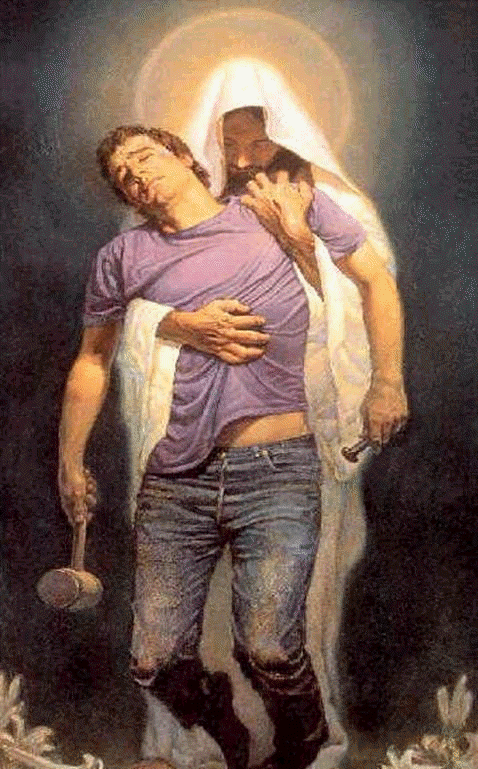
Promise me you’ll never leave. Promise you won’t tell. Promise to help me, no matter what. Promise you’ll never hurt me. Promise you won’t turn your back on me. Promise you’ll never give up on me. Promised me you’ll never forget.

Promises. We ask for and give them so easily. What does a promise mean to me? To you? Why are promises important?

For the last month I have been reading about promises kept, even at the most difficult times. About soldiers who risked their lives to save a woman who had earlier shielded them from the sword of her own countrymen. Not only did the soldiers save the woman, but they rescued her whole family as well. In the midst of a raging battle, the soldiers fought their way down city streets, back to her home, bringing her and her family to safety. They did this not because they loved her, not because they were a search and rescue team, not because they feared her. The soldiers rescued her because she asked them to and, in gratitude of her mercy toward them, they promised her they would. It was as simple as that.

Photo by xandert
Photo by xandert

I also read about a nation tricked into making a treaty with a neighboring village. The villagers claimed, rather convincingly, to be something they were not. The nation would never have entered into the treaty had they known the truth. Even still, when the national leaders discovered the deception, they honored the treaty. One day, a coalition of five enemy states attacked the village. Without hesitation, they called on the very nation they had deceived and pleaded for military support. As a man of his word, the national leader agreed. He then traveled with his entire army throughout the night until arriving at the village. The next morning, and for what seemed like days, they waged war on the invaders and successfully defended the villagers in perhaps their most difficult battle ever. Why? Because in allying themselves with the villagers, they had made a promise, of not only peace, but of unity.

Promises. What kind of promises have you made? Have you ever been tricked into making a promise? Or maybe you just feel like you didn’t get what you bargained for?

I read about another promise. The promise of a father. He was the father of the two soldiers and of the deceived national leader. The father had raised his children to be strong, faithful, compassionate, wise, loving, patient and honest – not because he told them to, but because he too was all those things. Their father had never made a promise he didn’t keep and he never would. In honor of their father, these sons did the same. A promise made was a promise kept.

For the last month or so, I have spent most (not all, but most) of my writing time deep in preparations for our summer play and camp. I have so much I want to write about that I’ve begun to envision the topics piling up before me like a stack of sweet pancakes just waiting to be devoured. But there is no time for self-indulgence, there is a script to be written! So, in an effort to be faithful to my blog and my commitments at the same time, I have combined the two.

By now, some of you recognize the soldiers, the woman, the leader, the villagers and the Father as characters from the book of Joshua, and our focus for this summer’s program. These last few days, as I think of the story of Joshua, I see a sweeping account of a Father’s faithfulness to his children and his determination to keep his promises, no matter what the cost. As a testimony to their Father, the children live with the same passionate, sacrificial integrity.

Do I take my promises and commitments seriously? Will I honor my commitments even when they fail to meet my expectations? Will I keep my promises, no matter the cost? Am I aware of how my faithfulness reflects on the Father who risked everything for me? The Father who promised He’ll never leave. Promised He won’t tell. Promised to help me, no matter what. Promised He’ll never hurt me. Promised He won’t turn His back on me. Promised to never give up on me. Promised me He’ll never forget. That’s a Father worth keeping promises for – am I willing? Are you?

Something to think about!

© Nichole Liza Q.

Hungry Anyone?

If anyone had told me a month ago, that my next favorite book would be about a futuristic society that punishes their citizens with high-tech, Hollywood style gladiator games, I would have thought they were crazy. But when my cousin showed me The Hunger Games movie trailer on his phone at Christmas, I was hooked before I even had the book in my hands! My daughter and I spent two nights reading it aloud to each other, alternating chapters. Shouting when it was time to trade the book, “Hurry! Give it over!” or if the person reading paused to catch her breath, “Keep going! Read! Read!” On the last night, we stayed up until 2:00 a.m. sustaining ourselves with granola and chocolate just so we could make it to the end. Which of course was only nominally satisfying….because it is a trilogy!!! We devoured the next two books in a matter of days.

A book that keeps me up at night is one thing. Lots of books keep me up at night. So how do I know if a book’s really gotten to me? If, when I get about 50 pages or so away from the end, I stop reading, because I just don’t want it to be over, don’t want to let the characters go. When I pick it back up, I take my time, savor those last few pages. Even with my daughter waiting anxiously to talk about the final book that she’d already finished, I read the ending slowly, mourning its passing with the turn of each page.

The Hunger Games trilogy, by Suzanne Collins, hardly lacks attention on the blogosphere. In fact, I may be the last blogger in the world to write about it. That’s why I am not going to give the standard review, critique the book or conjecture about whether this trilogy is a rip-off from a Japanese novel with a similar plot, as apparently some have suggested. (The one thing I have to say regarding those rumors is that good writing requires hard work, creativity and talent, and while these books might not rise to the level of classic literature, they are riveting. That doesn’t happen by accident.)

For those of you wondering if you should read the book, I will offer these general thoughts: Many people may be turned off by the overall concept, the graphic violence or the complete lack of anything spiritual in such a dark world, but the novel itself isn’t dark, like say The Golden Compass. The Hunger Games trilogy is about hope and the power of life to endure, spring up even, in the most neglected of places. If your kids read it, I suggest you read along with them so that you can discuss it together. My daughter and I are still talking about it!

So why am I really writing this post? What do I have to share of any real substance? Well, perhaps nothing more than to say this book confirms the relevance of Christianity’s message and the power of its imagery even in our post-modern world. I am not suggesting The Hunger Games is a Christian book or even that the author was using Christian themes. In some ways, I think Collins was avoiding religion altogether. Why else would she have created a society who faced death every day, but spent so little time thinking about the afterlife or searching for meaning? Don’t get me wrong, I am not complaining! Just acknowledging that some of the treasures I found hidden in this book were likely not put there on purpose.

*Spoiler Alert* The next several paragraphs contain some spoilers. I tried not to give away too much, so I think you could read it without ruining the books or movie, but proceed at your own risk!

First, I find that the premise of the story – that a higher power, The Capitol, rules over the masses by deceiving, oppressing, enslaving and dividing them, causing them to fight one another instead of their real enemy, the sinister President Snow and his government – is not all that different than the spiritual battle depicted in Christianity. Are we not being deceived on a daily basis? Are we not oppressed by doubt, fear, self-righteousness, pride and resentment? Do we not war with one another, if not with swords and guns, then with words and emotions?

Then, there is the love story. Peeta, who represents hope, practically oozes all things good and light. He is a baker, an artist, a natural leader and a man willing to sacrifice his own life for the one he loves, Katniss. In fact, at one point he dies and – wait for it – comes back to life. I’m pretty sure I don’t have to spell this one out for you, but the material’s too good – I can’t not write about it.

At a pivotal moment in their relationship, when they are far from home and in danger of dying, Peeta gives Katniss a locket with pictures of her mother, sister and best friend, Gale. Gale, like Peeta, is in love with Katniss; however, Katniss is unsure of who she loves, unsure if she is even capable of love. While Katniss doesn’t know what she wants, Peeta is unwavering in his love for her. When she needs him, he is there. When she pushes him away, he loves her from afar. When she’s at her worst, he loves her anyway. As they look at the pictures of her family and Gale, Peeta offers Katniss his life, asking her to let him die in her place – he wants her to live, to be happy, to marry Gale and have a full life, even if that means giving her up, giving everything up. That, my friends, is sacrificial, selfless love – the truest form of love there is.

Do humans universally long for this kind of love? A love that sacrifices oneself to save another? If our music, movies, plays and books are any indication, then we must. Images of heroes surround us – heroes that can save us, from loneliness, grief, pain, danger, self-obsession, self-loathing, even death. So it should come as no surprise that so many people love these books. Whether we know it or not, the story stirs something deep within us.

Finally, as a baker, Peeta literally feeds and nourishes people in a starving community. This, I imagine, was no accident on the author’s part because he is ultimately the one who satisfies Katniss’s deepest hunger. I can’t help but smile a little at his name, which is actually a homonym for a kind of bread eaten by millions of people the world over. But I wonder if as Collins was writing Peeta, she considered the One who truly satisfies.

We, every one of us, are part of a Hunger Game. Only this is no game. This is real. Look around you. Think about it. Why are you here? Who’s really in control? Are you still a slave to the unseen powers of this dark world? Do you know who your enemy is? Are you hungry? Starving for the truth? Desperate for something…or someone to satisfy your soul?

He’s out there, you know. Your Rescuer. The One who said, “I am the bread that came down from heaven,” is all the food your starving soul needs. And He’s the only chance you have of getting out of this arena alive.

© Nichole Liza Q.

Winter’s Coming but Spring is Here!

I know so many people who look forward to, and even cherish, the cool, colorful autumn season. For me, the warm colors, rich smells and cozy sweaters are just a harbinger of things to come. There is not a

Photo by HalfGeniusHalfWit

crackling fire bright enough to dispel the coming darkness or hold back the icy winds that I dread so much. Truly, truly, I dread the arrival of winter. I could list a thousand reasons why and at the top would be exchanging flip-flops for bulky jackets, open windows for cold hardwood floors and the sound of crickets for the hum of the furnace (cha-ching!)….but what I dread the most, what weighs on my body like a heavy, lead jacket, is that each day the coming winter snatches another two or three minutes of sunlight from my eyes.

To you this may sound absurd, but for me the trouble begins as early as October. One day I am my normal self, and the next I can barely drag myse

lf out of bed in the morning. After lunch, I fight valiantly – mostly for the benefit of my employers and coworkers – to keep my eyes open and mind alert, lest someone find me slumped over my keyboard and drooling on the week’s worship order. Before dinner, I frequently fall asleep on the couch which inevitably leads to an evening battle with insomnia and then…sleep, sweet sleep, just 10 more minutes, please! Some mornings, the only thing that gets me out of bed is telling myself that I can sleep again in 12 hours…eight, if things are really rough. How sad is that?

There are plenty of studies out there that define this condition and even some supposedly effective therapies, but expensive solutions for feeling tired quickly take a back seat to braces, college tuition and new tires for the car. So this time of year, you will find me counting down the days until December 22, when the sun starts rising earlier and setting later. As of today, there are 66 more days on the downhill. 66 more days of sliding headfirst into the abyss. 66 more days of darkness. I empathize deeply with our ancestors who worried, year after year, that the sun might sink below the horizon and never return. Had I lived back then, I likely would have joined the chanting and dancing and whatever other rituals thought necessary to summon the sun back up into the sky. Oh, the things we take for granted…like the air we breathe and the sun rising faithfully every day!

You may think I’m exaggerating but seriously, what other season is universally synonymous with death? When you read a book or watch a movie – excepting Christmas specials and Hallmark Channel Valentine’s movies – you know the barren trees and gray skies signal nothing but heartache. I poke fun but the reality is that every October a part of me goes to sleep while the rest of me longs for those spring days when I will once again feel fully alive. Yet the worst part of all is that the tiredness from lack of daylight brings with it a real and genuine sadness, a heavy heart and physiological pain I can’t escape.

The steel skies and withering grass remind me all too vividly of the cold, barren winters of my heart – particularly seasons of loss and grief. Leaves, far past their youthful days, give in to the relentless winds and let go, falling slowly to the earth. How many of those whom I’ve loved, have done the same? The winds blow through me and, for a moment, steal away my breath…the emptiness is so consuming, even my chest feels hollow. Time does not heal all wounds. The scars remain. Tell me something new. Tell me something of hope.

Over our recent Columbus Day weekend, we New Englanders were given the rare gift of bright, sunny, 80 degree weather for four beautiful days. My husband and I spent one of those days working in the yard – weeding, trimming and getting ready for winter. Only it felt like late June. I pruned dead branches and leaves from our lilac bush, careful not to snip the buds which are already set for spring. After I finished with the lilac, I visited my azalea and rhododendron bushes. I knew better than to clip anything from those early bloomers, and simply stood there for a while, wondering at the plump, promising buds. Swiftly, but not abruptly, the world seemed to stand still – like God had stopped the sun in the sky or pressed the pause button on his giant remote. Time felt suspended and my feet, unmovable. It was one of those moments where you can almost hear God whispering in your ear, “Pay attention.”

Tell me something new. Tell me something of hope.

Have you ever experienced that instant when something you already knew or had seen a thousand times or had recited to others over and over, suddenly became real to you? Before you knew, but afterward you understood. Before you believed, but then you received. That’s what happened to me. It was as if God had been cultivating the soil of my heart for that perfect moment when I had turned just enough for him to slide his shining blade beneath my armor, enabling him to skillfully and painlessly plunge into the hollow of my heart a new and precious seed of truth. Immediately, the seed took root and filled my chest with a peaceful warmth.

Photo by Karpati Gabor

My heart, my mind, my body – all were still. Warren Wiersbe said, “Nature preaches a thousand sermons a day to the human heart.” I listened. I listened and my soul was still. Silently, I received the promise which God revealed to me through the autumn buds of a spring-blooming flower. Even in winter, we are never without the certain hope of spring. Before the first frost touches a single petal, before the biting winds blow or even one snowflake falls, God places spring in the heart of his handiwork. On every bough, a bud, and in every bud, a flower.

I stood motionless, full of wonder and gratitude. God had just spoken – sweetly, tenderly, directly to me. He knows my weaknesses, my fears and my doubts and he doesn’t roll his eyes at me, or tell me to suck it up. Instead, he meets me where I am, with his arms offering comfort and in his hands, hope. ‘I know you are dreading this coming season, Nichole. I know. But it won’t last forever. Look here! I have already prepared the flowers for spring. See! Evidence! A sign of hope for you. My promise of spring for you.’  There are only a few times in my life when I have genuinely, tangibly felt God’s love – this was one of those times.

Yet, this message, however personal and pertinent, reaches far beyond the seasons, into the place of promises eternal. In this world, there are a thousand winters – winters of the heart and of the soul, winters of the mind and of the body, even winters that bewitch and blind our spirits. But in every winter, even the winters of sorrow, bitterness, darkness and defeat, we are never without the certain hope of spring and the peace, joy, life and victory that it brings.

Nature declares the glory of God and through creation we catch sight of the Creator, and of ourselves. Who is God, and who are we to him, that He would not leave us to doubt or despair, but rather allow us a glimpse into tomorrow? What compassion! What grace! Before winter even begins, a glimpse of spring. As darkness falls and the storms rage on, a glimpse of hope, a glimpse of heaven.

No, time does not heal all wounds. The wind whips around my shivering bones, and frost settles on my skin…yet long ago, when my heart wandered in the darkness of an enchanted winter, God planted there the first seed…the Seed of eternal spring. A ray of sun, warm and bright, pierced the darkness and slowly, the ice packed around my heart began to melt. The spell was broken, the endless winter ended. Though the coldness comes, its icy fingers have no hold on me. Yes, scars remain and sometimes, the pain still steals away my breath. But I rest in knowing there is no winter God has not written, no abyss beyond his reach, no one lost he cannot find, no darkness he has failed to light, no sorrow for which he has not prepared a Spring.


For since the creation of the world God’s invisible qualities-his eternal power and divine nature-have been clearly seen, being understood from what has been made, so that men are without excuse.  ~ Romans 1:20

© Nichole Liza Q.

A Palace in Prison

There’s all sorts of prisons, aren’t there? There’s the jails with barbed wire, armed guards, barred cells and the clamor of convicted felons. There’s the places where prisoners of war are isolated and tortured. There are work camps and slavery for the persecuted, imprisoned for their religion, beliefs or ethnicity, stripped of all dignity, starved, beaten and forced to do labor their weakened bodies can barely endure. These are the prisons with walls and gates and guards and masters.

But there are other prisons too, where the walls are not so easy to see. Where one knows the gate is locked but she can’t find the door. Where the torturers are people or memories or hurts he can’t escape, the walls are circumstances she can’t change, and the clamor is the voices in his head that tell him “this is all there is”, that tell her “hope is hopeless.” And there’s the prisons of our own doing…the things that isolate our hearts…pride, selfishness, unforgiveness, arrogance, control…I could go on.

Lately, I’ve been studying the book of Genesis – mostly the life of Joseph, son of Jacob. He was familiar with all sorts of prisons: brothers who hated him, the pit they cast him into, slavery into which they sold him, an Egyptian jail for a crime he did not commit, the constant demands of his eventual high position in a country that tempted him daily with its worldliness. These are the prisons Joseph knew.

As I study, I also find myself taking special notice of Judah, for it is through his line that the messiah, Jesus comes. It is not through Joseph, Jacob’s favored son. Rather, Jesus comes through Judah, a broken and blatantly sinful man.

Judah was the son of Leah, the less-loved wife, the wife who wasn’t favored. And so he also was a less-loved son. As an adult, Judah carried the guilt of selling Joseph into slavery then deceiving and bringing suffering upon his father. He lost his first two sons, his wife and then unwittingly impregnated his bereaved daughter-in-law from whom he had unjustly kept his third son. Judah had a few prisons of his own.

One difference in these two brothers is that Joseph, whether caught in the web of his brothers’ hatred, held captive as a slave or serving time in a dungeon, was, in his spirit, a free man. We can see it in his devotion and loyalty to the Lord and the people he served, his integrity, diligence, kindness, grace, mercy and complete trust in God’s plan and goodness. Joseph is not imprisoned by his circumstances or his emotions. He seems to know a wonderful truth: that the walls that hold his body in can not crush his spirit.

Eventually, toward the end of Genesis we see a transformed Judah, who offers his own life to save the life of his brother Benjamin and to prevent his father from enduring any further suffering. We see a Judah who is free from selfishness, envy and bitterness, freed because his concern for another finally outweighs his concern for himself. He looks physical captivity, slavery and even death in the eye and seems to say, “I’ve known greater prisons than you!”

So what about you and me? What kind of prisons are we living in? Are you stuck in a job you hate? Do you feel trapped in family wrought with bitterness and distrust? Is your body giving out on you? Maybe your depressed.  Or lonely. Anxious about money. Is someone you love hurting and you feel helpless? Or perhaps you’re wondering how you’ll ever say good-bye to your first child as they head off to college?

Then there’s the spiritual prisons. In one way or another we are all in danger of being trapped by our decisions to put other things before God. I find myself asking: What do I trust more…my ability to earn a salary or God’s faithfulness to provide? What do I work for more, the approval of people or God’s approval?  How do I know I am valuable, because others say so or because God says so?

Through the study of Joseph and some great conversation with our couples small group, I realized, in a new way, that even when I feel trapped, my spirit is free. Free to worship the Lord, free to do what is right, free to serve and love and dance and pray. Surely this is not something we can do on our own…but with God all things are possible.

A couple of months ago I was thinking about my “pit” (see The Pits) and wondering about God…why is he so willing to enter my pit…to reside there with me. Then He gave me a sort of picture: I saw Jesus climbing down into my dark, dirty pit. He was surrounded by earthen walls with bugs, cobwebs, plant roots…you name it…but nothing He touched made Him dirty. He was light and golden and perfectly clean. Why? Then a word popped into my mind “Incorruptible.” Jesus in incorruptible. God can be with us in our prisons and remain unchanged, pure and good. The God that rules over all of heaven is the very same God that meets you in your pit. He doesn’t shrink himself for you or compromise his God-ness. Even when He took on our sin his life was pure. And whatever situation we are in, His life – his incorruptible life – that well of grace, mercy, strength, courage, joy and peace – is available to us.

There are many books and sermons and essays written about Joseph’s life with titles like: “From the Pit to the Palace” or “Prison to Palace”. But that’s no longer how I see it. No. Joseph didn’t leave the pit for the palace. The palace was in the pit with Joseph all along. “The Lord was with Joseph,” Genesis 39:2. Every day, in all situations, Joseph’s heart knelt before the throne of the Lord. And he was free.

© Nichole Liza Q.

The Pits ~ A Christmas Message

Have you ever been in a cave or a deep pit? I can’t stand the thought of it! On our cross country road trip this summer, I refused to visit cave locations. I loved the mountain tops, the canyons, even the valleys, but caves? Underground? Dark? Damp? Probably bugs and bats and who know what else? No thanks! Just watching the story of the trapped Chilean miners unfold on television pained me. Whenever the reporter opened her mouth, I could feel the air being sucked out of my lungs. “It’s been 2 days.”  Two days! I would think. Then it was 4 days, 24 days, 40 days. When would it end?

For a girl who avoids dark, confining spaces, I sure spend a lot of time in the pits – emotional pits, psychological pits, spiritual pits. Have you ever been in a pit like that? Where you just couldn’t seem to feel good about anything? Maybe you were hurt – so hurt you couldn’t imagine ever being happy again. Perhaps bitterness was eating away at your heart. Or was your soul shackled to a need for revenge? Maybe you were wandering in a fog of doubt, lost sight of who you were and couldn’t remember the point of this life anyway.

A few months ago, when I was in a really ugly place, at the urging of a good friend, I spent several hours praying about my “pit”. Now I could make this a really long letter and tell you all about the deep, psychological revelations, spiritual implications, and sometimes bizarre conversations I had with the Lord and myself that night, but neither you nor I are ready for that. Instead I will share what I think is the single, most pivotal moment in my prayer time that night. As I prayed, I asked the Lord, “But how can I ever get out of this pit? You say I have to want to get out but I don’t know if I want to get out. Can you make me want it? And even if I want to get out, then what? I’m trapped. What do I do?” A moment later, almost clear as day, (though not audibly like a person), I heard the Lord gently say, “Invite me into the pit with you.” Even as I write this, tears well up in my eyes. “Invite me into the pit with you,” he says.

Who is this God who offers to come into our pit with us? The great I AM, the Lord Almighty, the King of kings, says to me, a selfish, petulant child, “Invite me into the pit with you.” That was exactly what I needed to hear that night. The pit is too deep, the walls too steep, the earth too hard, the way too dark. I can never get out on my own. Yet, I do not have to be in this alone.

During my prayer, I looked up at the television (which had been muted) and what was on? Nothing other than the Chilean miners being rescued, one by one, from a pit 2014 feet below ground. After 69 days – 69 days! -of waiting, hoping and praying, they were finally being saved. For weeks they had been fed, medicated as necessary and monitored for emotional and psychological well-being.  For over two months, teams of people around the world worked to create a mechanism by which the men could be freed from the mines. Now, finally, the whole world watched as, one at a time, the miners rode the small capsule to freedom. I, like you, was elated and overcome with joy for these men and their families.

The next day, I watched as the last miner was pulled out of the earth. I turned up the volume and heard the reporter say that there was still someone to be freed. What? I thought the last miner was just rescued! I turned up the volume some more. Turns out, the miners hadn’t climbed into the capsule on their own like I had thought. Silly me. Rescuers, themselves, entered the capsule first and willingly rode it deep down into the earth to help save the trapped men. The last man out of the mines was a rescuer. He sacrificed the sunlight and security above to go down into the pit with them; and he didn’t leave until every last man was saved.

It was no accident that God timed my prayers to coincide with this historic rescue. What a beautiful expression of his love. “Look, Nichole. This is a picture of me,” he said, “I have come down to you and I am not leaving you behind.”

Now this is a Christmas letter, after all, and so I will go ahead and write what many of you are already thinking: Isn’t that what Christmas is all about? The Lord of lords, the King of kings, the Almighty God, the great I AM, stepped out of heaven and into a manger. He left his place on high and came down into the pit with us. The Alpha and Omega left behind the goodness, light, glory and perfection of heaven for this fallen world, in order to become our Prince of Peace. The Creator of all things took the form of his creation and lived not only in the pit of humanity but as the pit that is humanity. And he didn’t leave until he completed his mission: that by his sacrifice every last person could be saved. The Lion became the Lamb. That is the gift of Christmas: Jesus.

If and when you find yourself in a “pit” of your own, whether it is today or tomorrow or next week or next year, I encourage you to invite Jesus down into that dark place with you. And remember, you don’t have to wait until things are really bad. He’s always there, waiting to be invited in.

Merry Christmas!!!

Though you have made me see troubles, many and bitter, you will restore my life again; from the depths of the earth, you will again bring me up. Psalm 71:20

© Nichole Liza Q.

In Memory

My grandparents didn’t live a flashy life. They grew up here in Connecticut – my grandpa helping his father on the railroad in Torrington, my grandma helping out on her parent’s farm in Granby and working tobacco in the summers. During high school they both lived in Granby and went to school in Simsbury. Neither really loved school and both remembered being treated as second class citizens because they were “Country Bumpkins” attending Simsbury schools. Some things never change.

One of grandma’s favorite memories – and my favorite stories to hear – was of her and her friends leaving school for their 30 minute lunch break. They started their break by lighting up a cigarette and then running from Simsbury High (which is now the Simsbury Police Station) to Doyle’s Drugstore, which was located in what is now the Apollo’s Restaurant plaza. The drugstore was also a soda shop and Grandma and her friends, after running half a mile smoking a cigarette, sat down at the counter and quickly scoffed down hot fudge sundaes for lunch. Then they ran all the way back to school, smoking one more cigarette before returning to class. Doesn’t that sound just like Grandma? As for Grandpa, he was apparently smartest guy in school with the highest IQ (he did marry Grandma after all) and if you ever get a look at his old photos, you will probably agree that he was the best looking guy there too!

My Grandma and Grandpa started dating when they were just 14 and Grandpa loved to tell the story of one of their dates in particular. On that night, Grandpa had brought Grandma back to the house in his car. It was very late and very dark out on those country roads with no street lights and this night must have been a cloudy one, because as he tells it, it was pitch black. Anyway, they apparently parked their car on the street near the house and, as Grandpa tells it, they fell asleep. A few hours later, well past Grandma’s curfew, they woke up to the voices of Grandma’s brothers and sisters calling out “Arlene! Arlene!” as they ran around the farm and street looking for her; only to find that she was right there, on the street in front of the house the whole time! It was so dark, noone ever saw the car.

Grandma and Grandpa married after Grandpa returned from serving in the Air Corps (I think that is what it was called back then). They married and bought a small home which they later sold because it couldn’t house their growing family. They would never own their own home again. They lived for many years in an old farmhouse at the base of High Meadow. Grandpa worked for the town and then for Hamilton Standard. He helped to build the suits for America’s astronauts and it is rumored that when the men of Apollo 13 were trying to find a way to survive on board their spaceship, Grandpa is the one who recommended they use duct tape to fix…well…whatever that thing was that needed fixing. If you’ve seen the movie, you know it was pretty important!

Grandma was a stay-at-home mom and housewife and ladies, it wasn’t like it is today. She had a washer and no dryer, even all winter long. Frozen underpants anyone? No disposable diapers. No microwave. She made three meals a day, every day for her whole family. No Subway, McDonald’s or delivery pizza and if there was a restaurant in town, they couldn’t afford to eat at it. No shower, just one bath and 4 teenagers. No heat in much of the house. A vacuum with no rug attachment…just the hose. And on top of all this, she had a garden – that they truly counted on for food – and farm animals to care for. Oh Grandma, you put me to shame!

They raised their children as best they knew how with the resources they had and as you know, they all turned out pretty great. Sometimes Grandma would lament about what she wished she had done differently ~ that she had read to them more or had not been so harsh. That is just what parents do, I guess. We always wish we could have loved our children better. Funny, now that they are gone, I wish I had loved them better. Anyway, while Grandma sometimes wished she had parented better, she and Grandpa never wished her kids had turned out better. They were both so proud of each of their children – who they had become, the trials they had endured and how they all seem to have come through it better in the end. They loved them to the very end with the care, angst and pride every parent feels for their children, no matter what their age.

In 1973 they had their first grandchildren, Brigette and me, and 10 more eventually followed. Grandma and Grandpa were, to me, more than Grandparents. Very early on, I lost my first father to what we will call a lack of maturity and then, when I was 12, I lost my second father, my step-father and Derek’s biological father, to a terrible disease. In some ways we lost him many years before he died. My mom did everything she could to keep us going, including working days at CG and waiting tables at night while pregnant with Derek. During those years, Grandma and Grandpa were our rocks in the middle of a stormy sea.To borrow from country singer Sara Evans: “My [Grandpa] he is grounded like the oak tree. My [Grandma] she is steady as the sun.” When everything else in life was uncertain, they were there – steady, dependable, faithful. My Grandma did laundry every Monday, Wednesday and Friday. Lunch was at noon every day and dinner at 4:30. Grandpa went to work every day and came home each night in time for dinner. He didn’t go out with the guys or work endlessly to get ahead. He was there. I especially loved it when I would sit on his lap and hold his hands and pretend I was flying a plane. He would tell me “Pull up! Pull up!” or “Make it steady!” What fun for a little girl!

I know lots of people complain that their dads were never emotionally available, never talked to them much. Well, for someone like me, Grandpa’s just being there meant alot. Grandpa taught me that some men do come home every night, some men do stay,  some men do love their wives forever.

I know they have touched the lives of so many people. For me and my brother, they were like the insulation of a house, keeping out the cold on a long winter night; the icing on the cake, holding everything together and sweet besides; the heart of our hearts and breath of our lives.

No, they never lived a flashy life. They never built a job from the ground up or owned a large home or made millions on a land investment or even owned more than one car at a time. But that wasn’t what made them great. The greatness of Tom and Arlene Creighton was in their day to day living, in the long haul, in their perseverance, dependability, steadiness, love and faithfulness. In the words of one of Grandma’s favorite authors, Jan Karon, they are a perfect example of “the extraordinary beauty of ordinary lives.” What they gave to me, to us, can never be measured or weighed. It is of infinite value and beyond what words can express. I will love them, we will love them, forever.

© Nichole Liza Q.

Blog at WordPress.com.

Up ↑