
Tuesday, June 20
When we decided to go to France, visiting the beaches of Normandy was non-negotiable for me, and thankfully everyone agreed anyway. Even so, it wouldn’t be accurate to say that we were “excited” for this part of the trip. Yes, we were looking forward to seeing the legendary battlefields; however, there was also a sense of privilege and honor, of obligation and respect – an awareness that our freedom and prosperity was bought by the blood of those who fought and died there.
Edited to add: I forgot to mention that, according to my mother, my paternal grandfather was in one of the amphibious vehicles that landed on the beaches of Normandy. I didn’t know him very well and have no way of verifying that, so if anyone out there knows for sure, please let me know. My maternal grandfather’s brother died during WWII in a flight training exercise in Florida. His family was never the same.
“You’ll notice that all the graves are facing west, facing home.”
Jump ahead to:
- Bayeux Shuttle D-Day Tours
- Pointe du Hoc
- Omaha Beach
- Normandy American Cemetery
- Bayeux, etc. (gluten-free restaurants)
Bayeux Shuttle D-Day Tours
Our journey to Normandy began months before our visit. While Doug and his colleague, Jim, who has previously visited Normandy, were devising the best strategy for storming the beaches…
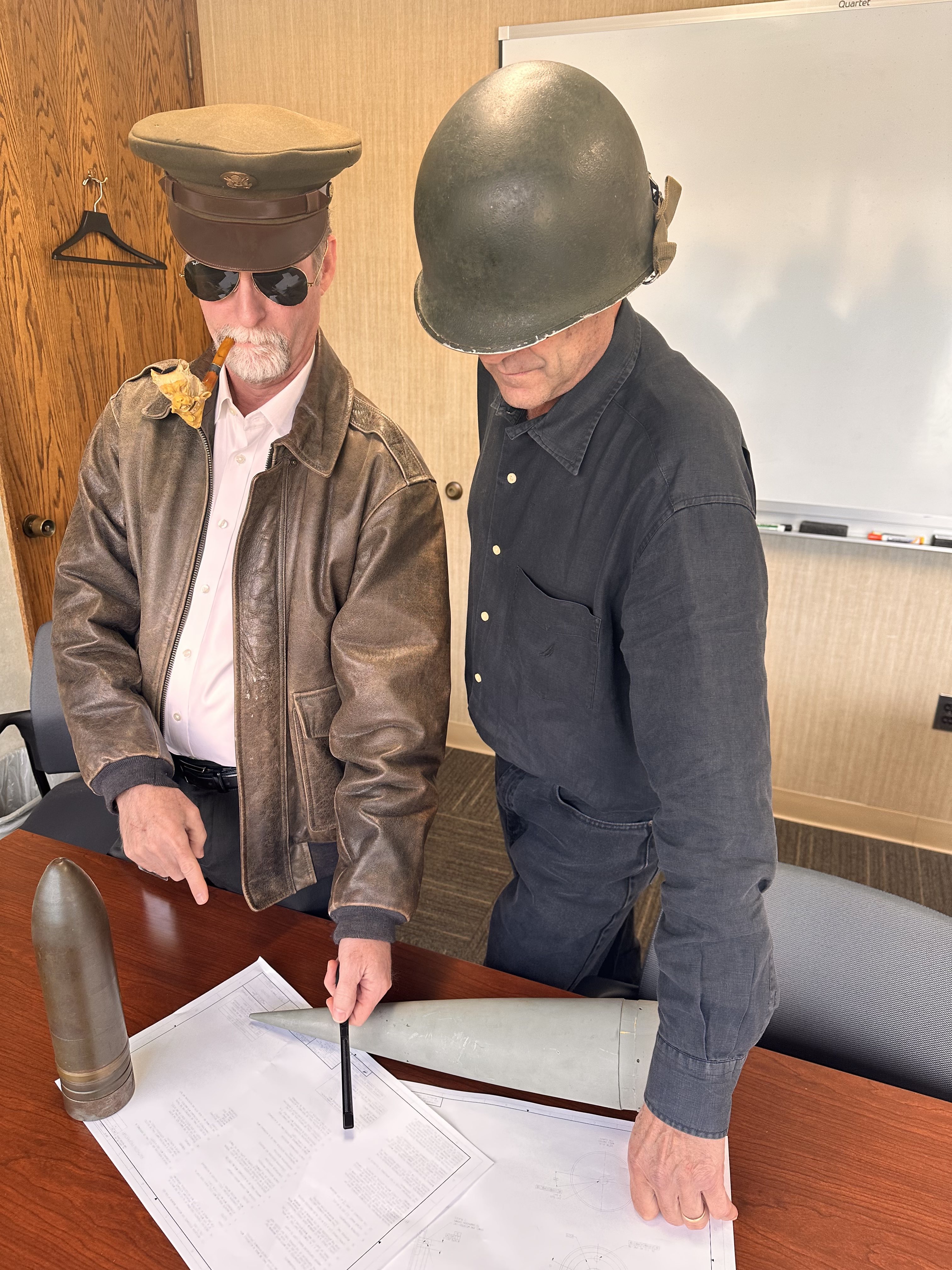
…I was busy trying to book a tour online. Overwhelmed with options, I did a little crowdsourcing among my history-loving internet friends and based on their recommendations, we booked a tour with Bayeux Shuttle. Owned by an American woman who was raised in a US Navy family, and her husband, a Normandy native, Bayeux Shuttle offers tours that focus specifically on the United States D-Day Experience, and guarantees tour guides with excellent English-speaking skills.
We chose the half-day tour – from 9:00 a.m. to 1:00 p.m. – which cost approximately €85/person. If you’re a real WWII enthusiast, and you have the time, you might want the full-day US tour, or even an Allied D-Day Experience tour that includes British and Canadian history. However, we found that the half-day tour was just the right amount of WWII history for our family.

Our tour guide, Camille picked us up at a parking lot in downtown Bayeux at about 8:45 a.m. We were delighted to discover that we basically had a semi-private tour with a couple from our neighboring state of Rhode Island and their eight-year old son who knew more about WWII than everyone except Camille. All of which made the tour that much more enjoyable.

On the drive to our first stop, she shared some background on WWII, what led to D-Day, and how the local area was impacted. She also took time to gauge our knowledge and interest so she could adapt the tour appropriately. Throughout the day she was friendly, personable, easy to understand, very knowledgable, and a good driver! The van itself was roomy, clean and comfortable. If you’re looking for a D-Day tour, I highly recommend Bayeux Shuttle.
Pointe du Hoc

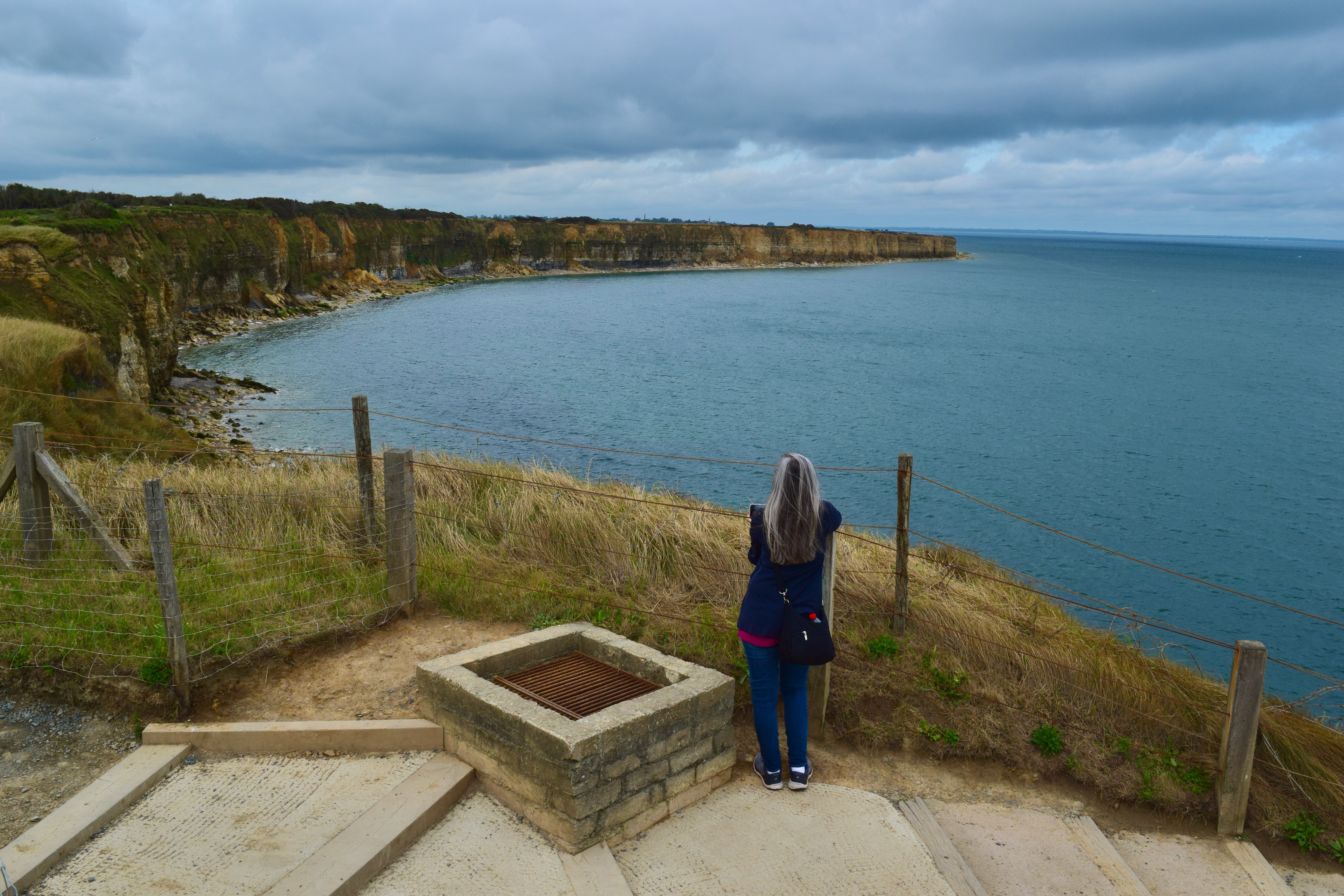
Upon our arrival at Pointe du Hoc, a promontory between the Utah and Omaha D-Day landing beaches, Camille explained the significance of the location. She also shared interesting details about the 2nd US Ranger battalion’s assault against German forces stationed there. Then we had about 30 minutes to tour the site on our own.
Today, Pointe du Hoc features a memorial and museum dedicated to the battle. Many of the original fortifications have been left in place and the site remains peppered with bomb craters.
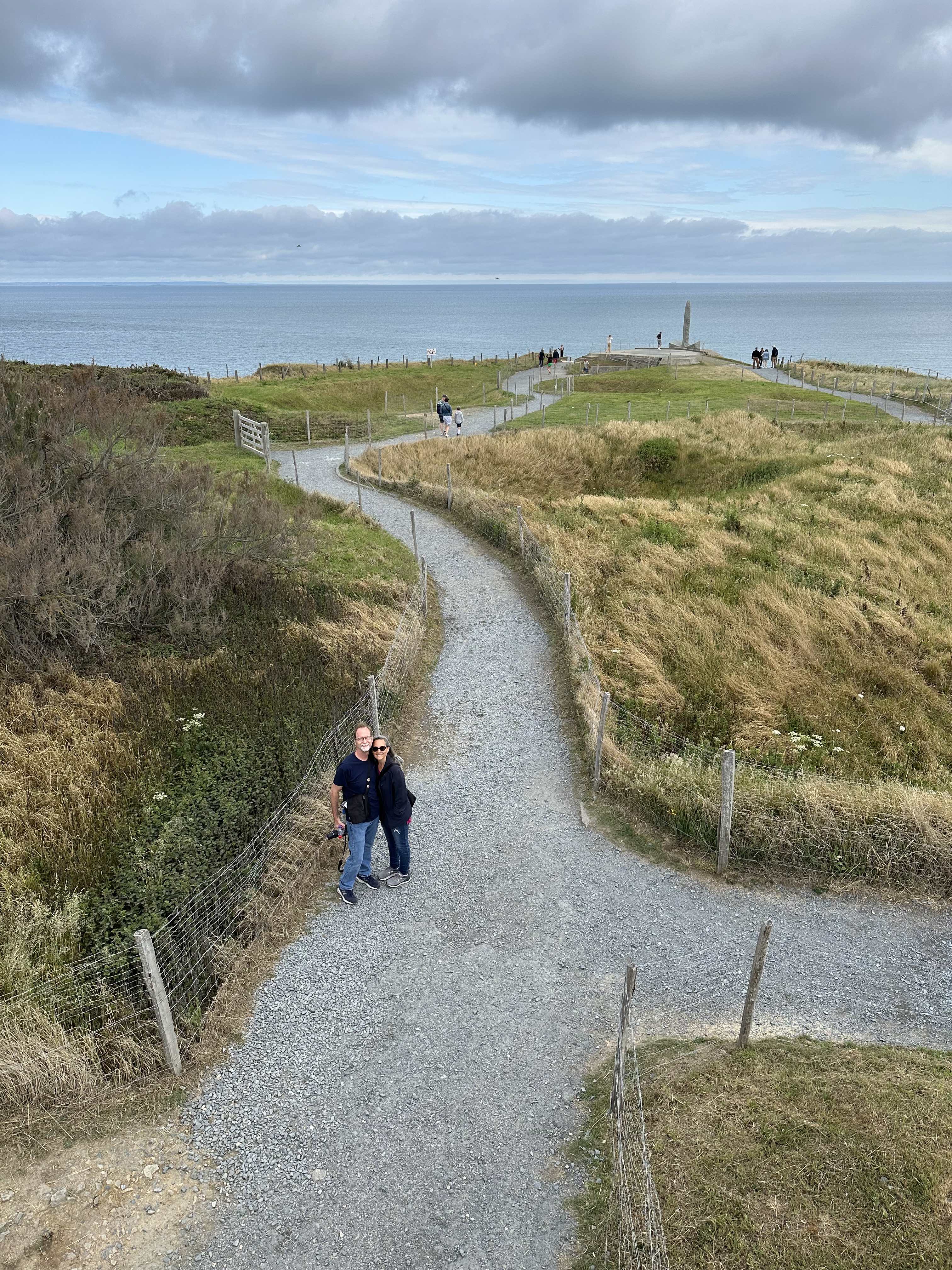
the Ranger’s Monument, and several bomb craters.
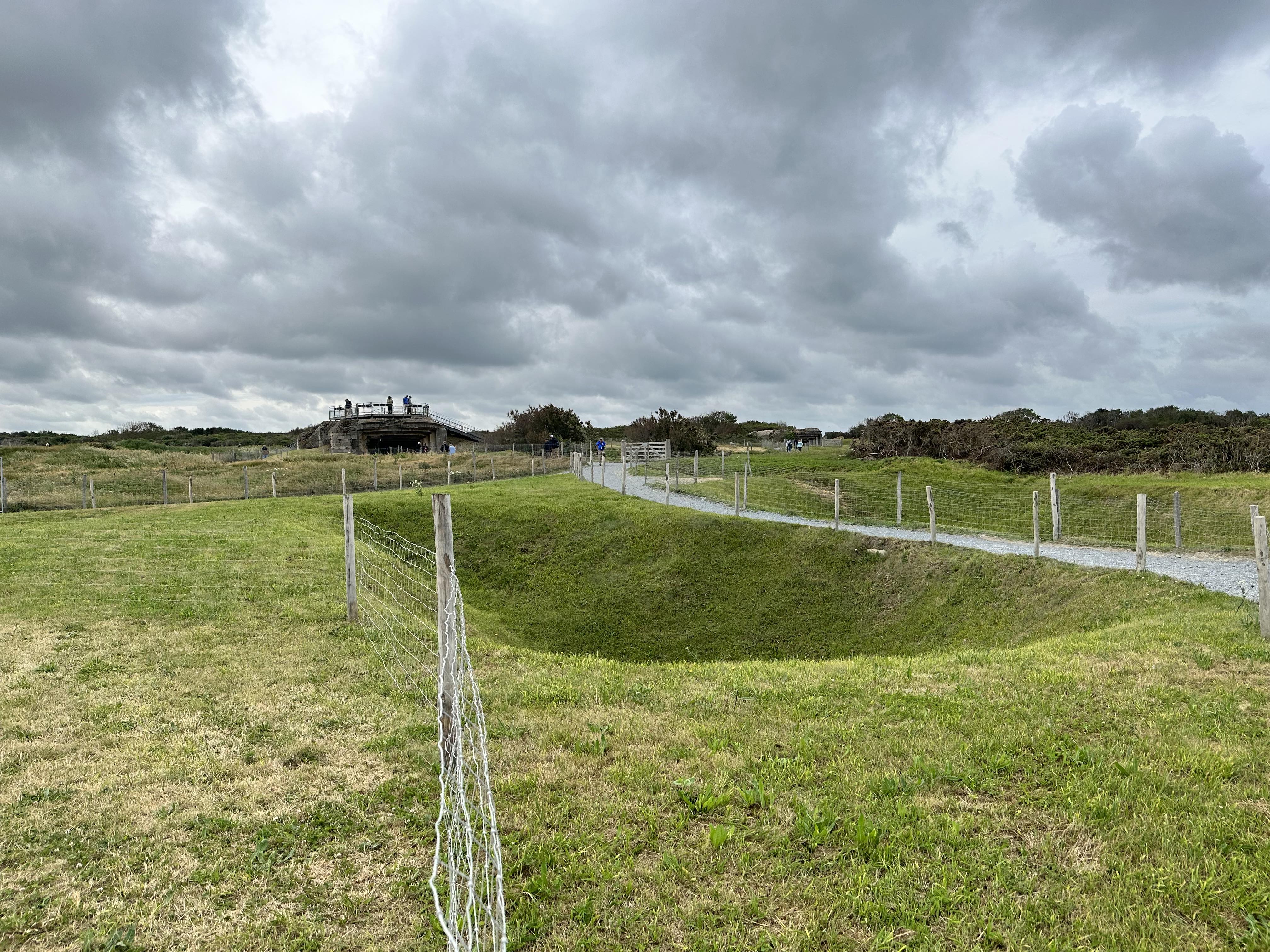
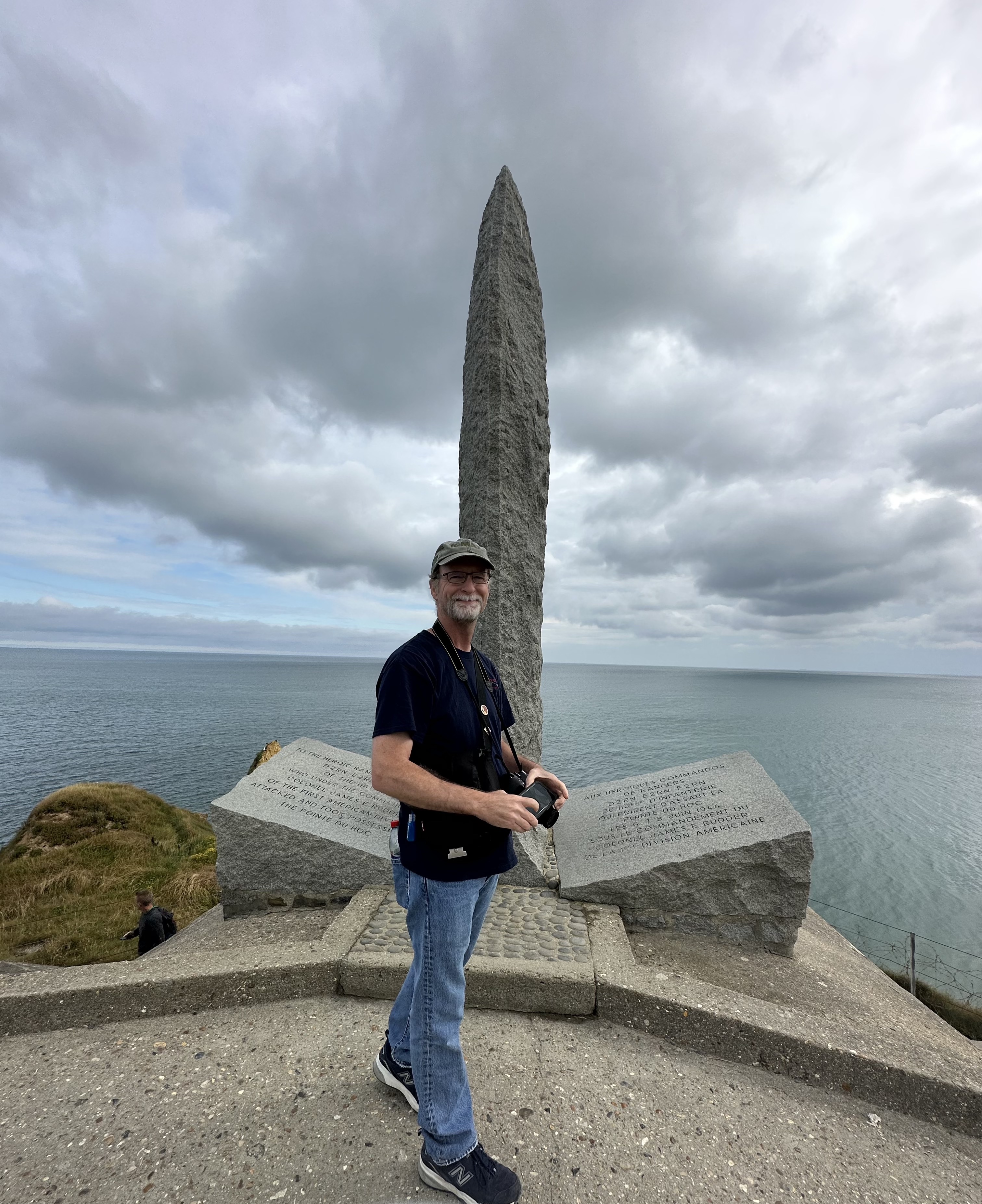
Doug’s face says it all, so I don’t have to…
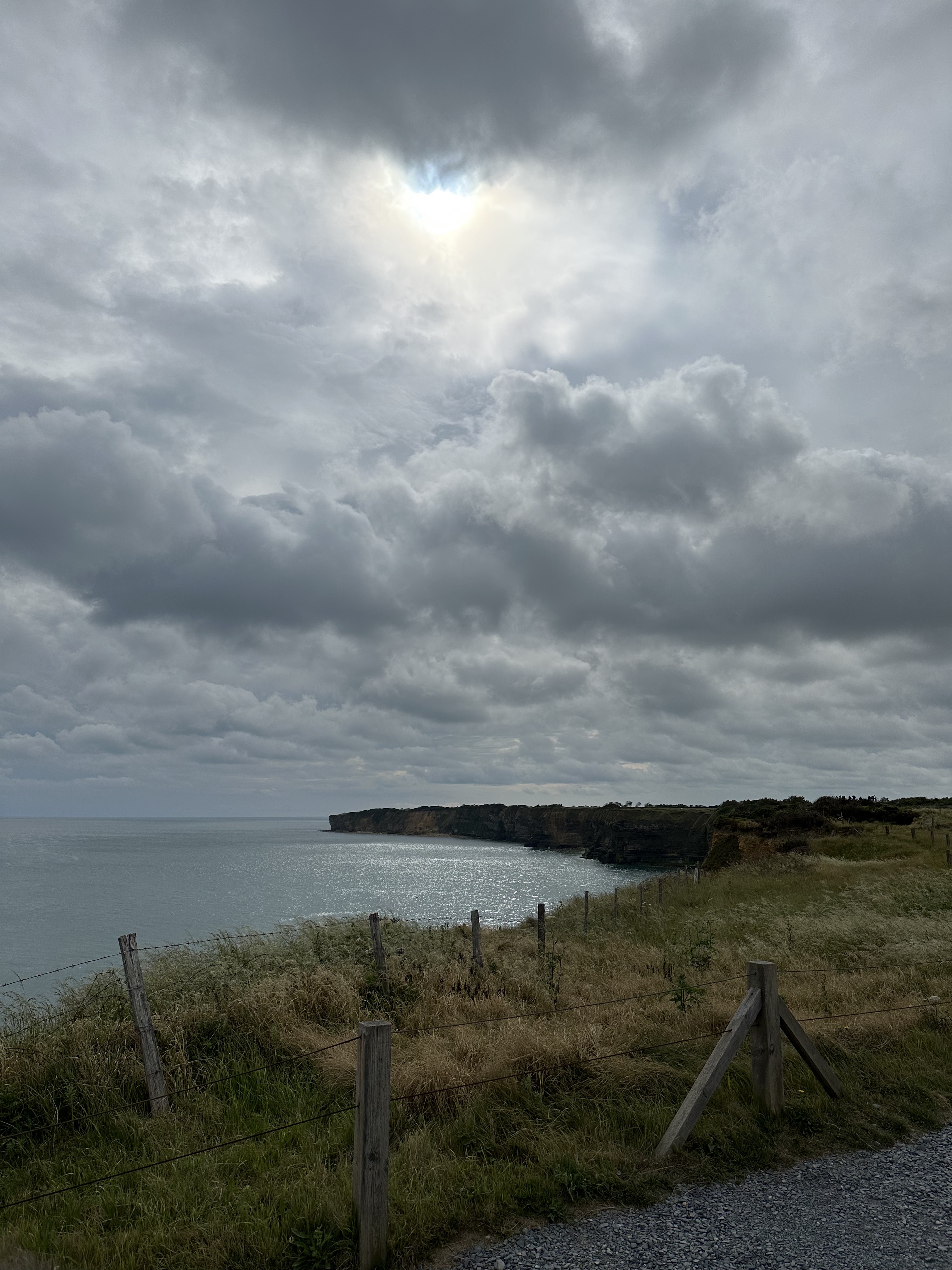
While a bright sun would have been nice for photos, the steel gray clouds and looming threat of rain were a far better match for the heaviness we felt while visiting Pointe du Hoc.
Below: Some of the remaining fortifications; Doug and I doing our best Ronald and Nancy impression; Christina inside one of the bunkers.


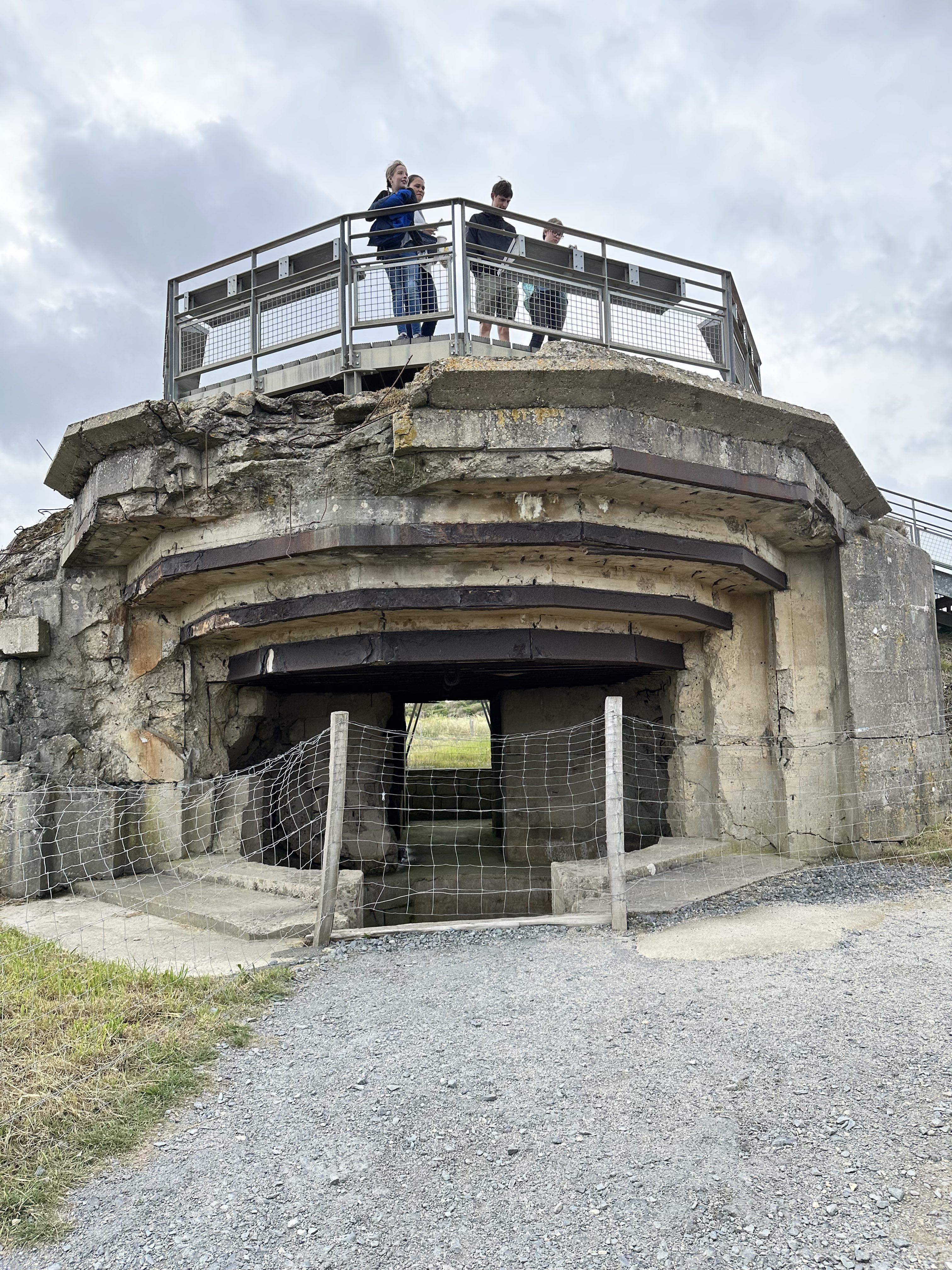
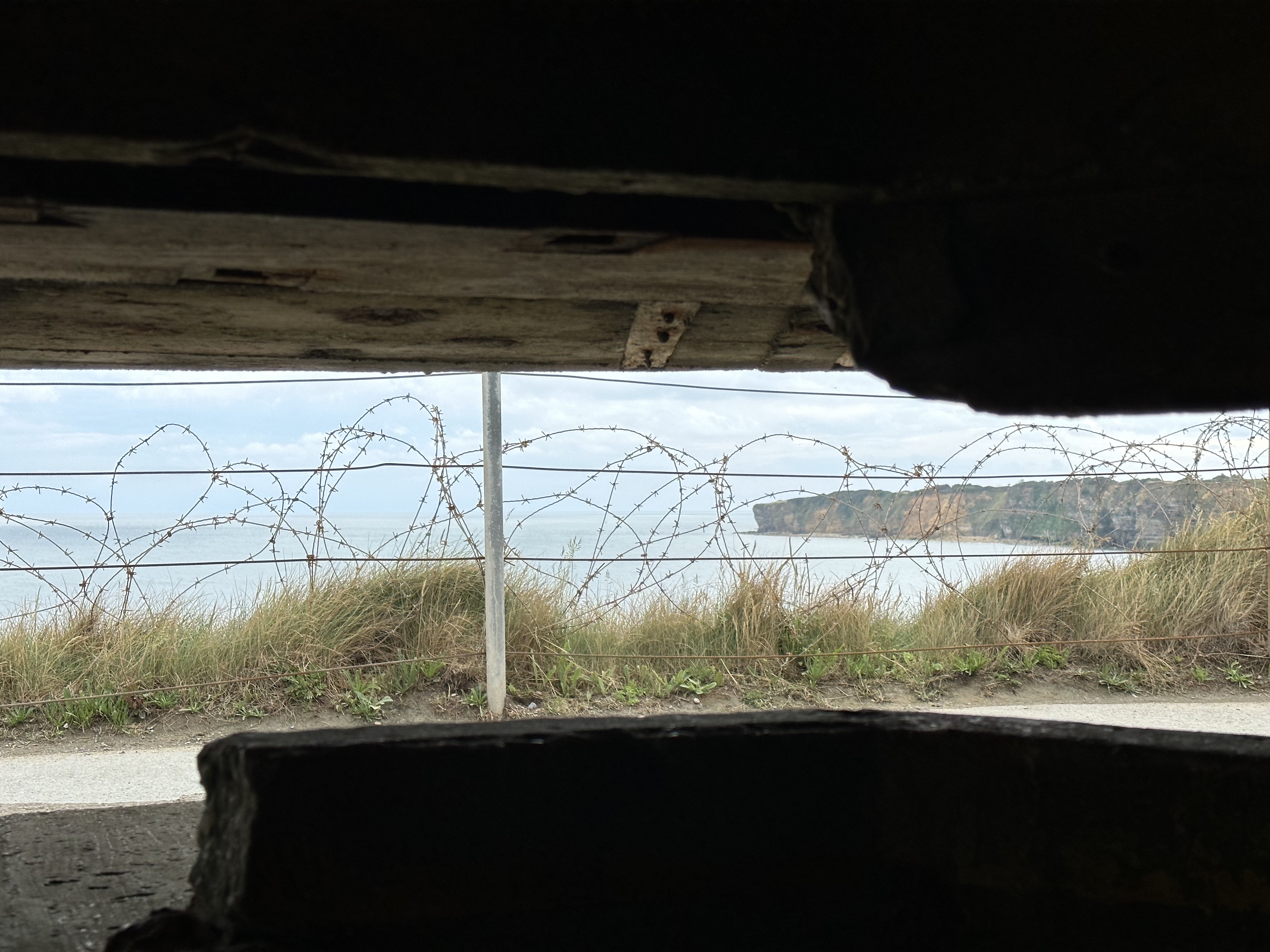
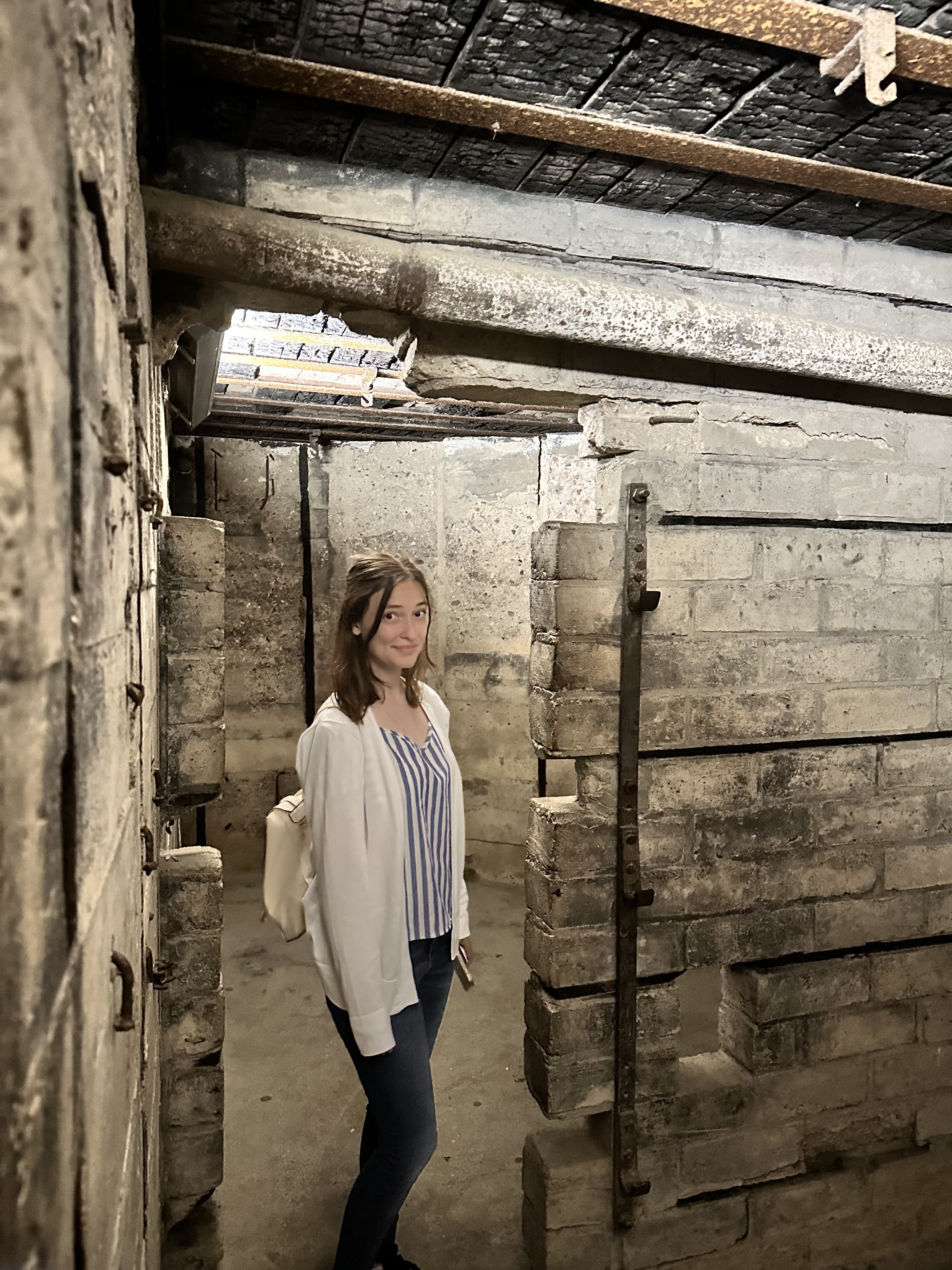

I love the beach. Any beach. I love how it inspires a sense of awe and peace, power and freedom. But here, the crumbling bunkers, rusted barbed wire, and 80 year-old bomb craters, feel haunting against the backdrop of a glistening sea.
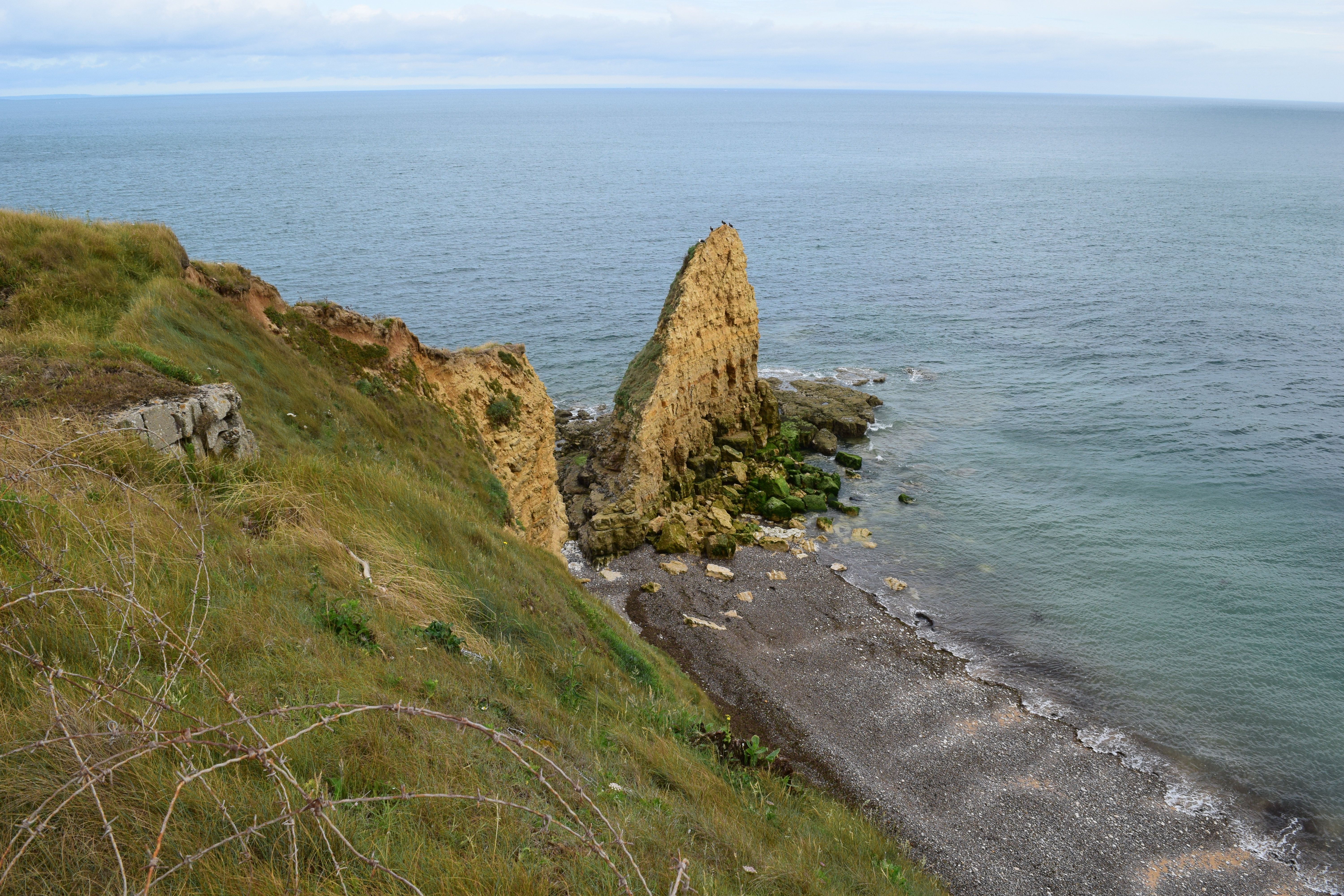

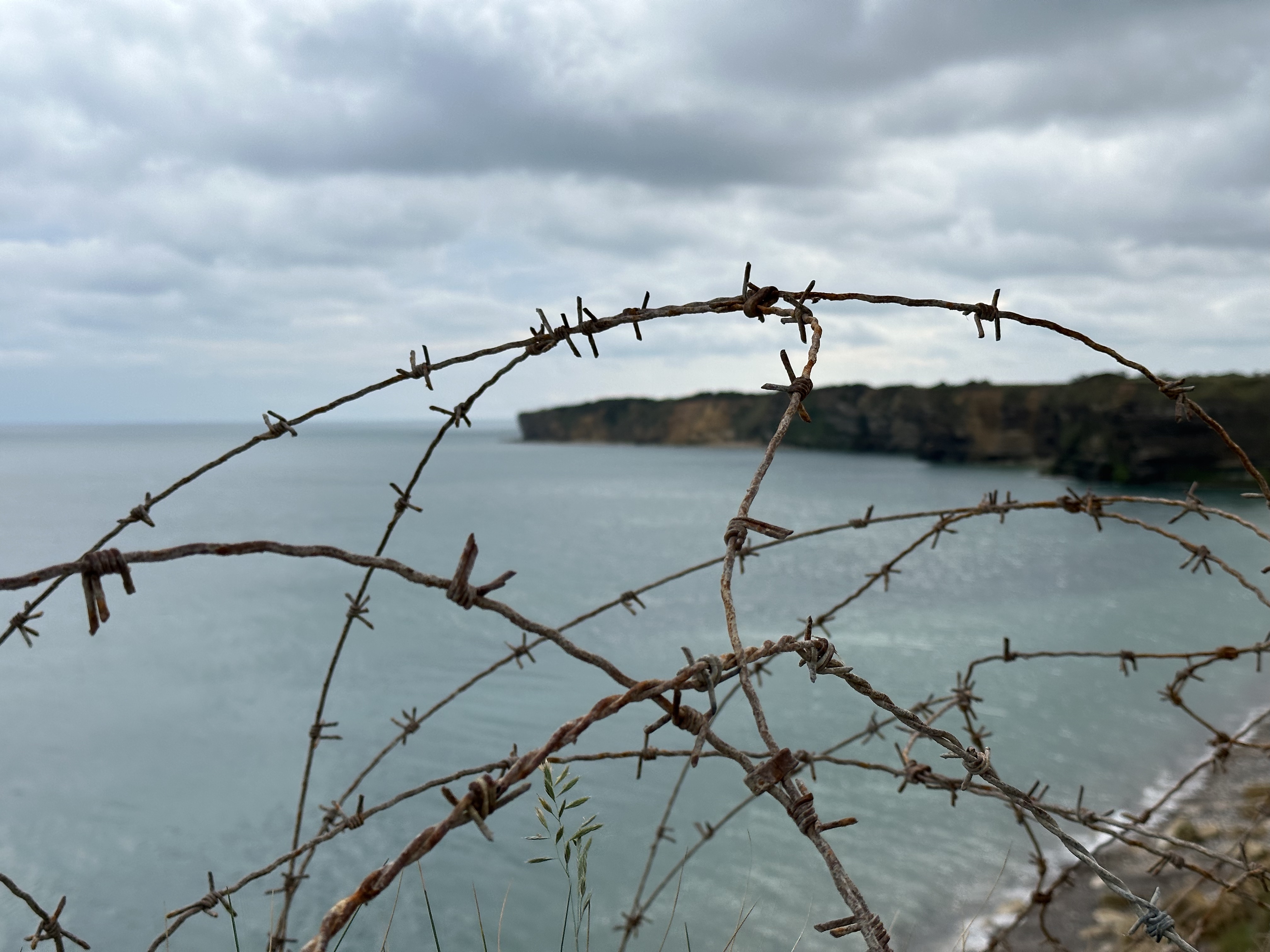
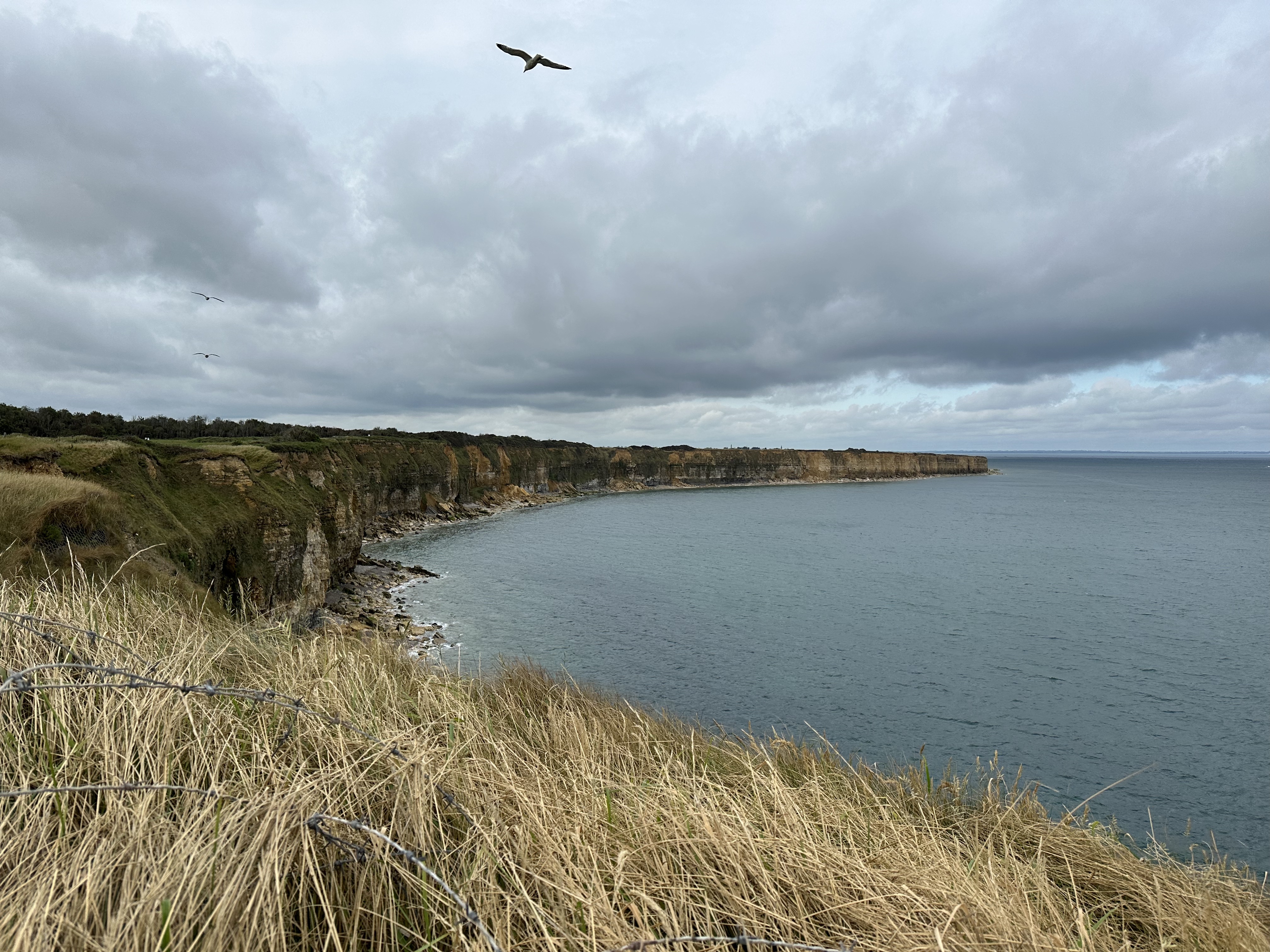
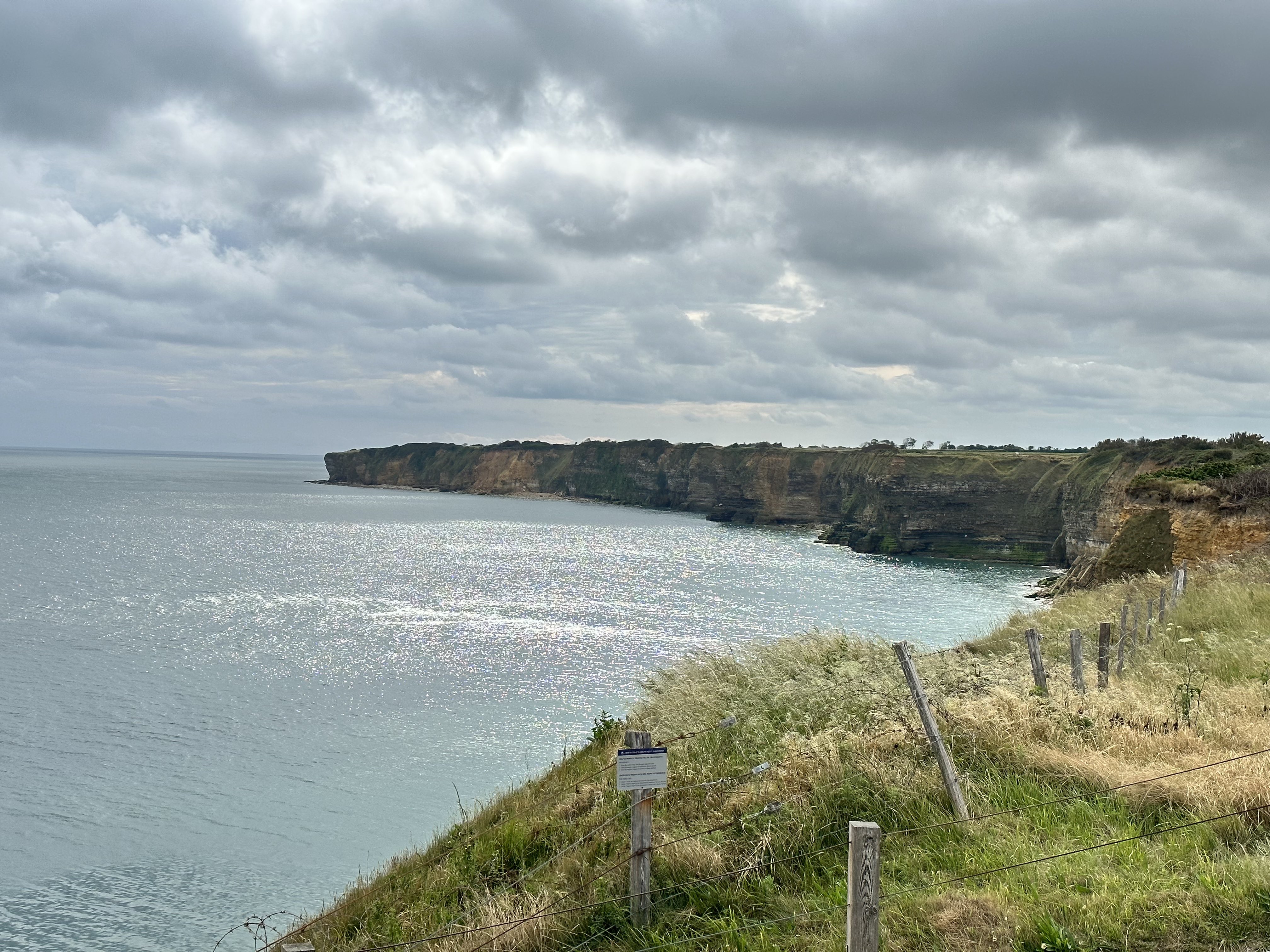
How strange that in a world so beautiful there exists such capacity for evil. How terrifying that such evil cuts through the heart of every man and woman.
Omaha Beach
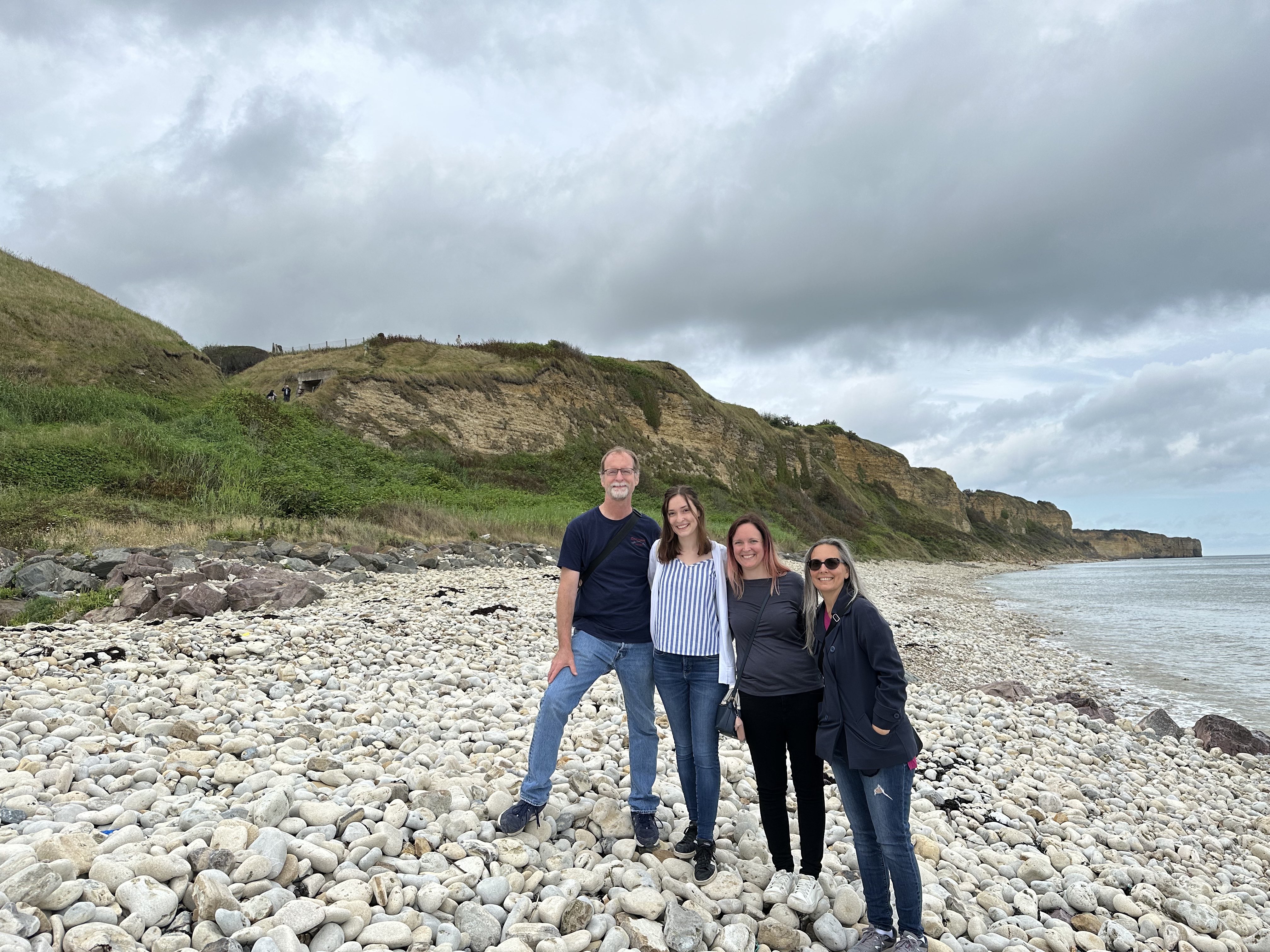
Our next stop was Omaha beach shore where over 34,000 American troops landed on June 6, 1944. There is far too much to share, and most of you probably know more than I ever will, but here are a few things we found interesting:
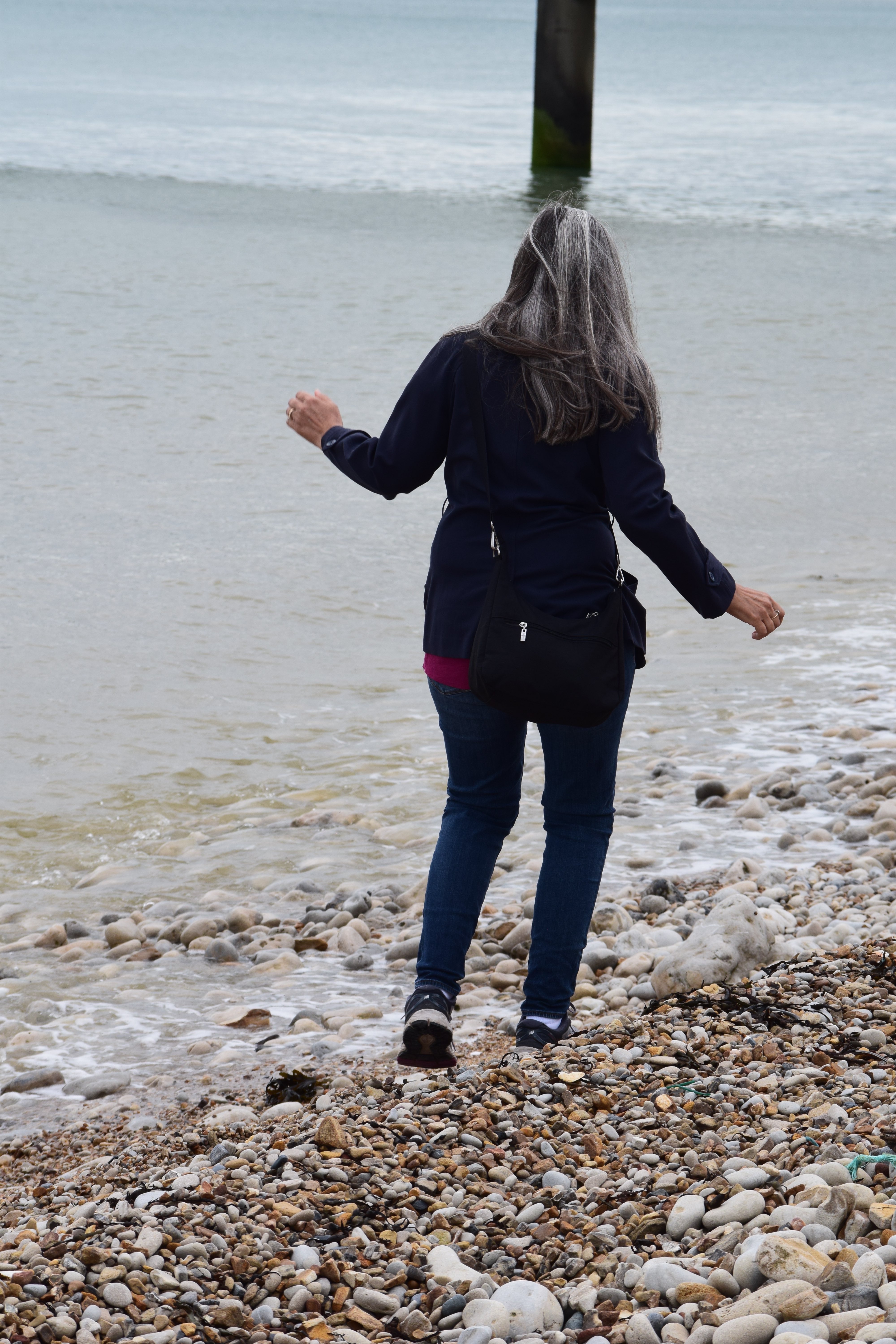
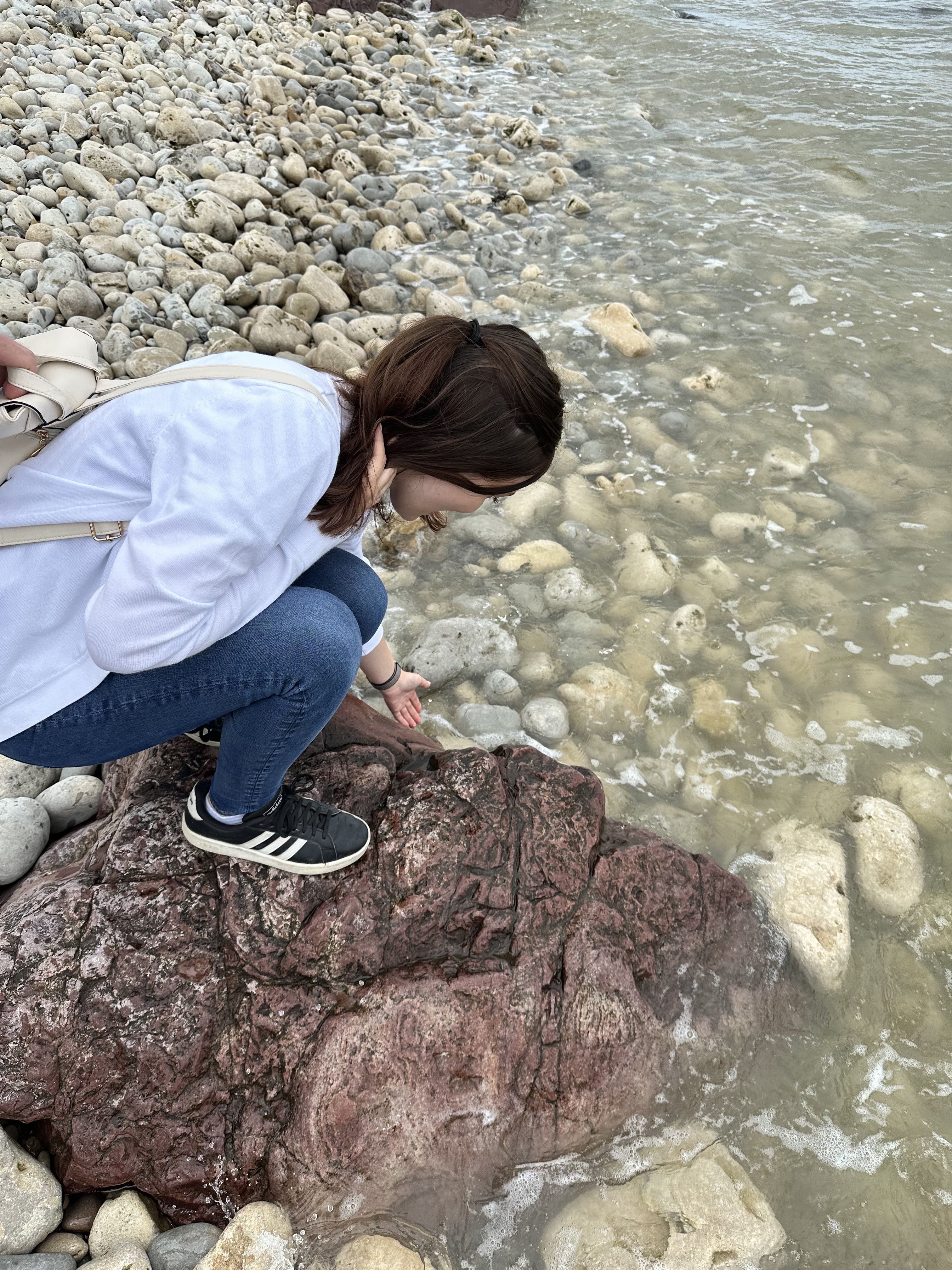
- Omaha and the other D-Day beaches, were chosen in part because they are some of the sandier beaches on the French coast. In previous attempts to land on rocky shores, like those we encountered in Etretat, the unstable ground proved far more difficult than expected. During our tour, the western section of Omaha Beach was covered in big round stones. According to Camille, sometimes, for no apparent reason, the ocean washes up big rocks and later washes them away; but most of the time Omaha Beach is sandy, like what we encountered later in the day (photos below).
- On D-Day, the coastal waters were riddled with rows and rows of obstacles and mines designed to hang up landing craft or to kill or incapacitate allied troops. The obstacles, part of Hitler’s Atlantic Wall which spanned approximately 2400 miles from Spain to the tip of Norway, included massive anti-tank defenses knows as Belgian Gates, Czech Hedgehogs, and log ramps, plus rolls of barbed wire all intermittently rigged with explosives. You can see photos and descriptions of them here, here, here, and here.
- War Sand: due to the breakdown of shrapnel, Normandy beach sand is approximately 4% metal thus earning it the special distinction of “war sand.”
I think what struck me most during this part of the tour was the realization that all those young men stepped into the water knowing that their primary purpose was to eat bullets. Allied forces had to wear down German defenses by forcing them to use up all their ammunition. The only way to do that was to keep giving them bodies to shoot at. Those D-Day soldiers who stormed the beaches of Normandy, especially those in the first waves, literally laid down their lives so that the men coming behind them could fight on.
I suppose in some way I already knew that, but standing there where it happened, watching the waves roll in, looking up at the cliffs, expanded my perspective in a way no text book or Hollywood film ever could.

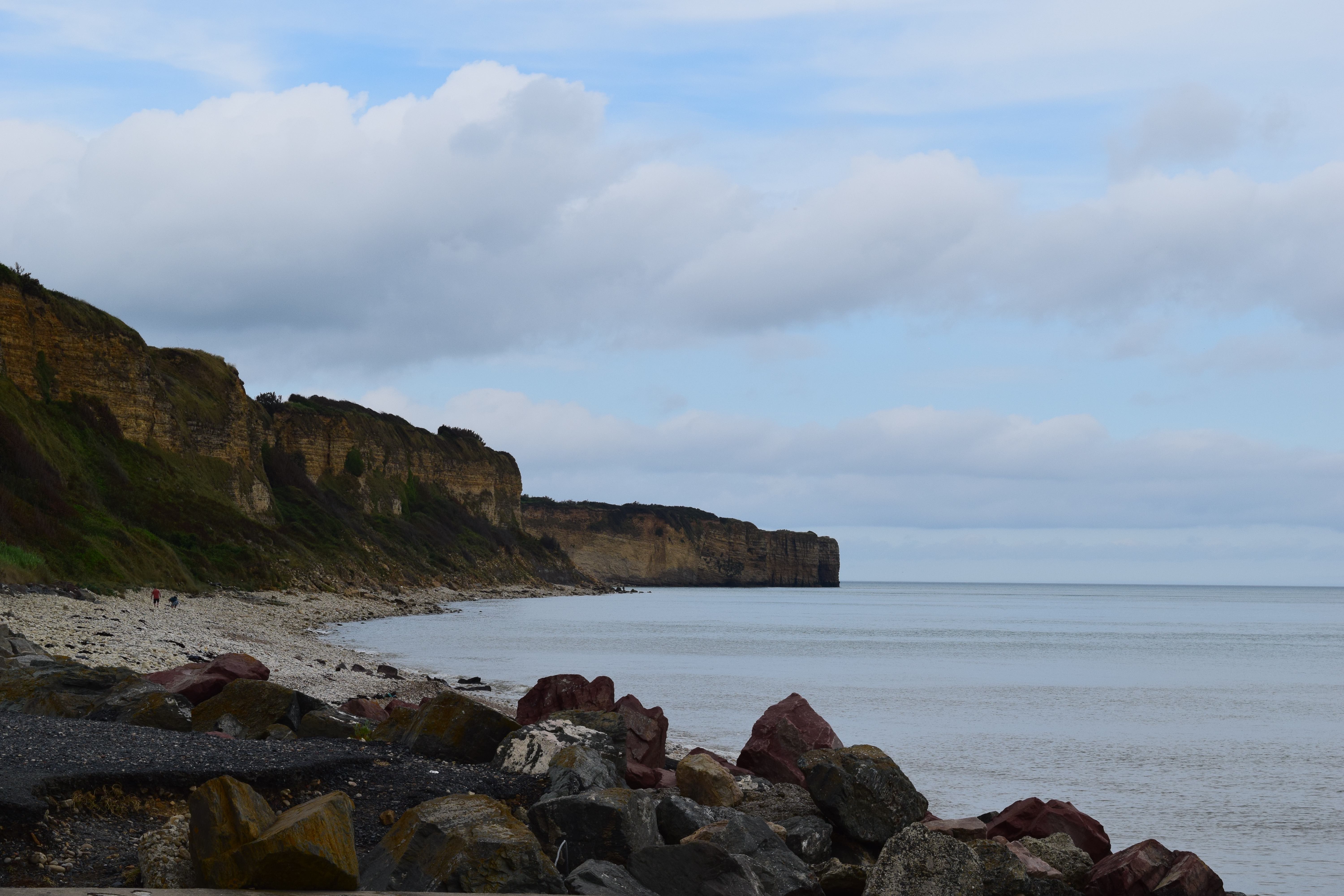
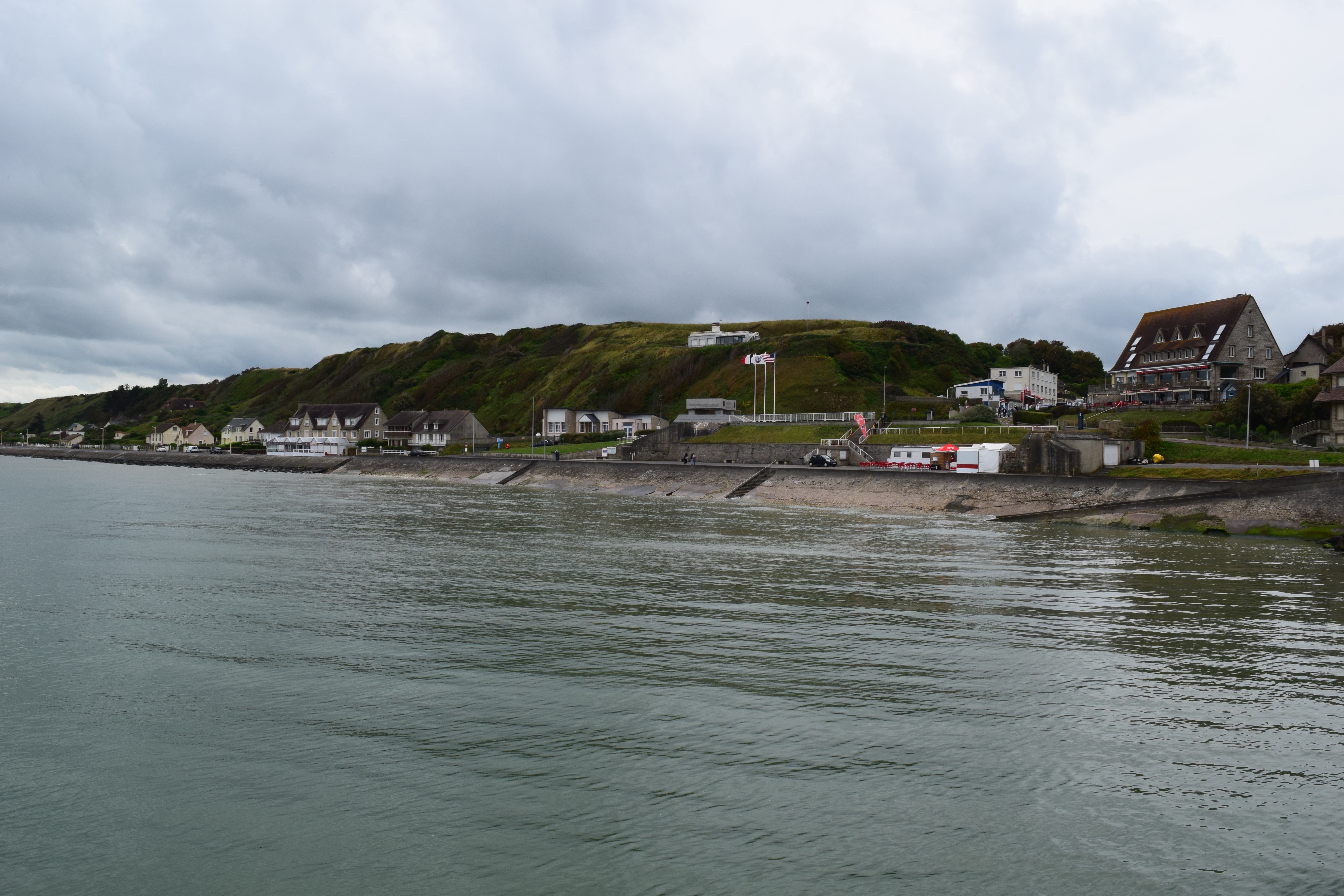
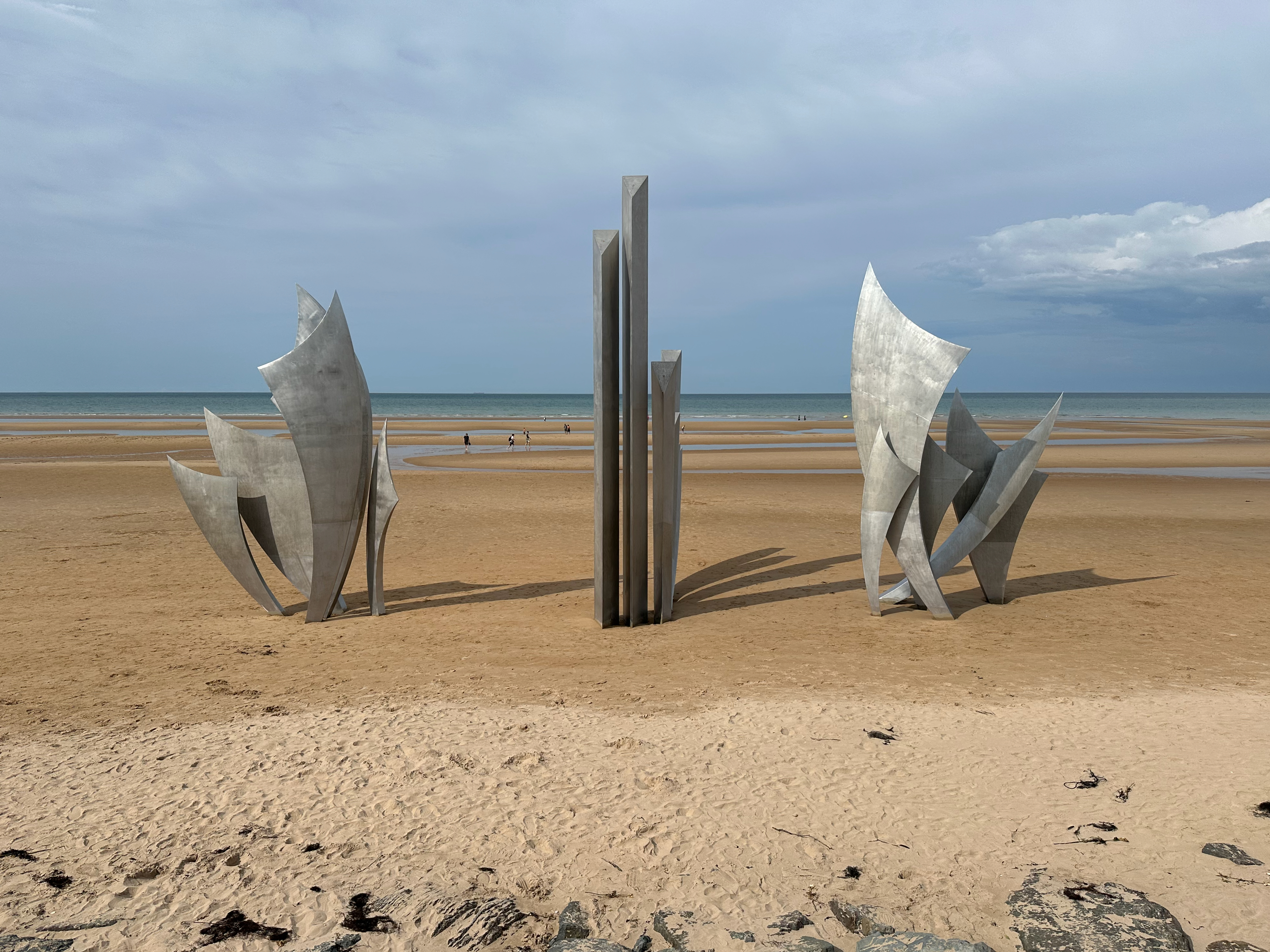
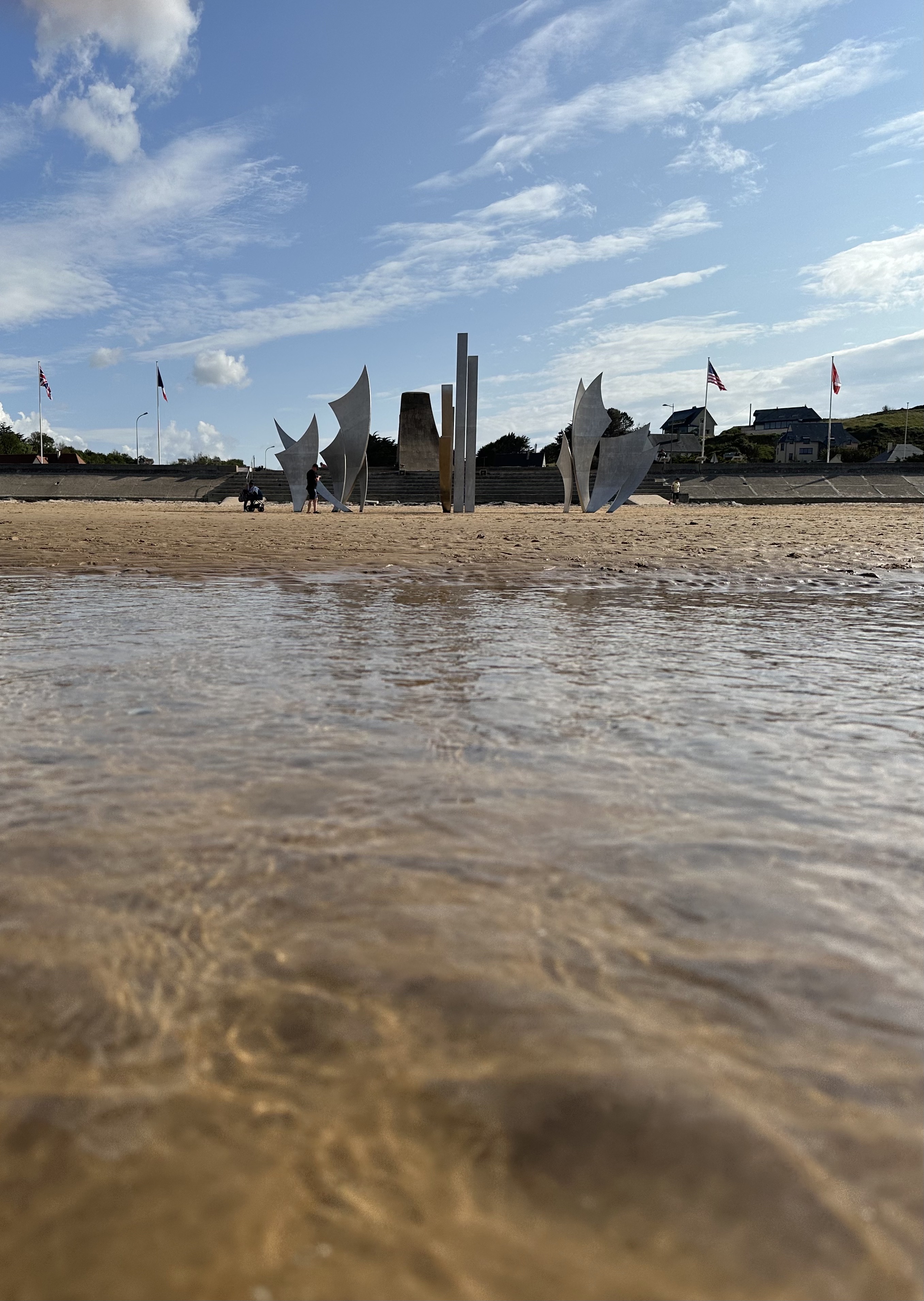
In the early evening, while Jacquelyn rested at the Airbnb, Doug, Christina and I went back to Omaha Beach. We wanted to visit at low tide and see the Les Braves Memorial Monument, which is nearer to the center of the beach than the area we visited in the morning.
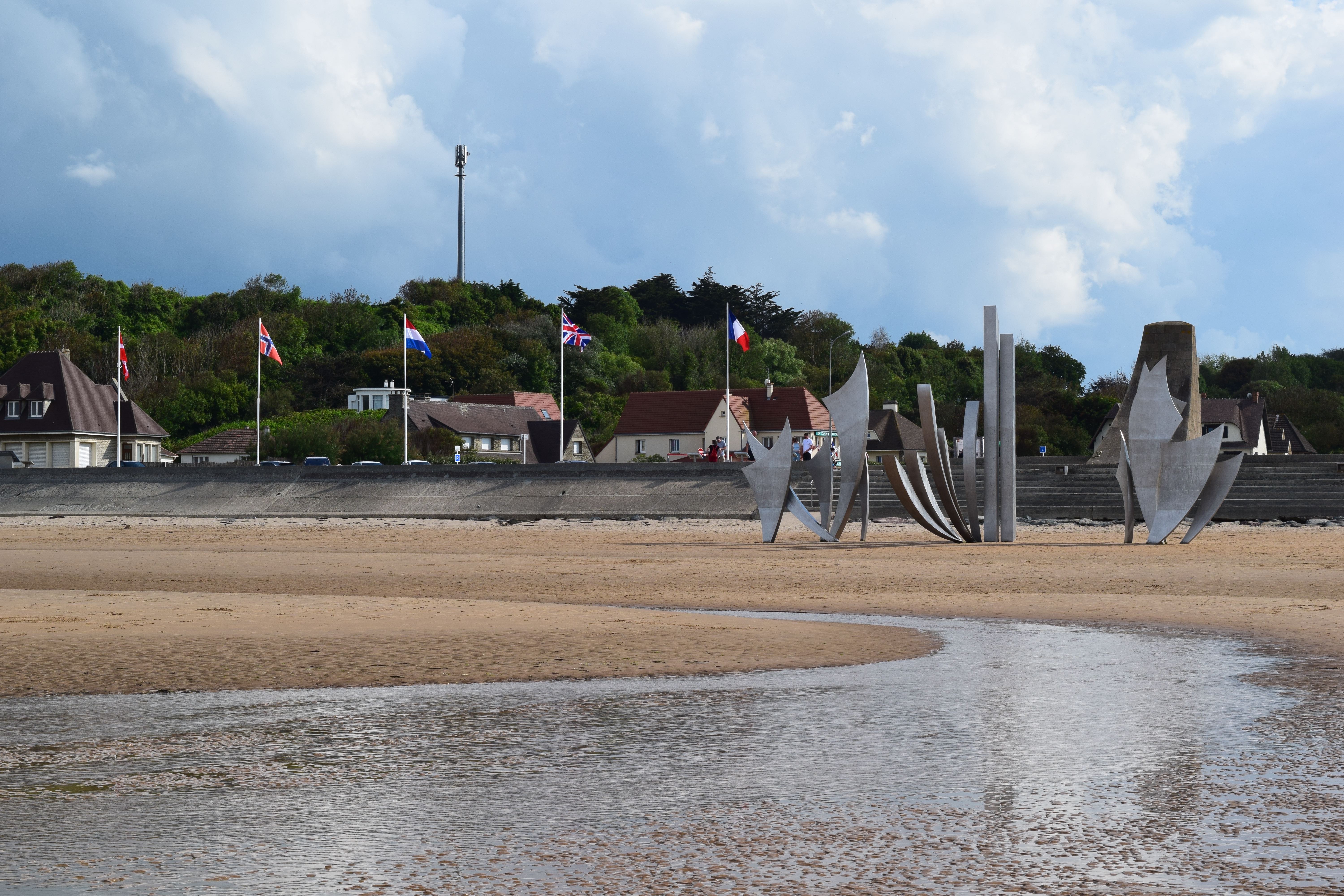
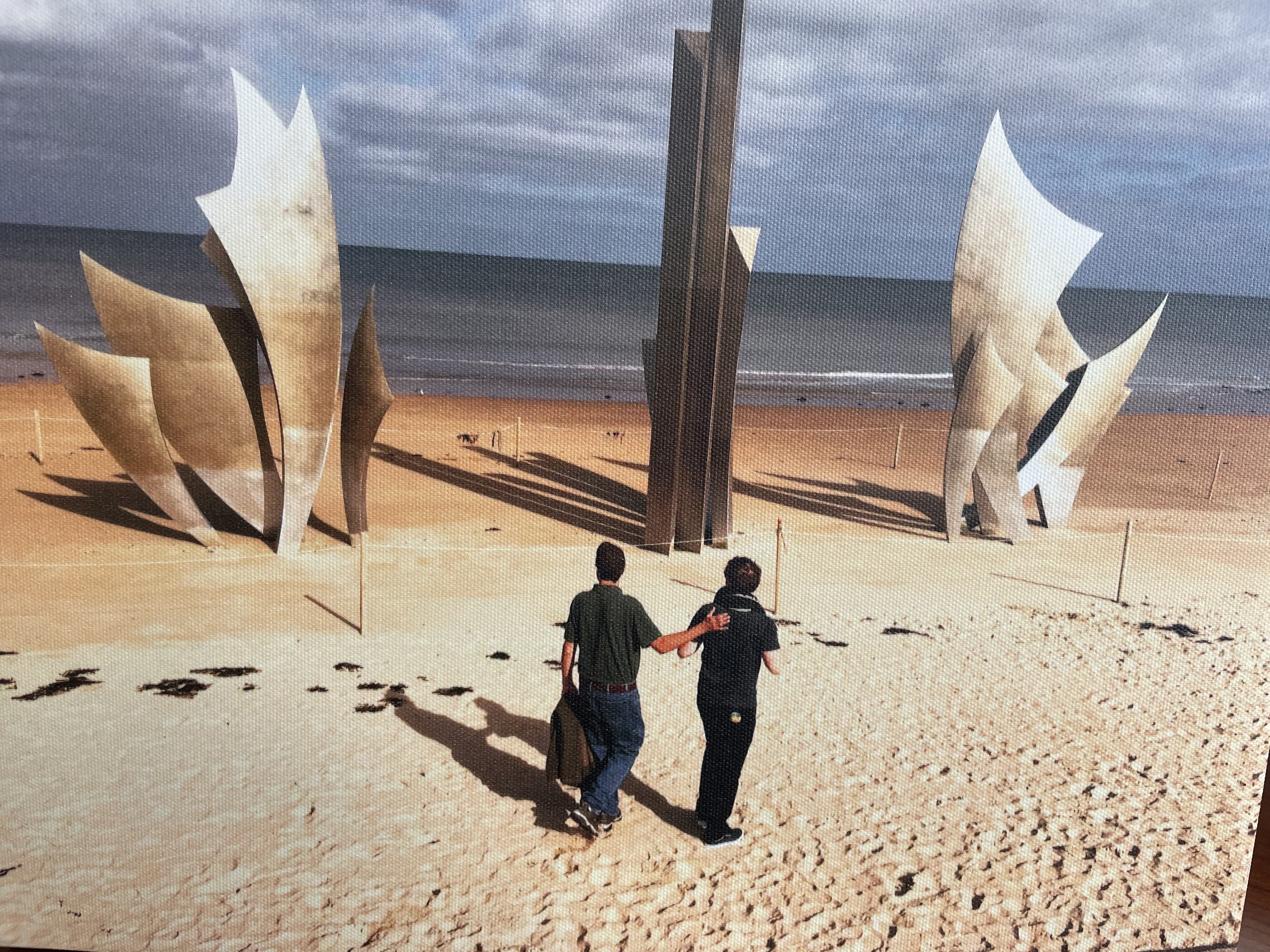
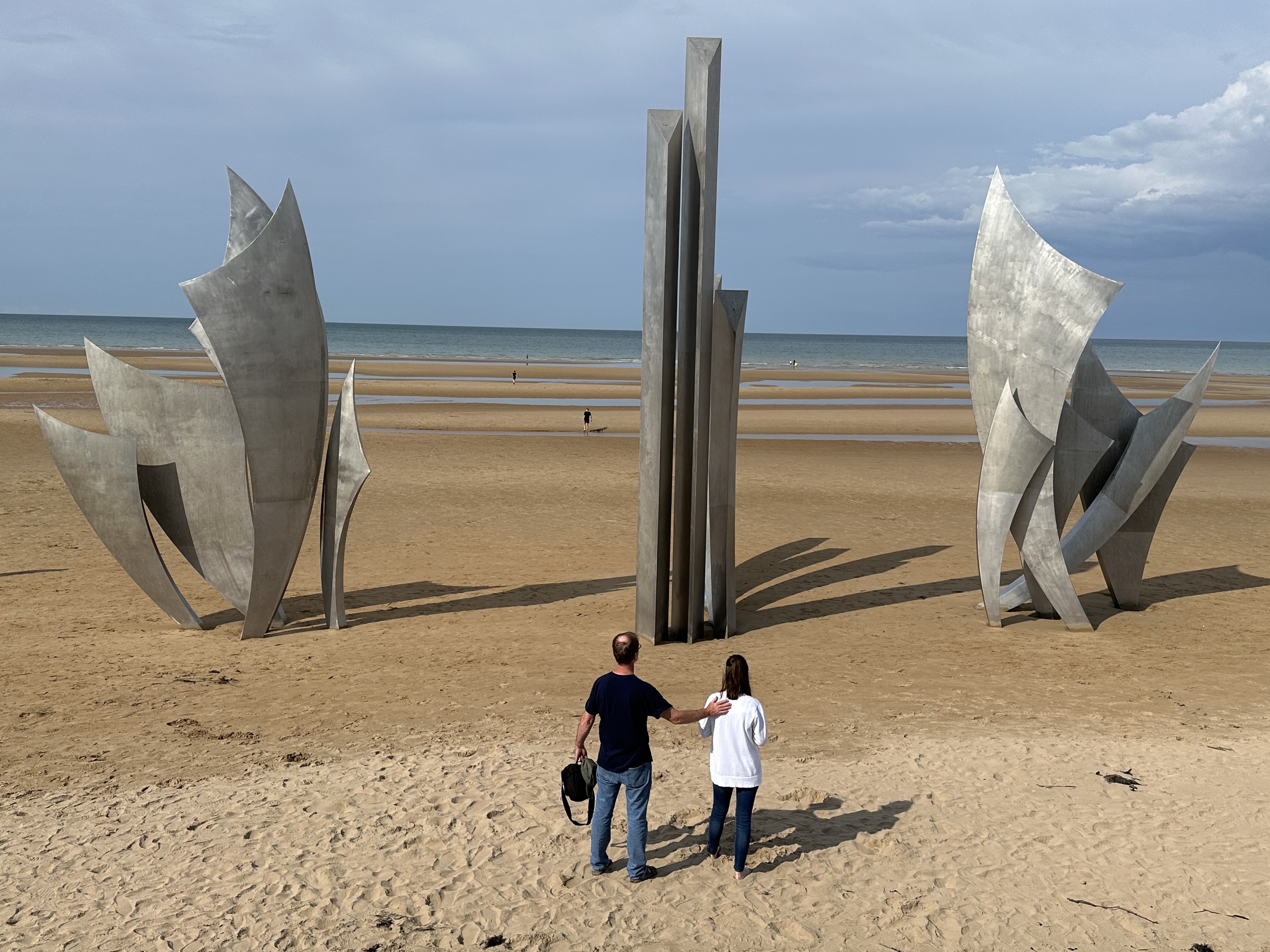
Doug’s colleague Jim, who I mentioned earlier, has a photo in his office of himself and his son at the Les Braves Memorial. In May, Doug commented on the photo and Jim said “If you ever get the chance, you really need to go to the beaches of Normandy.” At that point, Jim didn’t know we already had a trip planned. So Doug said “Jim, since you’ve made the recommendation, I will go in the next 30 days and I will have a photo taken right there in front of the memorial at Omaha Beach.”
He kept his promise!
On the left is the photo of Jim with his son Jamie (used with permission) and on the right are Doug and Christina recreating the shot:
The day was very meaningful to Christina, as well. Ever since taking U.S. History with her favorite high school teacher Mr. Mitchell, she has wanted to visit Normandy. In fact, she was texting him updates while we were there!
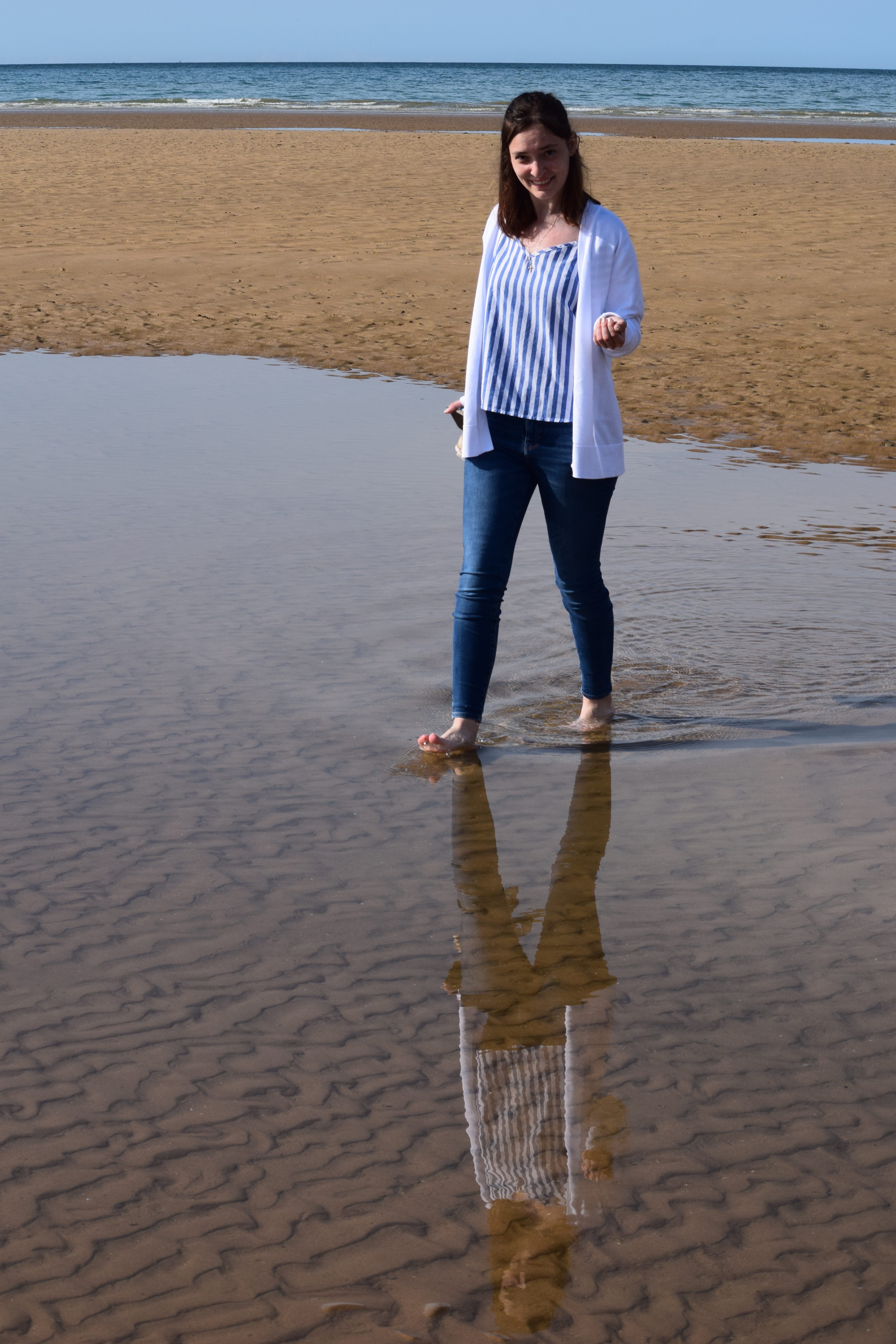
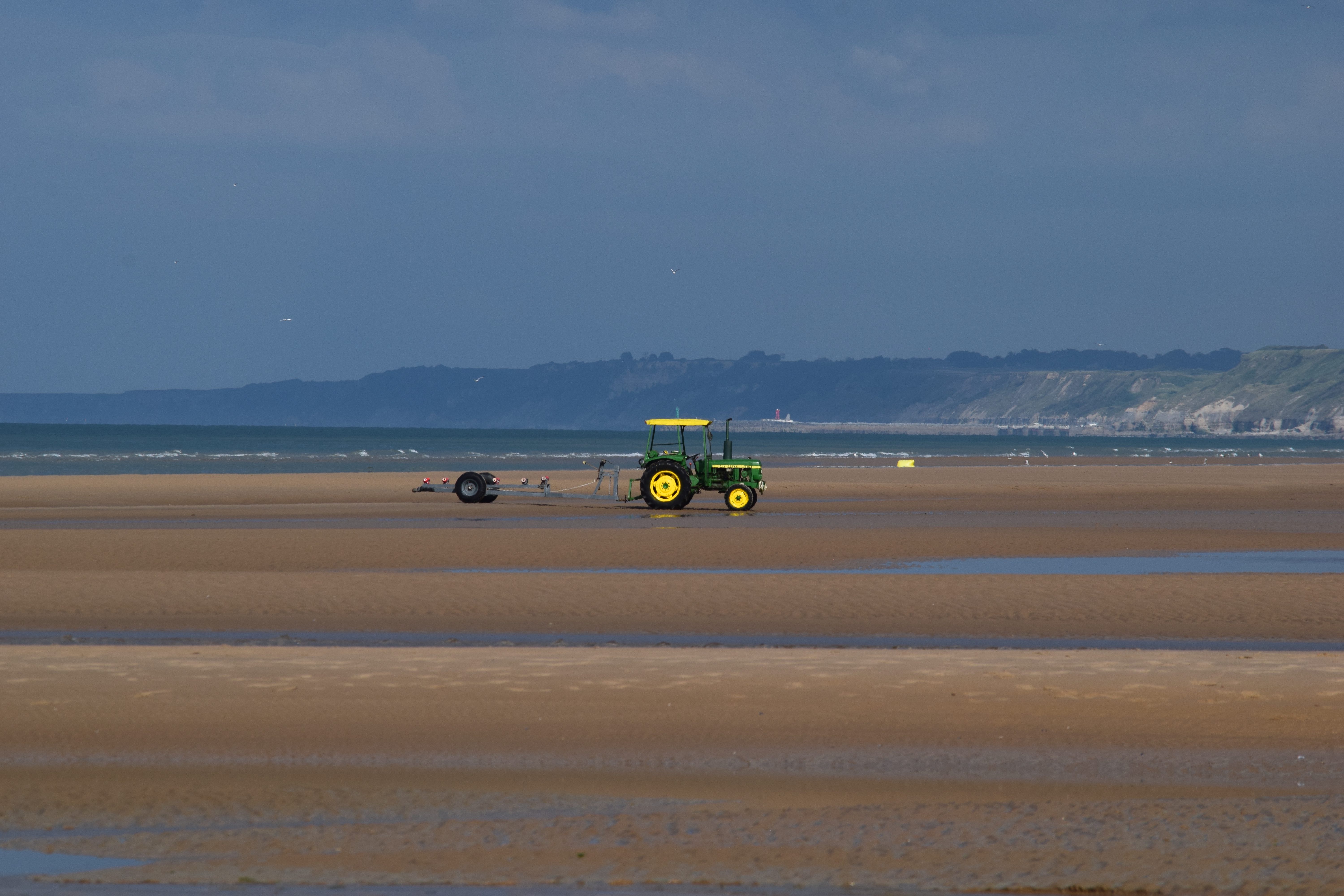
Visiting at low tide allowed us to walk way out onto the broad and flat beach. The sun was shining. People were fishing. Children were playing and laughing. Couples were strolling hand in hand. There were even tractors towing boats out and back across the sands!
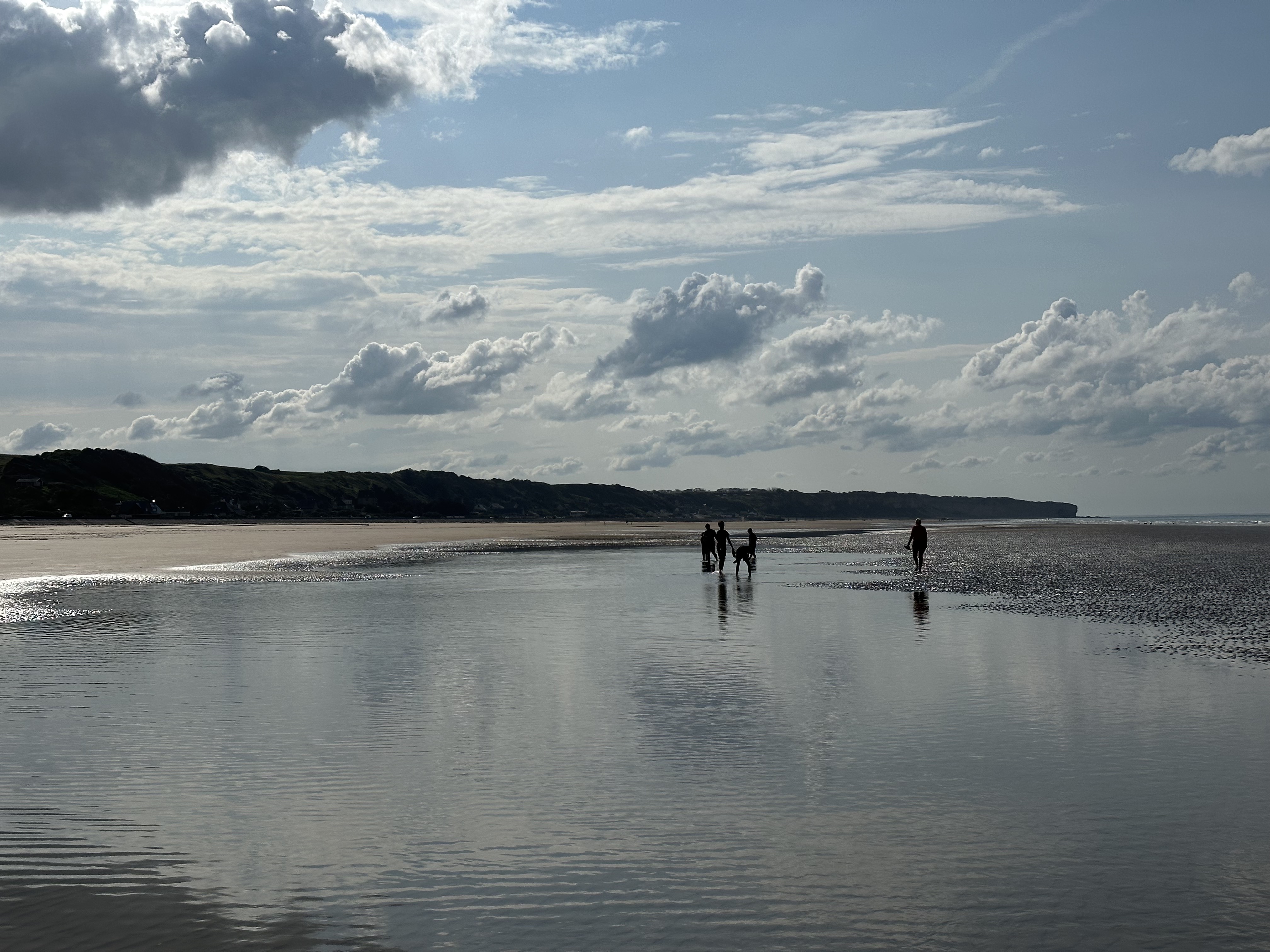
In the present, surrounded by such beauty and life, I felt a deep sense of peace, which stood in stark contrast to the chaos, horror, and death that happened in that very spot 80 years ago.
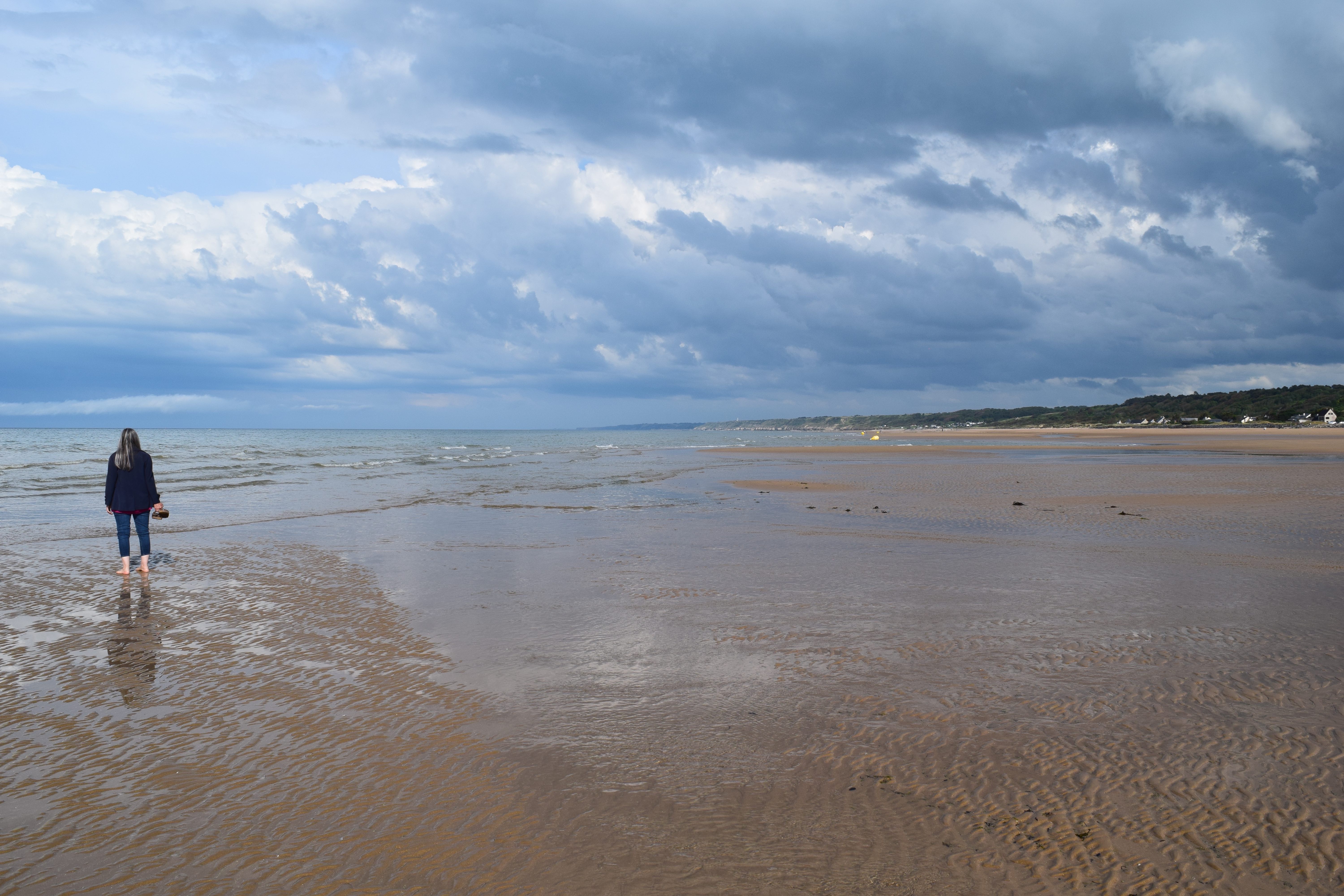
For a brief moment, it was as if I was watching two films playing at the same time – one overlaying the other. And it wasn’t ‘then and now’ or ‘us and them’ or ‘peace and chaos’ or ‘death and life.’ It was, instead, the mysterious tether that binds us – all of us, everything – across time and space. It was everything. Everywhere. All at once.
Normandy American Cemetery
YES, there’s more!!! The final stop of our tour was the Normandy American Cemetery which rests on a hill overlooking Omaha Beach. You can watch a 360° tour and aerial video of the cemetery here.

We learned from Camille that the cemetery was intentionally shaped like a cross with the long part of the cross running east to west along the coast line:

The memorial, located at the eastern end of the cemetery (or the top of the cross), is designed to tell the story of D-Day. If you stand before the reflecting pool, you can imagine it representing the sea:
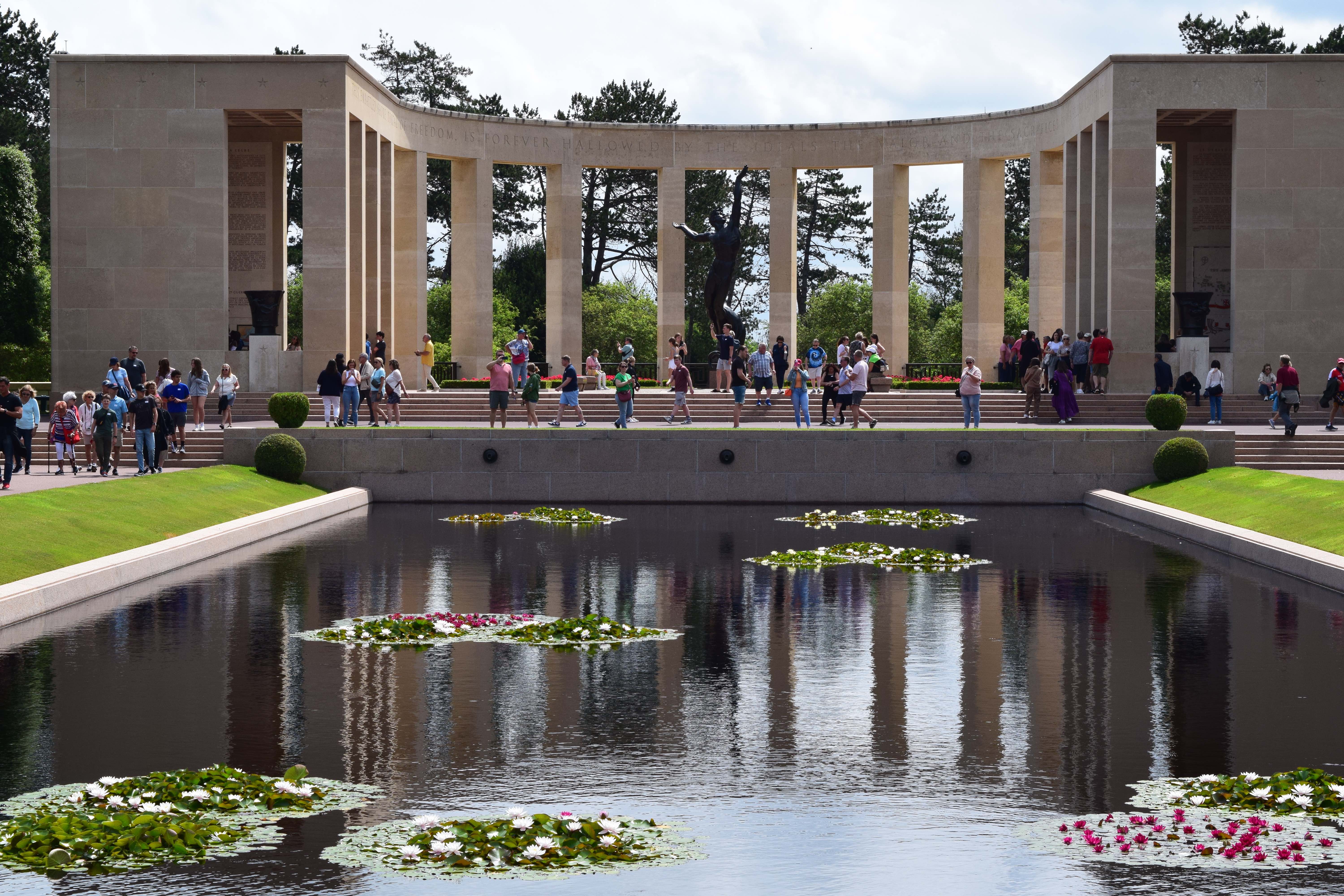
Then, as you walk up onto the platform, you find yourself standing on stones taken from the beaches of Normandy. Rising up from those stones, is a bronze statue of a young man reaching for the heavens, symbolizing the spirit of the American youth who fought there. The inscription at the base of the statue reads “MINE EYES HAVE SEEN THE GLORY OF THE COMING OF THE LORD” from the Battle Hymn of the Republic:

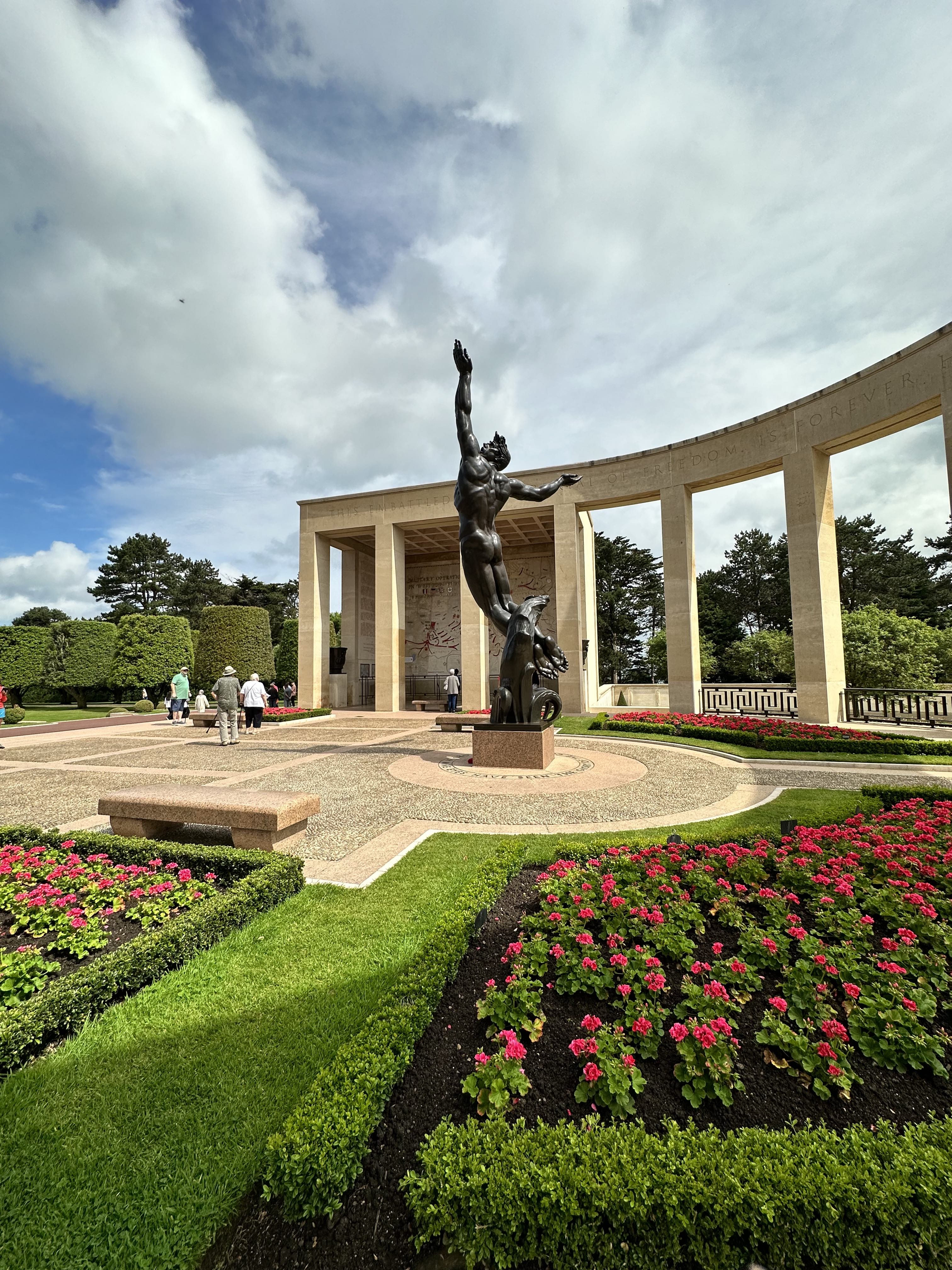
Walking past the colonnade that surrounds the statue, you enter a semi-circular garden which represents the French lands beyond the beaches, that the Allied forces liberated from the German army. And finally, compassing the garden in a semicircle are the Walls of the Missing.


The Walls of the Missing includes the names of nearly 1600 missing soldiers. As recently as 2018, the remains of a missing soldier were discovered, identified and then laid to rest in the cemetery in 2022. (I only have video of the Walls of the Missing so I’ll have to post those to Facebook.)
Then we went and stood on the memorial overlooking the graves of nearly 9400 American soldiers who died during the D-Day landings or ensuing operations. Those numbers include 45 pairs of brothers, a father and son, and four women.

Two of the women buried at NAC were from Connecticut. Sgt. Dolores Browne and PFC Mary J. Barlow were both members of the first all-female, all African-American battalion to serve overseas. They were part of the 6888th Central Postal Directory Battalion and died as the result of a Jeep accident.
We learned that families of the deceased soldiers were (and still are when remains are discovered) given the option to have their loved one’s body sent home to the USA for burial. However, most families have chosen for them to be buried in the Normandy American Cemetery. This surprised me but Camille said it’s because most of the soldiers were young and had no descendents, no one who would be around to care for their graves. This way, families say, their loved ones can remain with their friends and will always have someone to care for their resting place.
As I stood there listening to Camille, looking out over the thousands of white crosses and Stars of David, I couldn’t help but feel the weight of the sacrifice, of what was lost, of the immeasurable debt we can never repay. Oh how high the cost of freedom. Oh how humbling to know our lives were bought with the blood of so many who’d barely begun to live.
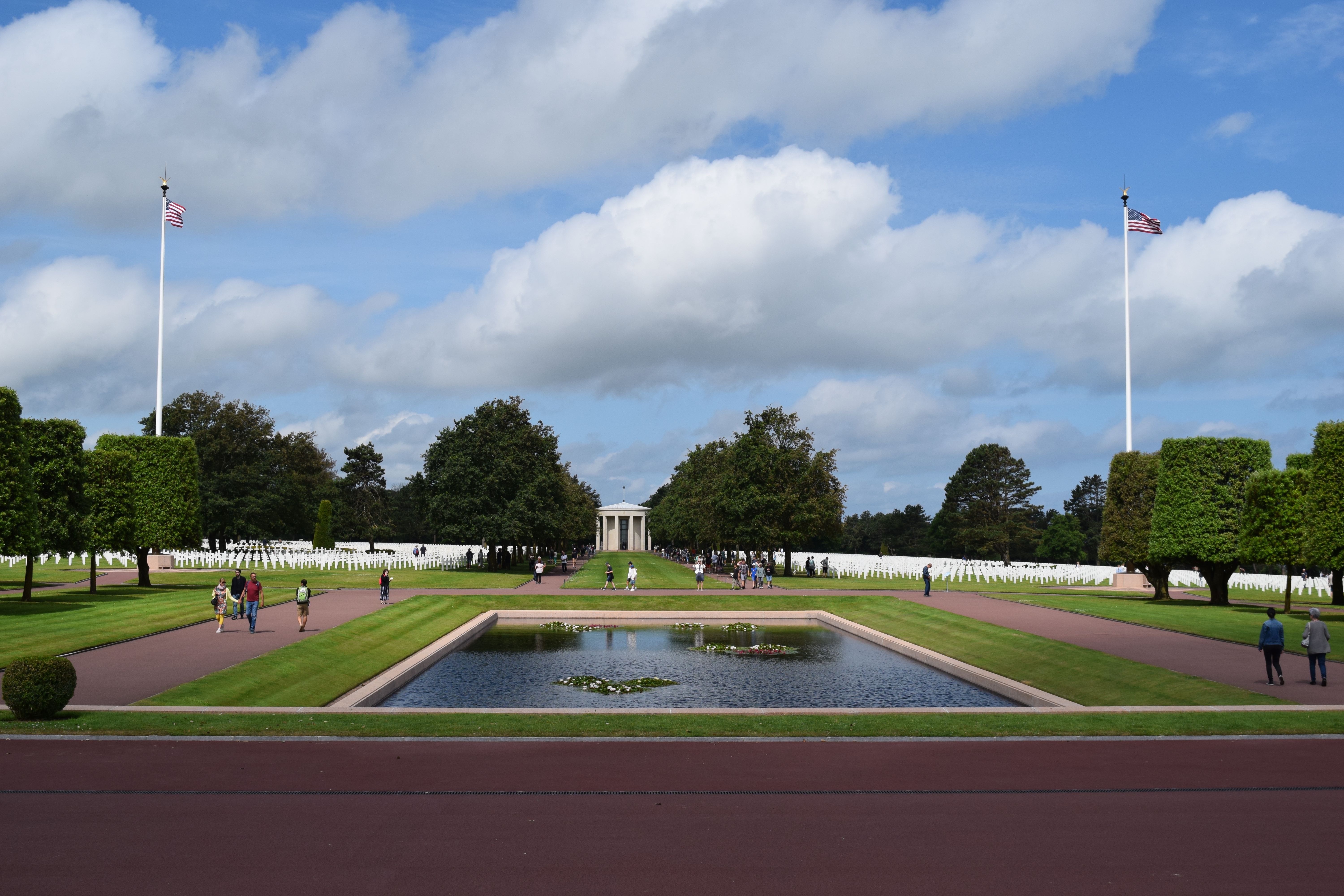
I’d held up pretty well until that point. No breakdowns. No tears. But then Camille swept her arm out over the graves that stretch out toward the sea and said, “You’ll notice that the graves are all facing west, facing home.”
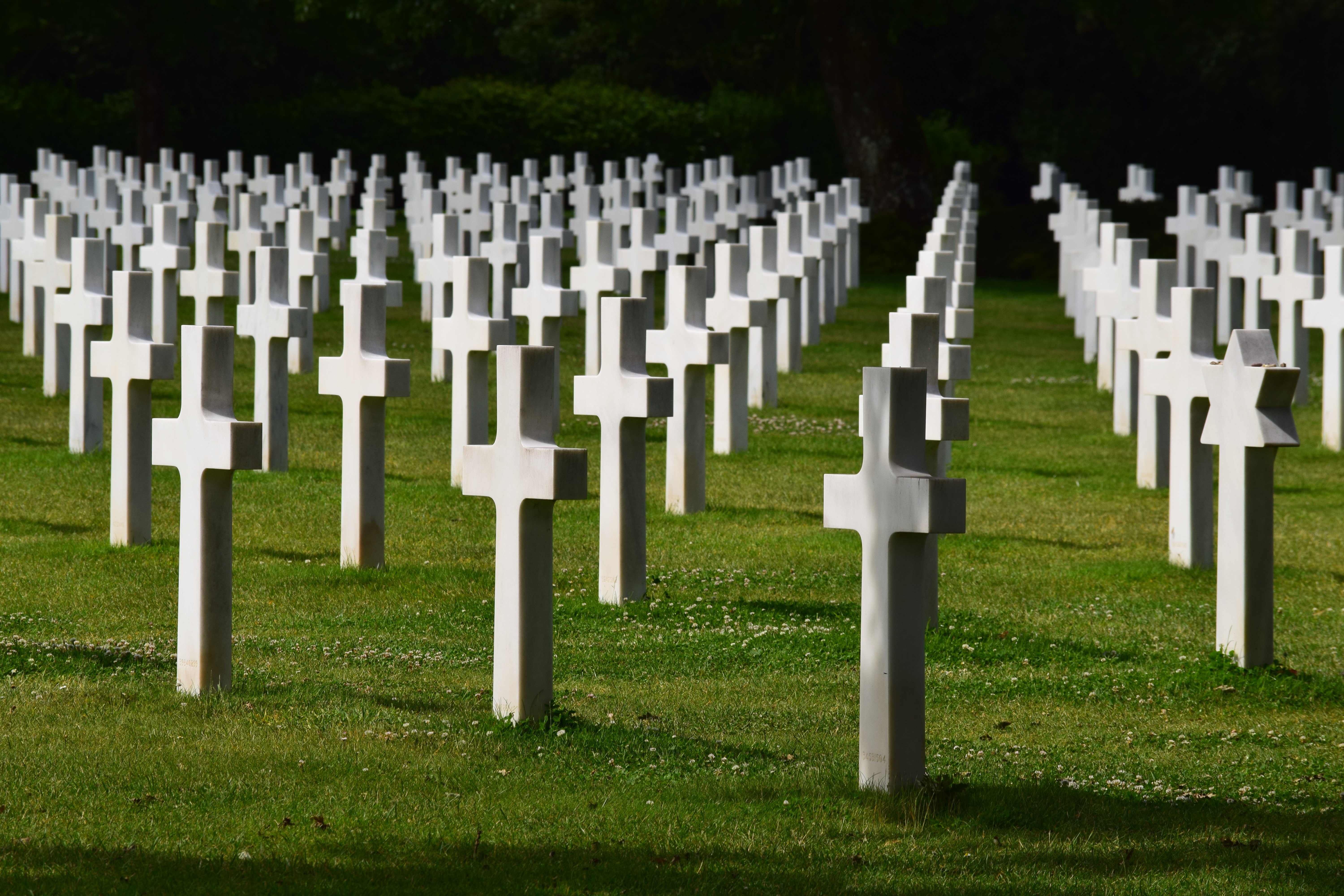
“You’ll notice that all the graves are facing west, facing home.”

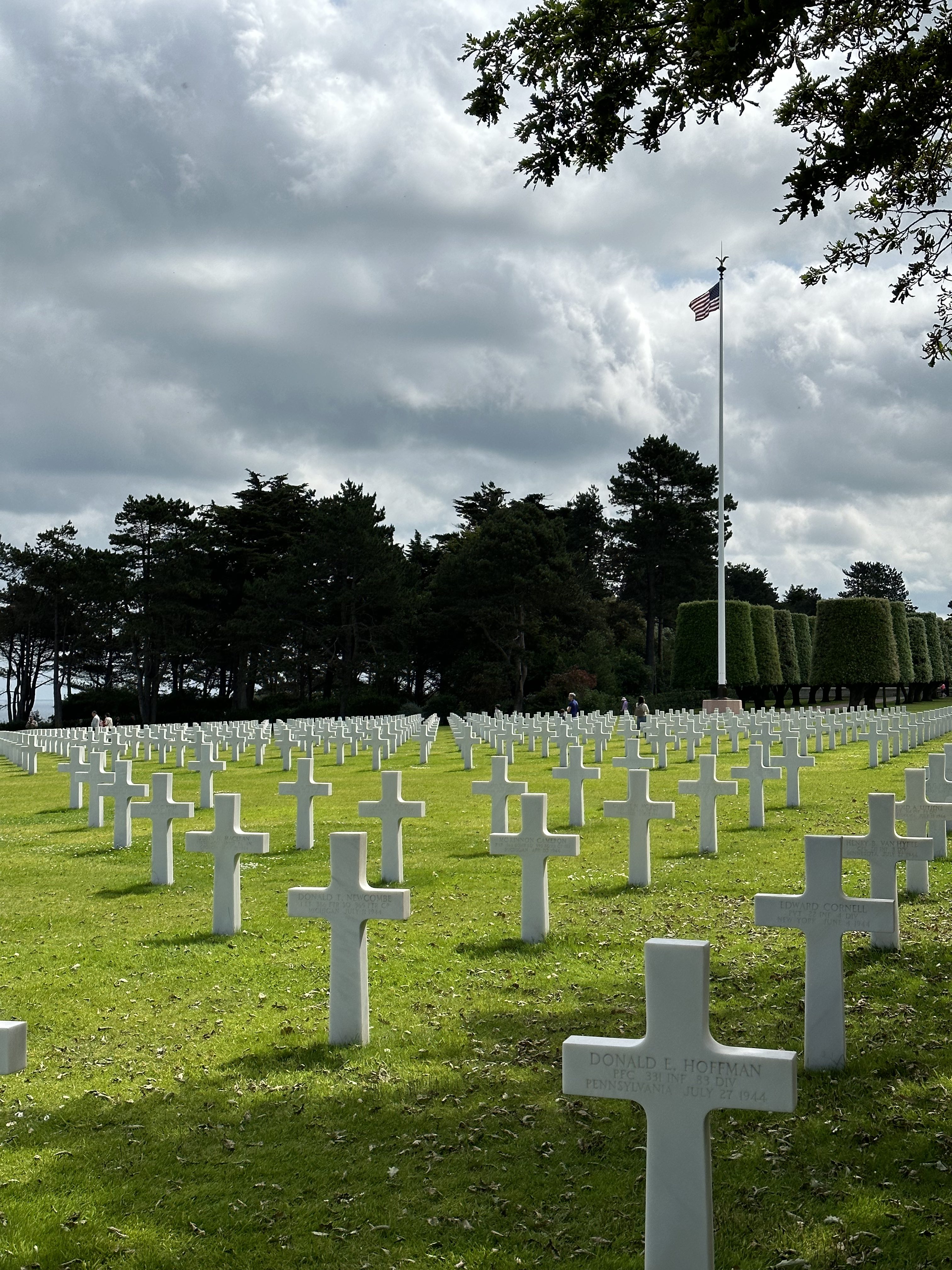

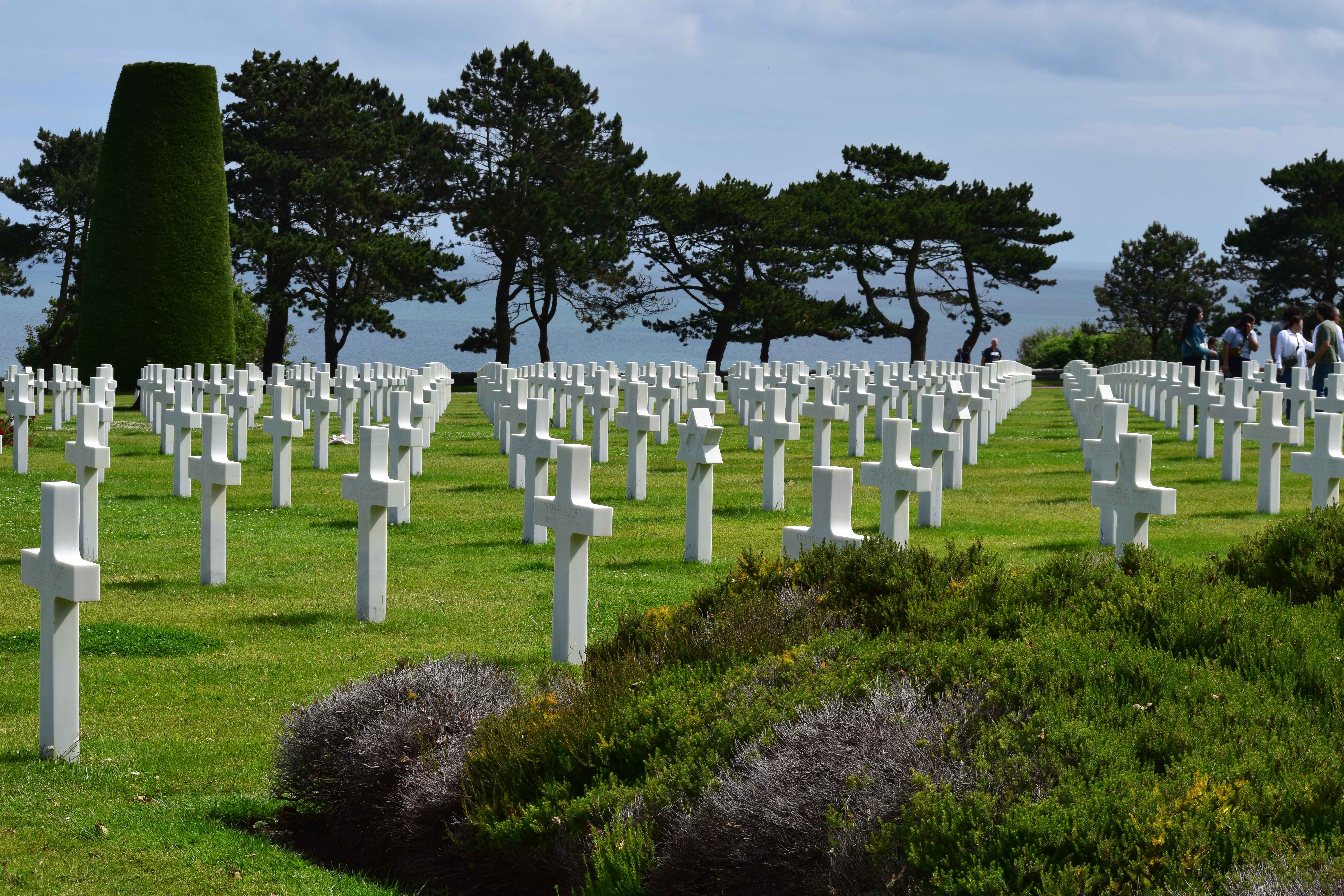
Maybe it’s the mama in me. Maybe it’s the sister who knows what it’s like to lose a baby brother. Maybe it’s because I had already been nine days the farthest I’d ever been from my homeland. Maybe it’s just because I’m human and war sucks and death sucks and life isn’t fair and sometimes it’s all too much, but that was it. That was the moment the tears fell.
(In truth, they fall every damn time I edit this thing. Thank God it’s almost finished!)
Bayeux, etc.
After our tour, we were pretty emotionally spent but we had to eat. As is the custom in France, many restaurants were about to close for the afternoon but the kind staff at La Fringale Restaurant et Pizzeria à Bayeux agreed to serve us. After a relaxing lunch with plenty of gluten-free (and corn-free) options, we spent some time shopping and sightseeing downtown.
The medieval city is one of the few areas in Normandy not destroyed by the Allied bombing campaign. This is because the soldiers of the SS left the town on D-Day, and the Resistance – including a local priest – quickly informed the Allies that the Germans had left Bayeux, thus sparing the town from harm.
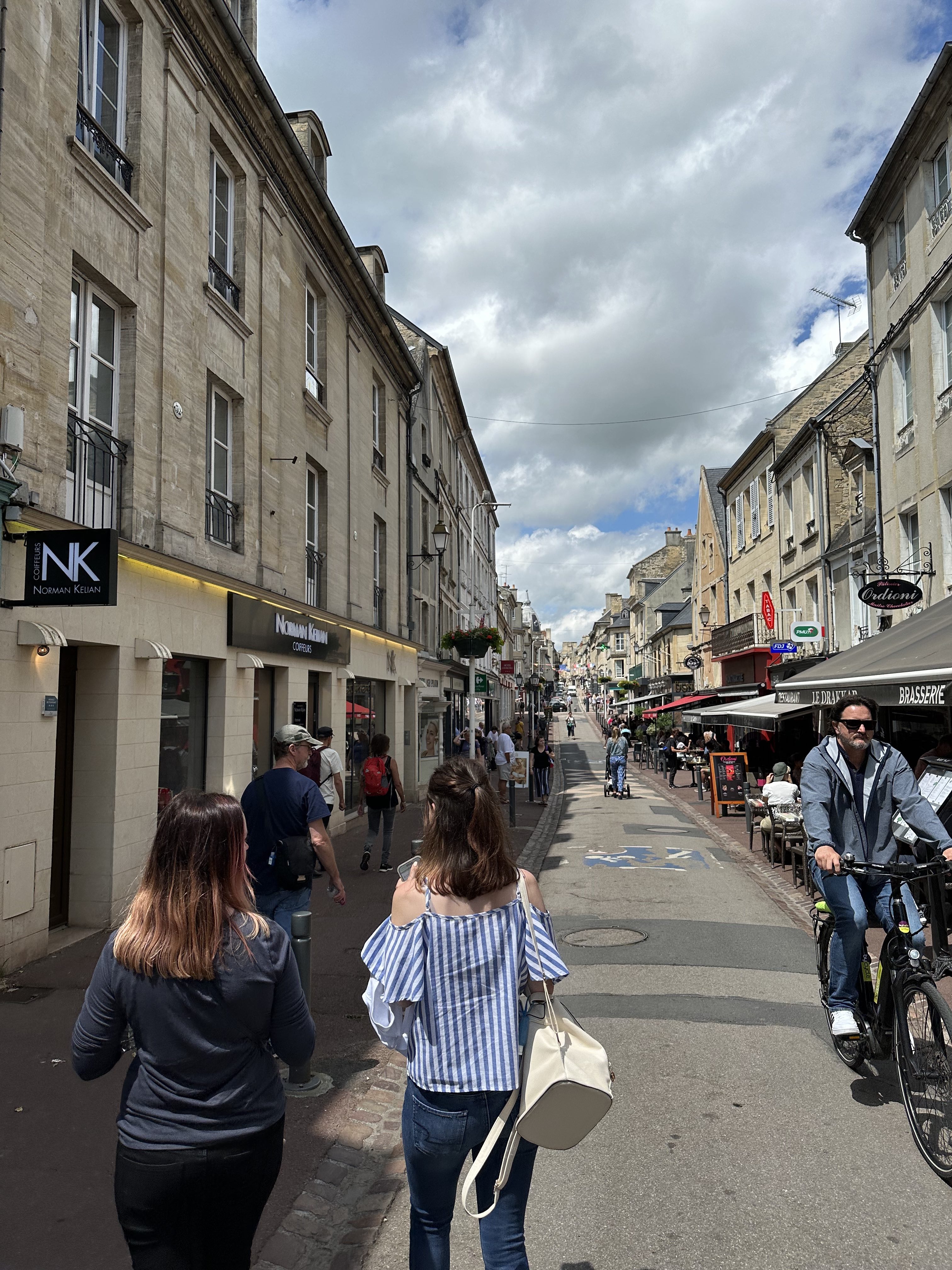
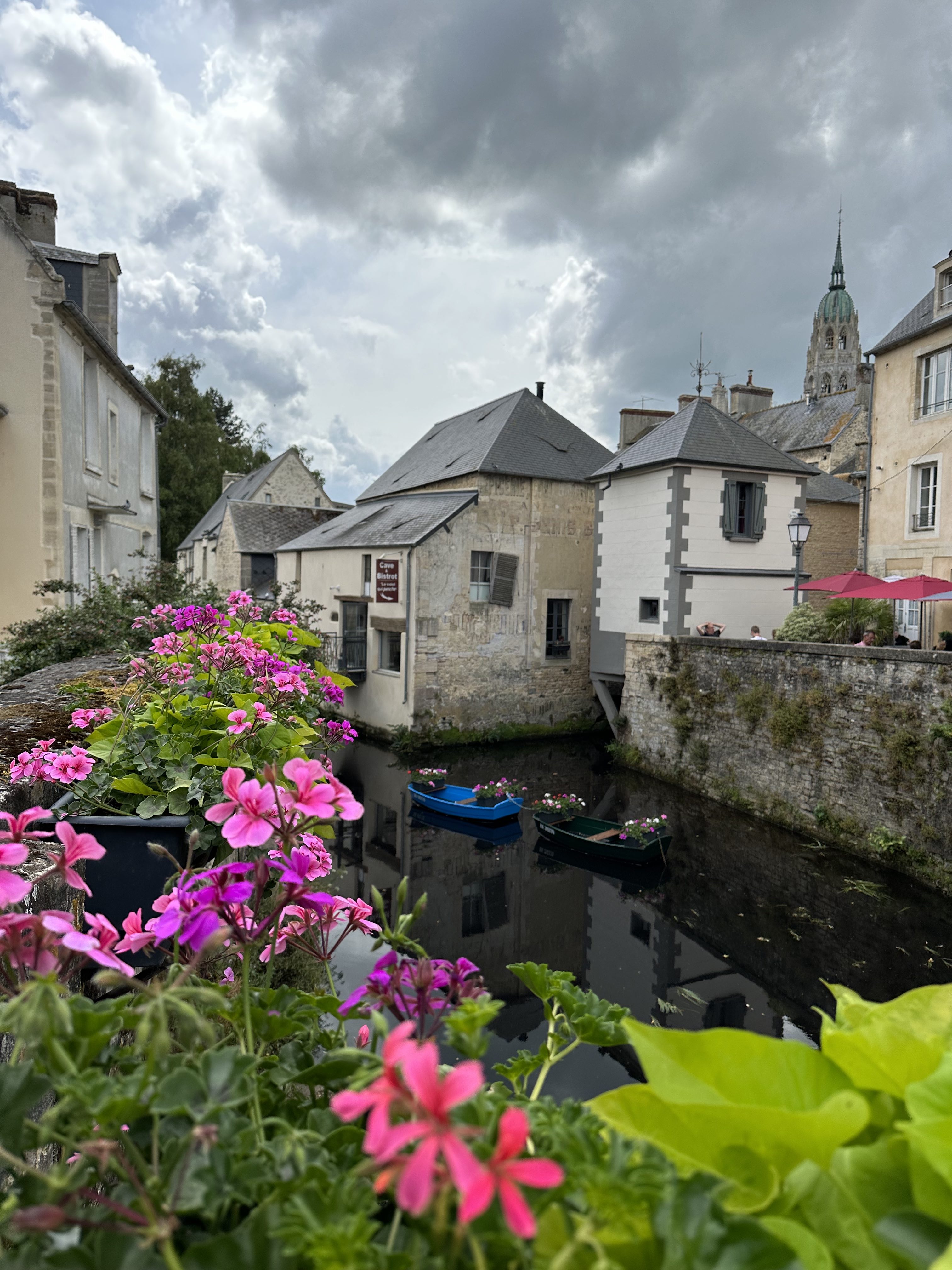

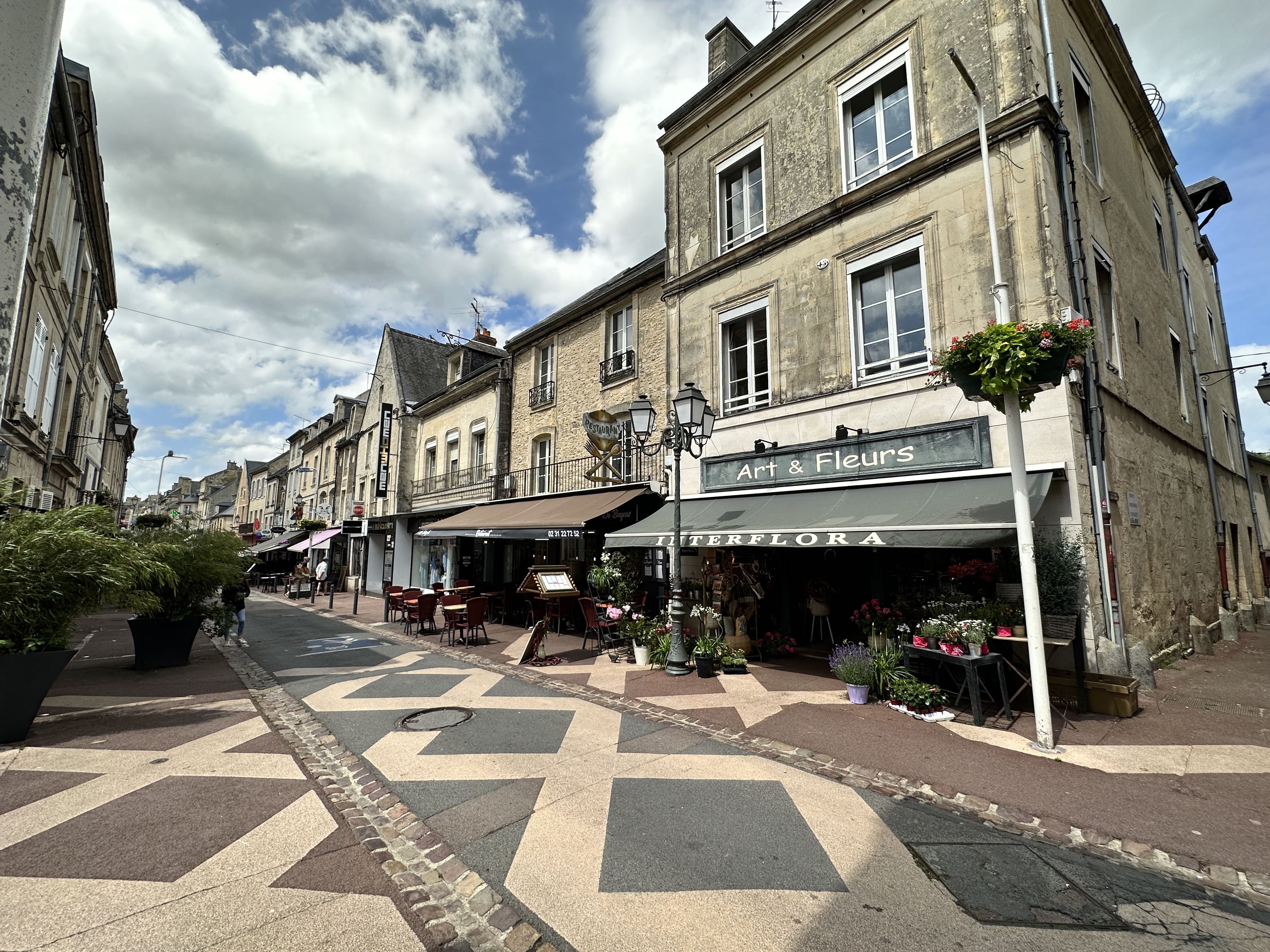
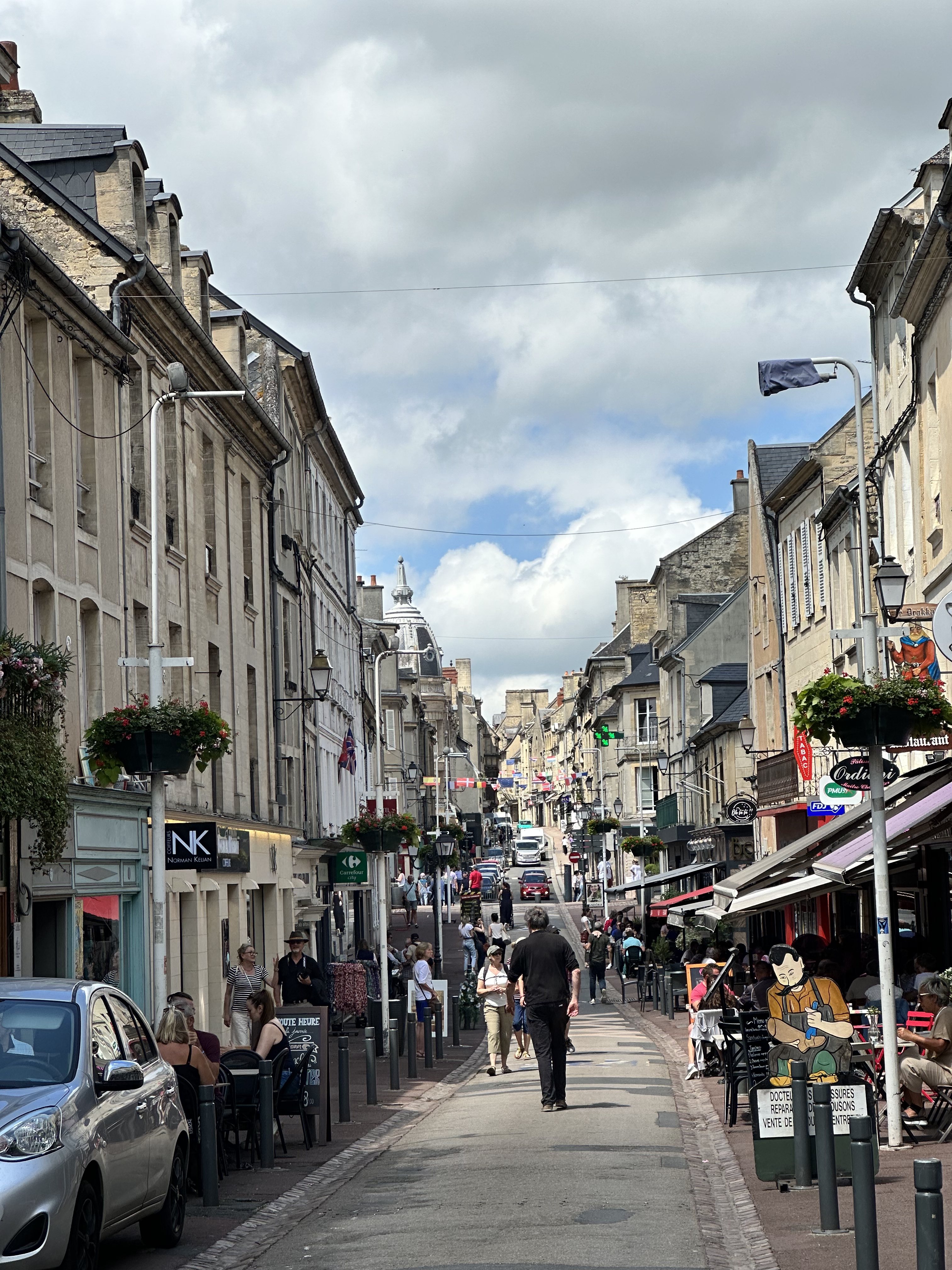
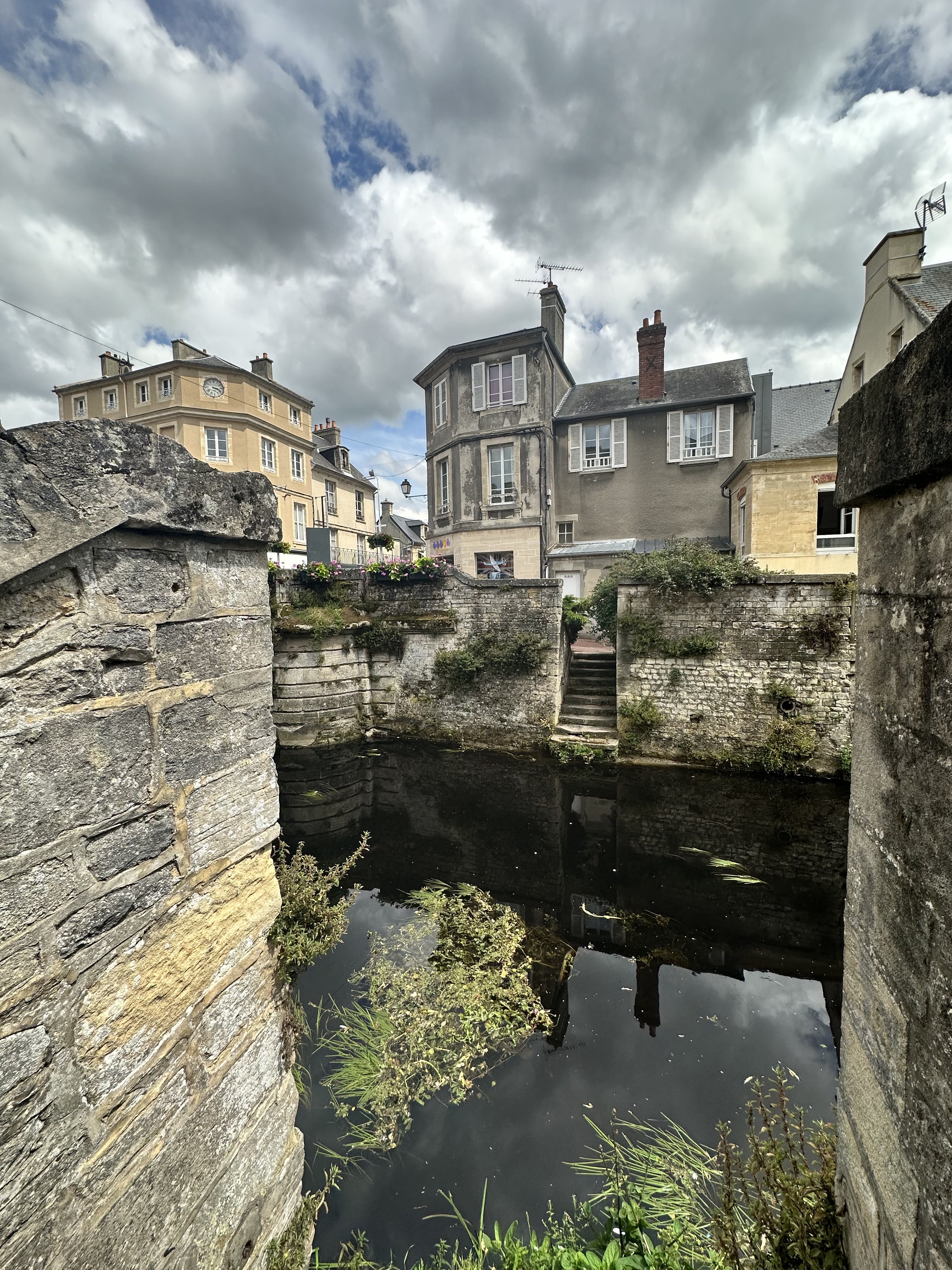
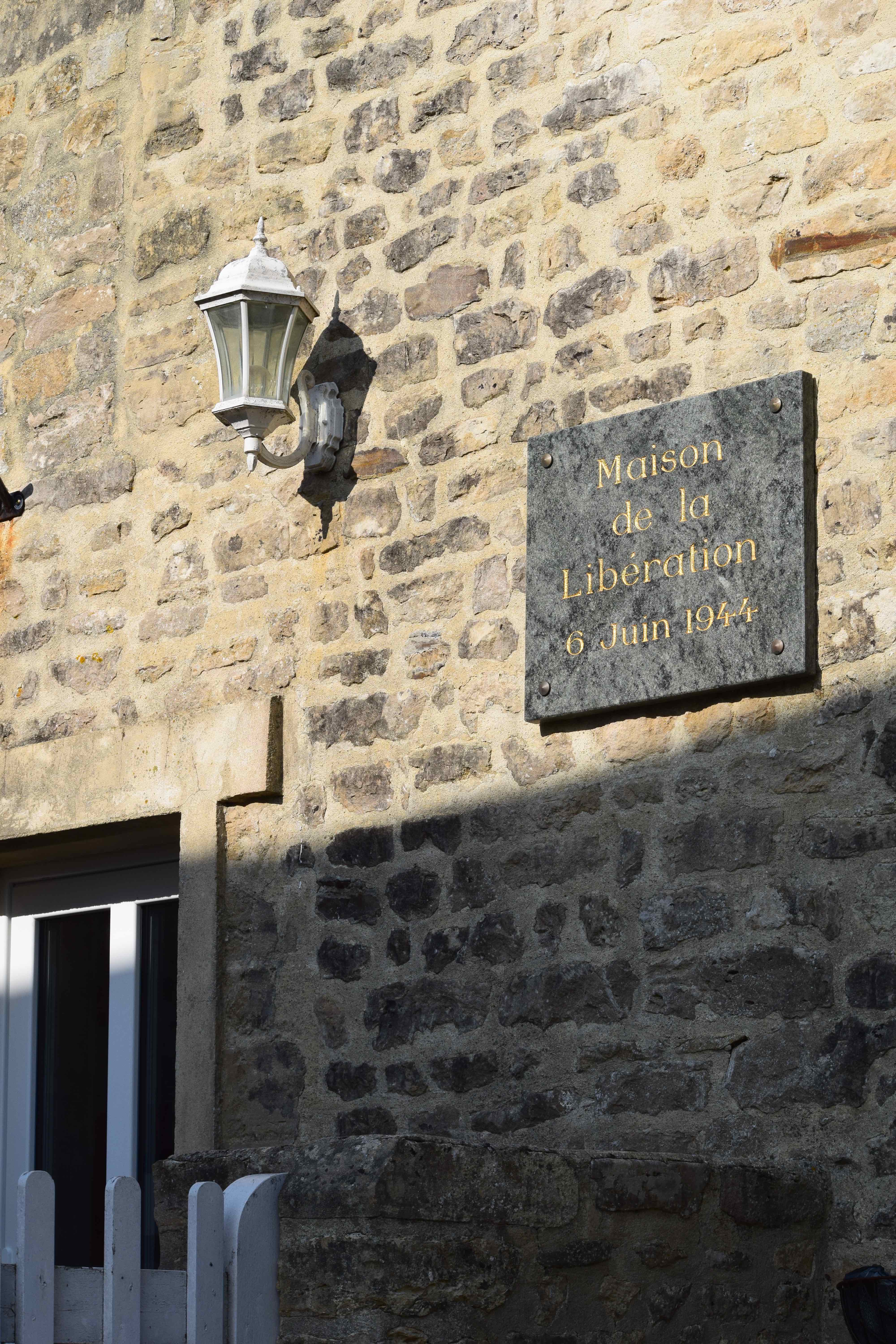
After Bayeux, as noted above, Doug, Christina, and I visited Omaha Beach during low tide. On our way to dinner, we drove by Maison de la Libération, the first house liberated by US troops on June 6, 1944. Then we found La Marina, a creperie offering gluten-free crepes, in the little fishing village of Port-en-Bessin-Huppain. It’s always fun when you stumble upon real local flavor in the midst of such rigorous sight-seeing!


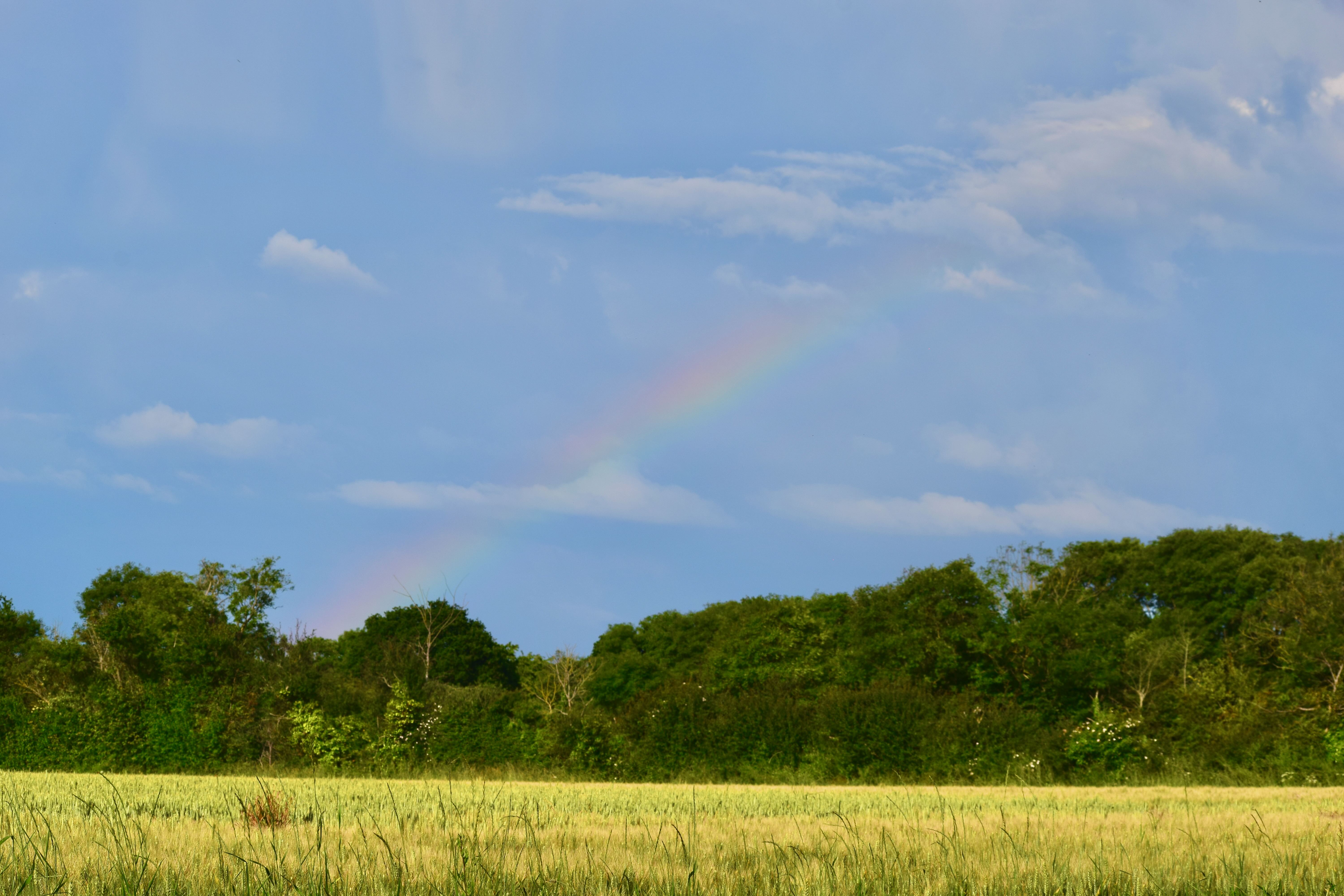
On the drive back to the Airbnb, we were treated to a rainbow. Which all in all, seemed a fitting end to a memorable and moving day.
Next up: Mont St. Michel, an accidental music festival, and almost running out of gas!
 Lightning Bug
Leave a comment